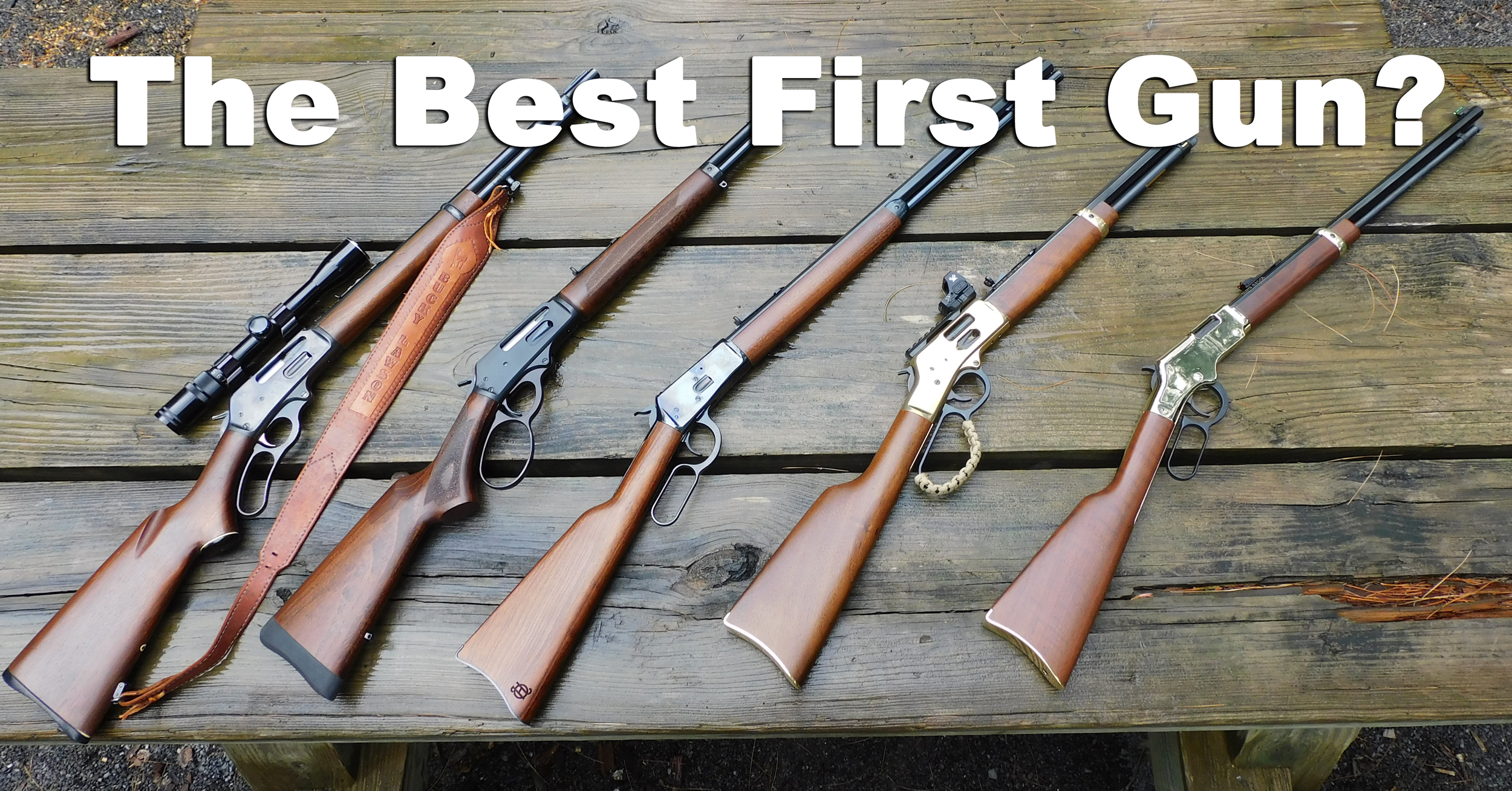


Lever action rifles enjoy a storied history in American gun culture and with good reason. In this feature, we lay out everything you should consider before buying a lever action and make the case that lever action rifles may be the best first gun for most new shooters.
Lever action rifles are a uniquely American phenomenon. Their classic looks, fast operation, and reliable performance have made them a popular choice since Benjamin Tyler Henry first gave us his 1860 rifle. But in a post-World War II world of slick bolt actions and fast-shooting semi-autos, the venerable lever gun declined a bit, even though legend has it that the quintessential lever gun cartridge, the .30-30 Winchester, has taken more deer than any other load. That claim is disputed, of course, but its mere existence demonstrates the lever gun’s past popularity.
But shooters are rediscovering lever guns, and the platform is undergoing something of a Renaissance. Henry is creating bold new designs, while a reinvigorated Marlin is reminding everyone why its classic models became classics in the first place. Winchester’s iconic lever guns are still in high demand, whether vintage examples or factory-new rifles. Smith & Wesson recently introduced a new, classically-themed lever gun, the 1854. Companies like Rossi and Heritage are making very nice clones of proven models at a more affordable price. Hornady is helping to fuel this movement with its LEVERevolution ammunition line, increasing the performance of classic cartridges like the .30-30 Winchester, .35 Remington, .45-70 Gov’t, and others.
Truth is, lever guns are fun, fast, and effective, and are lending themselves to applications beyond their traditional hunting roles. Cowboy Action shooting, plinking, and even self-defense are legitimate lever gun pursuits these days. So, what to make of all this? How should shooters approach all the new options and explore what they have to offer?
I don’t have all the answers, but as a life-long lever gun enthusiast, here’s my take and a number of reasons why lever action rifles make one of the best choices for first time gun buyers.
Lever Guns are Versatile
Lever action rifles, in the past, have often been viewed as 19th century technology and/or old-timers’ deer rifles. Technically, those perceptions aren’t exactly wrong. After all, I’ve been hunting with the same lever gun for almost 50 years now, and most of Winchester’s current lineup was designed in the late 1800s. But they are so much more besides, and the design has hung around for a reason.
Hunting
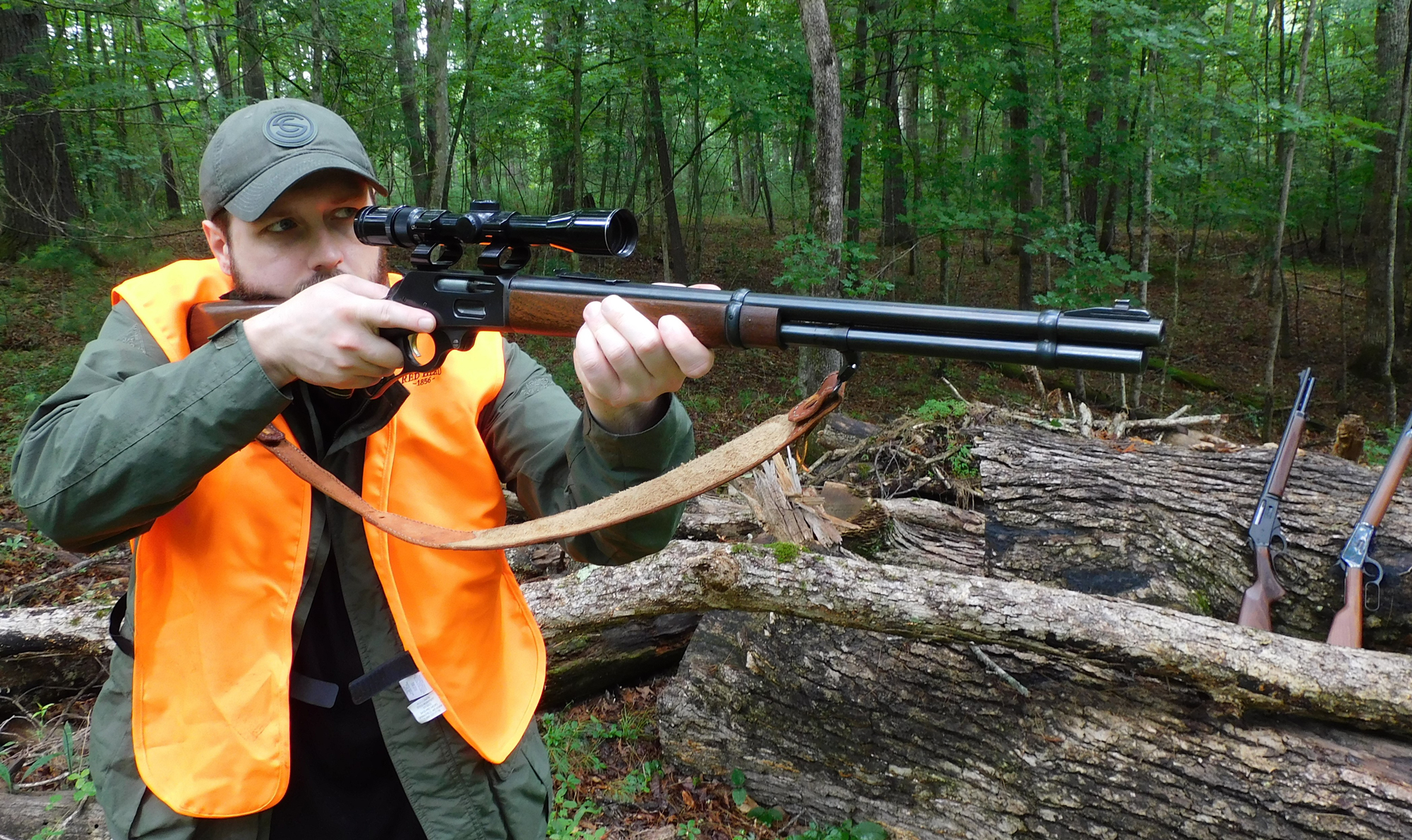
Modern shooters are learning that lever guns are indeed great hunting rifles, with options for just about every scenario. You read that correctly. I grew up “knowing” that lever guns were relatively short-ranged and good “brush guns.” My Marlin 336, chambered in .35 Remington, was perfect for my Appalachian Mountain hunting ground, with its steep draws, laurel thickets, and relatively limited line-of-sight. I’d say at least half the other hunters I encountered in the woods carried something similar, usually chambered in .30-30. That was actually a running joke in our deer camp. It seemed that everyone and their brother had a “Firty-Firty.”
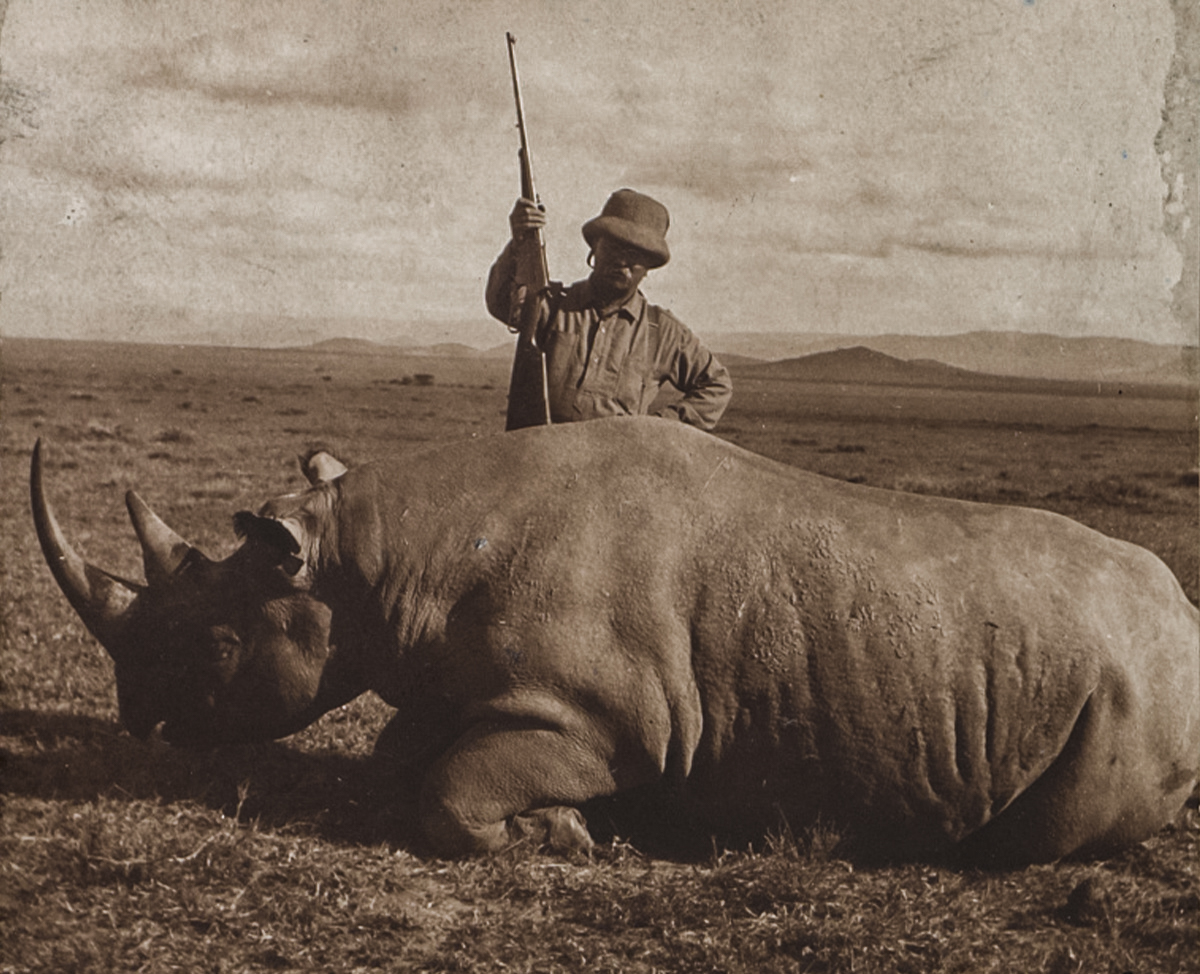
Lever guns are great for everything from squirrels to cape buffalo. Teddy Roosevelt used his lever action Winchester 1895, chambered in .405 Winchester, to kill a rhinoceros. They’re much more than “brush guns.”
Consider the box or rotary magazine-fed models, like the Browning BLR, Henry Long Ranger, Savage 99, and Winchester Models 1895 and 88, that are chambered for longer-range cartridges like .30.06 Springfield, .300 Savage, .308 Winchester, 6.5 Creedmoor, and many others. These models are lesser known, but no less effective. The Browning, Henry, and Winchester 1895 are currently in production. Pre-owned Savages and Winchester 88s can be easily found online and aren’t overly-expensive. They’re all fantastic rifles. Henry also offers the Lever Action Supreme and Predator rifles, chambered for .223/5.56, .300 Blackout, and .450 Bushmaster.
Pistol-caliber lever guns in .357 Magnum. .44 Magnum, and .45 Colt are also capable deer rifles. Use the right load, and you have plenty of gun. But understand that your range will be more limited. One of my high school friends took several whitetails with a .44 Magnum-chambered Marlin 1894. Other good choices include the Winchester 1892, Rossi R92, Henry Big Boy, Heritage 92, and Smith & Wesson’s 1854.
If you’re going to buy your first gun, why not make it something you can hunt with too?
Self-Defense Options
Lever guns are also emerging as defensive firearms, especially in states where buying a modern semi-auto carbine is difficult or impossible. A pistol-caliber lever carbine can hold up to 10 rounds, and a shooter can learn to run the action very fast with just a little practice. Several companies are making lever guns specifically set up for defense, like the Marlin Dark Series or Henry’s X line. Smaller companies are also getting in on the action, as with the promising Bond Arms LVRB.
These guns have modern, synthetic stocks; slotted front handguards for accessories; Picatinny rails; and threaded barrels for muzzle devices or suppressors. They make for a reliable, effective option if you can’t use an AR-15 or something similar. Companies offer these guns in many rifle and pistol calibers, ranging from .22 Long Rifle all the way to 450 Bushmaster and .45-70 Gov’t. That includes .223/5.56 and .300 Blackout.
Lever Gun Configurations
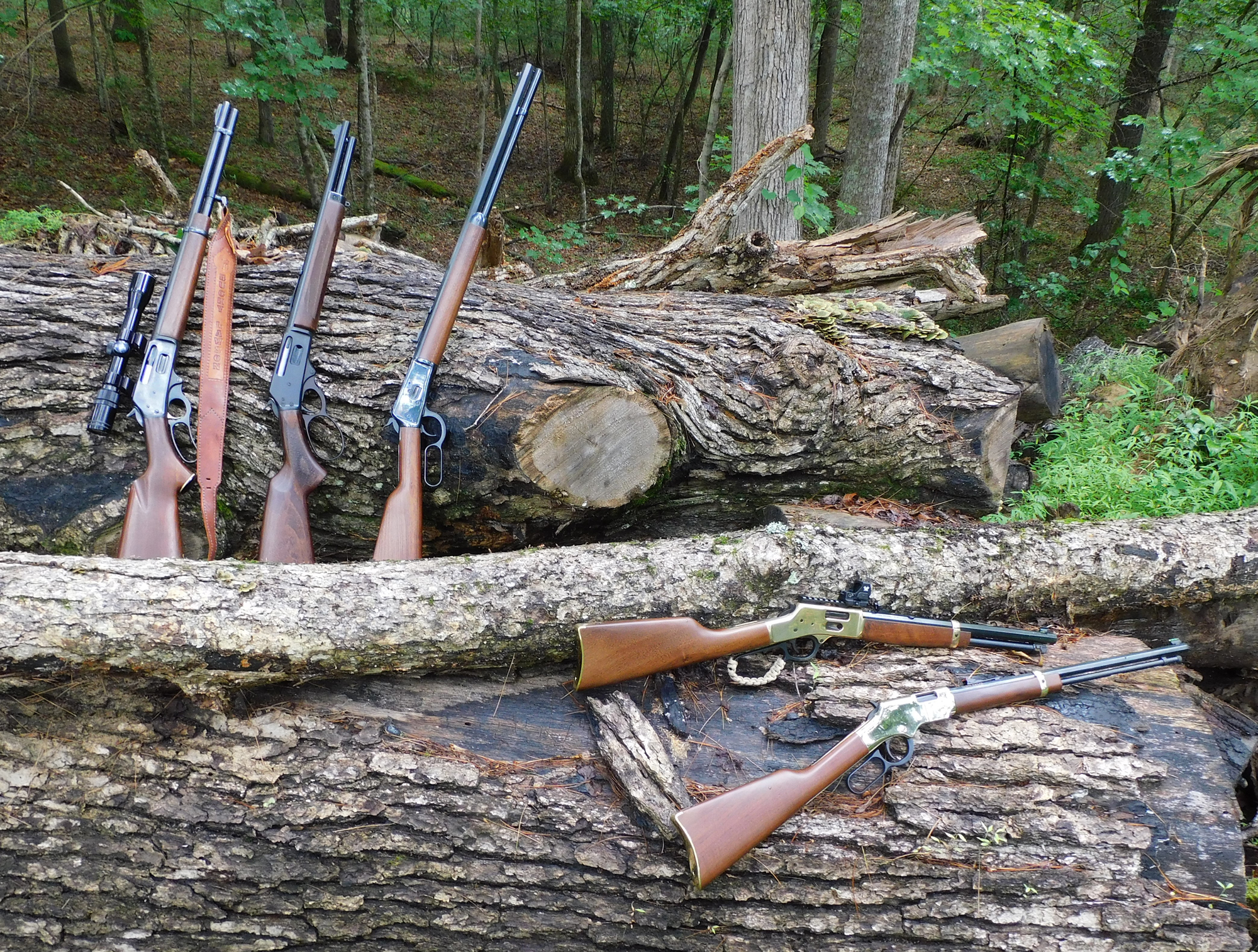
There are four basic lever gun configurations: Rifle, Carbine, Trapper, and Mare’s Leg.
- Lever action rifles typically have a 24-inch barrel, or thereabouts, though this configuration has become less popular over time. Marlin’s 336 line hasn’t offered a rifle-length variant since 1962. Winchester, however, still offers its classic lever gun models with a 24-inch barrel, and even one 26-inch. I currently own six lever guns. My Heritage Model 92, based on the Winchester 1892, is the only one with a 24-inch barrel. The Browning BLR offers various barrel lengths based on the chambering, while the Winchester 88 and Savage 99 were produced with 22-inch barrels.
- Carbine-length lever guns are generally the most common. These guns sport a 19 or 20-inch barrel, making them handier and quicker to bring on target than the longer rifle variants. Carbines are prized for hunting in dense woodland environments.
- Trapper models are shorter still, usually having 16-inch barrels. Trapper models are meant to reduce weight and speed up target acquisition, while still offering full-size, centerfire calibers. Defensive-themed lever guns are usually Trappers or Carbines.
- Mare’s Leg lever guns are essentially a gimmick created by Hollywood. Several companies make them, and I own one, but their 12-inch barrels and lack of a full stock make them more difficult to operate. Mine is a fun range gun, nothing more, though some shooters have learned to operate them effectively.
These configurations are general, and the lines sometimes blur. My Henry Big Boy Carbine, for instance, actually has a Trapper-length 16-inch barrel. That’s just how Henry classifies it.
Strengths of Lever Actions
Like any firearm platform, lever guns have strengths and weaknesses, and it’s important to match the gun to the intended task. Lever guns are used primarily for hunting, and their strengths lean in that direction.
Lever Guns are Fast
The lever gun’s biggest advantage over other manual action rifles is speed. Run properly, a good lever gun is capable of reloading faster and smoother than a bolt action or even a pump.
Even a moderately experienced lever gun shooter can get two aimed shots on a game animal without breaking the sight picture. We all aim for a single-shot kill, but that doesn’t always happen. Duplicating that feat with a bolt action requires far more practice and skill.
We mentioned the various barrel lengths, but traditional lever gun cartridges, like the .30-30, have limited ranges baked into their design. Hornady’s LEVERevolution ammo extends that range a bit, but you still won’t be making 400-yard shots. A 16 or 20-inch barrel will usually do the job for those cartridges, assuming you choose the right load.
Those shorter barrels make for a nice, handy, compact rifle in the deep woods. There’s a reason, actually several reasons, my Marlin has made all those trips into the mountains. If I want to hunt open farmland, I’ll take something else. But the Marlin is my mountain rifle. It doesn’t hurt that the .35 Remington cartridge, with a 200-grain bullet, is a real thumper. That round in that particular rifle has never failed to knock a whitetail down on the first shot.
Lever Guns are Robust
A quality lever gun is tough. They’re meant to be run hard. In fact, they’re most reliable when you run them hard. I deliberately used the word “robust” for this section since many lever gun manuals say to run the action “robustly.” That means you run it hard and fast. Short-stroking a lever gun’s action is the surest way to cause a jam. Don’t baby your lever gun. It’s built to take it.
I’ve only encountered one test gun that didn’t hold up to that philosophy, despite the gun’s manual using the word “robustly.” But it was a new model from a respected company who was already aware of the issues by the time I alerted them. They assured me they were fixing it. That rifle is still on the market, so I hope they did so.
Several companies offer large loop options. The large loops look cool, but they come from John Wayne himself, not the Old West. It seems the Duke’s large hands required a bigger loop, so they made one for his personal Winchester 1892, and the trend caught on. I like them, but I recommend using a paracord braid or leather sleeve. Running the action “robustly” with an unpadded large loop will beat your knuckles up something fierce.
On a side note, a large loop combined with a Trapper-length barrel allows you to spin-cock your lever gun like Chuck Connors did in the old TV show, The Rifleman. It looks awesome, but don’t do it very often because it’s hard on the action. Just make sure you don’t bash your face with the barrel if you choose to try it. Ask me how I know.
Weaknesses
Lever gun weaknesses, to me, are relative to the task I’ve assigned a particular firearm. Other lever gun enthusiasts I know seem to share that perspective. Let’s address them individually.
Loading Speed
A fair criticism of lever guns is that they are generally slow to load. Whether the gun has a traditional tube magazine or breechloading internal box or rotary mag, reloading isn’t exactly fast. But in a hunting scenario, is that really an issue? My Marlin 336 has a 6+1 capacity. If I can’t get it done on a whitetail with that, I have no business in the woods.
Likewise, my Henry Golden Boy holds 16 rounds of .22 Long Rifle ammo. Reloading is admittedly slow. But 16 rounds for hunting or plinking is pretty good. I can’t really complain about it.
Shooters have developed topping-off techniques for side-loading lever guns, which can be aided by a butt cuff side saddle. I have one of those for my Henry Big Boy Carbine, putting an extra 8 rounds of .357 Magnum at my fingertips. But reloading still can’t be characterized as fast.
But fear not. Fast-loading options do exist. The most prominent are the Henry Lever Action Supreme and Predator rifles. They accept standard AR-15 magazines and can reload as fast as you can run the drill. The Bond Arms LVRB will also use AR-15 mags when it becomes available. The Browning BLR and Winchester 88 also use detachable box magazines, but the manual of arms won’t be quite so fast as the Henrys, nor will they approach the Henrys’ capacity.
Range Limitations
Traditional lever gun cartridges, like .30-30 Winchester, .35 Remington, .45-70 Gov’t, and the newer .360 Buckhammer are not designed for long-range shooting. Same with the pistol caliber models. The traditional tube magazine prohibits using spitzer bullets because of the risk of putting excess pressure on the primer of the round in front of it. So these cartridges have, until recently, been limited to round-nose bullets, which deliver a punch, but do it at shorter ranges.
But Hornady’s LEVERevolution line offers spitzer bullets in all those cartridges except .360 Buckhammer. They also have the common pistol rounds we mentioned earlier. The polymer tip allows them to be used in tube magazines. They extend the range somewhat by offering better velocities, though no one will ever confuse those rounds with the .30.06 Springfield.
I’m comfortable taking a regular .35 Remington or .30-30 Winchester round out to 200 yards, but no further. The LEVERevolution gives me confidence out to about 250. But, honestly, the environments in which I hunt with those rounds have never offered me that kind of shot. I’m not saying it can’t happen. But it’s never happened to me. I do like the extra velocity, though, since the “brush gun” myth is indeed a myth, and I’m not married to the round-nose bullets. Use what works best for you.
Lever Gun Sighting Options
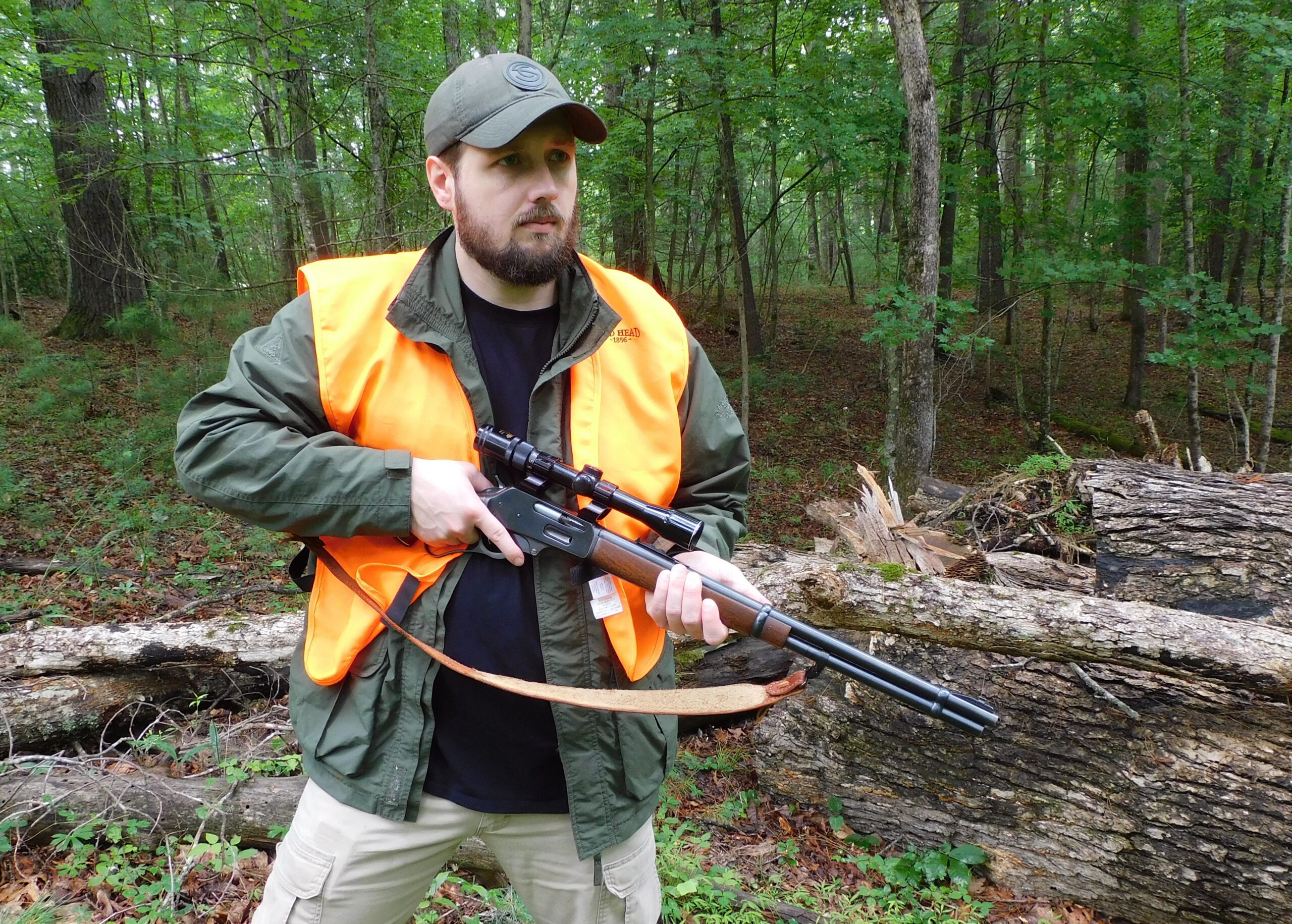
Traditional lever action rifles are usually equipped with some kind of buckhorn sight. Buckhorns are effective, but you must take the time and make the effort to learn how to use them properly. They are effective at close range and at distance. Learning to use buckhorns is beyond this article’s scope, but the information is there, and the skill itself is useful. But you have other options, which are sometimes dictated by the gun itself, and the environment in which you intend to use it.
Scopes
The most obvious choice is adding a scope. Some purists claim that scoping a lever gun is tantamount to sacrilege. I disagree, but I scope lever guns differently from bolt guns. As I talked about before, the lever gun’s advantages are speed and handiness. A scope should not negate those advantages. I therefore use see-through scope mounts that allow me to use the gun’s iron sights if I want to make a snap shot in a heavily wooded area or around a laurel thicket, of which there are plenty where I hunt. Deer love the cover a laurel thicket provides, so I pay close attention when I’m moving past, or sometimes through them.
Hunters who don’t agree on scopes sometimes cite the often severe drop angle on a lever gun’s stock. The see-through mounts I use raise the scope considerably, meaning I must sacrifice part of my cheek weld. Those who disagree with me cite that fact as a reason to either not scope a lever gun, or to mount it as low as humanly possible to preserve what cheek weld you can.
I certainly understand those criticisms, but I will say that practice and experience have taught me to be reliably accurate with my scoped Marlin, and the diminished cheek weld seems to not be a problem. I killed my first deer as a teenager by putting a 50-yard freehand shot into an approximately 12-inch window on a buck standing in the brush. Put him down with one shot. I used the same scope and see-through mounts that still ride on that rifle. The reduced cheek weld was not a factor then, and it has not been since. Develop the skill and familiarity with your rifle, and you’ll be fine, whether you choose a scope or not.
Iron Sights
My adult son owns a Trapper-length Rossi R95 in .30-30. That’s his rifle choice when he accompanies me in those laurel-infested areas. He likes how quickly it comes on target if he jumps a deer, or if he just needs a quick shot. He chooses not to scope that gun at all, preferring to rely on the standard buckhorns. They’re fast and accurate, and that’s what he wants in that environment.
My .22 Long Rifle-chambered Henry Golden Boy also lacks a scope. That’s a conscious choice on my part. It’s a small game rifle and I also use it for plinking. It’s my favorite rifle among my several rimfires. I don’t want to scope it, but I did enhance the iron sights. I replaced the buckhorns with a set of Hi Viz fiber optic sights that put me on target quickly and reliably. You don’t have to use Hi Viz, but upgrades are available if you want them.
Finally, some lever guns almost require iron sights. Of course, I’m talking about the classic Winchesters with their top ejection ports, and rifles that follow those designs. Some people have managed to scope them, but I prefer not to fool with it. As I said, I’m fine with buckhorns, so my Heritage 92, with its top ejection port, has kept the factory sights. It’s a very effective rifle just like that.
Red Dots
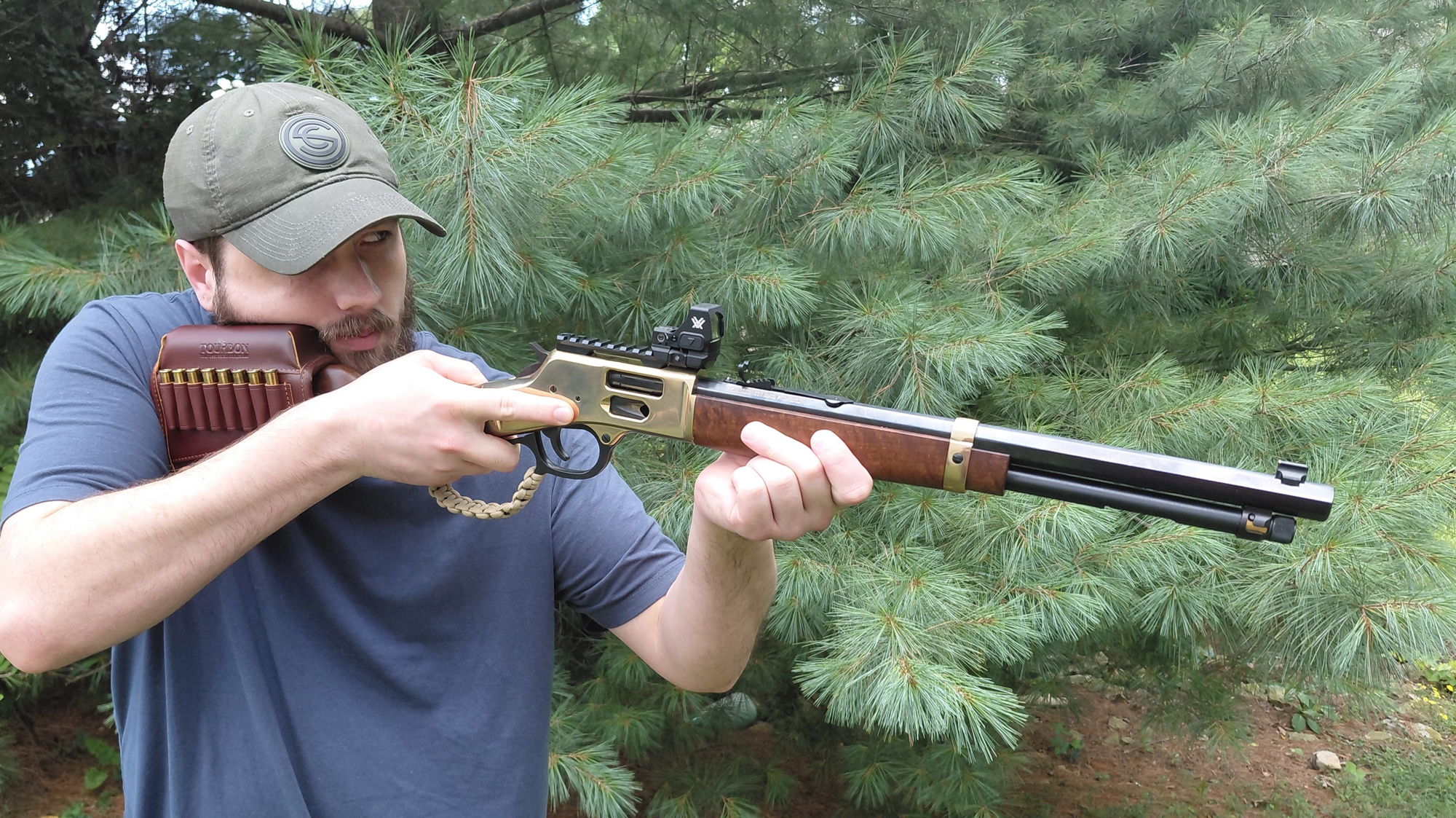
Adding a red dot or other reflex sight to a lever gun may sound strange. But recall that lever guns are also emerging as defensive rifles. I don’t yet own one of those purpose-built lever guns, but I use my .357 Magnum Henry Big Boy Carbine that way nonetheless. The gun was already tapped for scope mounts, so I added a compatible Picatinny rail section instead and attached a zero magnification Vortex Defender ST red dot.
That combination makes for a formidable home defense gun. The rail and red dot raise my head, much like the scope on my Marlin. But I want that in a defensive situation because I can see and scan my environment better. It’s very similar to the cheek weld I get when running a training course with my AR-15. But I admit to cheating a bit here, since the butt cuff has a raised comb to help keep me steady. I suppose I could do the same with my Marlin, but 48 years of use makes me not want to mess with an already-established good thing.
Parting Shots
Lever guns are my favorite firearm platform, bar none. I suppose that’s natural since my Marlin was the first rifle of any kind that I ever fired. My Dad had me on that one before I even shot a .22. I like them because they’re versatile, fun, effective, and they have personality. Personality may not put meat on the table, but I like it nonetheless and will take it where I can get it.
They’re perfect for my native Appalachian Mountains because they’re so handy and because I likely won’t need to take a long shot. I love my Winchester Model 70, but the 24-inch barrel, more powerful scope, and slower operation make it less effective in the deep woods. I use it when I hunt my friend’s farm, where it’s clearly the better choice.
tyle=”font-weight: 400;”>But lever guns like the Browning BLR, Henry Long Ranger, Savage 99, Winchester 1895, and Winchester 88 can also thrive in open environments. They offer traditional, longer range bolt action cartridges and longer barrels with lever gun speed. What’s not to like?
I also think lever guns are viable defensive tools in states that make AR-15 ownership difficult or impossible. They aren’t the AR’s equal in that role, but they can be very effective when set up and used properly.
I’m glad to see lever guns making a comeback because they have a definite role in the hunting and shooting world, and they are far from obsolete. If you’ve perhaps overlooked lever guns, or dismissed them as old technology, consider giving them a fresh look. Yes, they can be nostalgic, and some have their limitations. But I promise you, there’s a lot more to them than you might think, and they are so much fun. Just pick the right one for the job, and a lever gun can likely get it done for you.