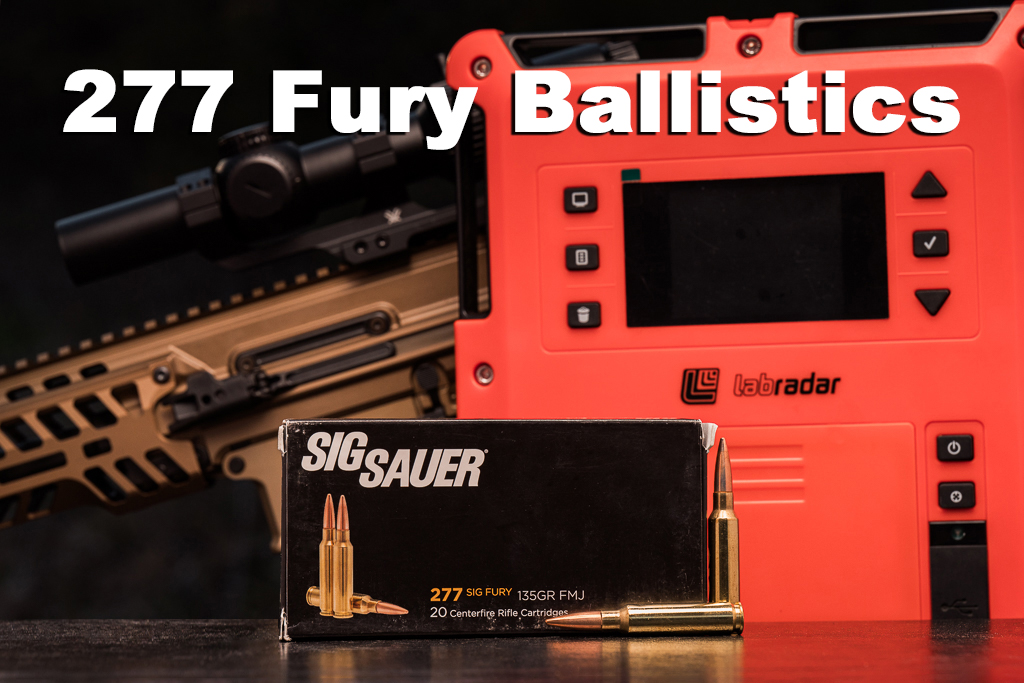


This article covers the history, design, physical attributes, and firearms of the .277 Sig Fury. Most importantly, we use the manufacturer’s muzzle velocity, ballistic coefficient, and grain weight to calculate the round’s likely downrange performance. This information will help shooters decide if the .277 is right for their specific needs.
Released in 2019, the .277 Sig Fury is a newcomer to the firearms world, an industry where cartridges with over a century of use are still common.
277 Fury Ballistics
Sig Sauer, the only manufacturer currently making .277 ammo, does not have downrange stats for their cartridges. However, knowing the weight, velocity, and ballistic coefficient, we can utilize ballistic calculators to estimate performance.
Essentially, we can input the muzzle velocity, grain weight, and ballistic coefficient into the calculator. We also input desired environmental conditions (wind speed and direction, temperature, etc) which stayed consistent for all calculations. The calculator does the rest, giving us downrange stats for velocity, energy, trajectory, and wind drift.
Nothing beats real-world testing, but this gives us a starting point for analyzing the .277 Fury’s ballistic performance.
Velocity
| Muzzle (fps) | 100 | 200 | 300 | 400 | 500 | |
|---|---|---|---|---|---|---|
| 135-grain Full Metal Jacket Elite Ball | 3,000 | 2,797 | 2,604 | 2,418 | 2,240 | 2,070 |
| 150-grain Hybrid Hunter Nosler Accubond | 3,000 | 2,807 | 2,623 | 2,446 | 2,275 | 2,112 |
| 155-grain Hybrid Match Sierra MatchKing | 3,000 | 2,824 | 2,655 | 2,492 | 2,335 | 2,184 |
Data provided by Sig Sauer. Environmental data include 59 degrees Fahrenheit, 50% humidity, 29.92 inHg of pressure, and 10 mph wind speed. Calculated numbers in italics.
Trends shift quickly, but over recent history we have seen an increase in speed from a large variety of ammunition. Hot cartridges are (or were) all the rage for decades, and it appears the .277 Fury fits with this trend.
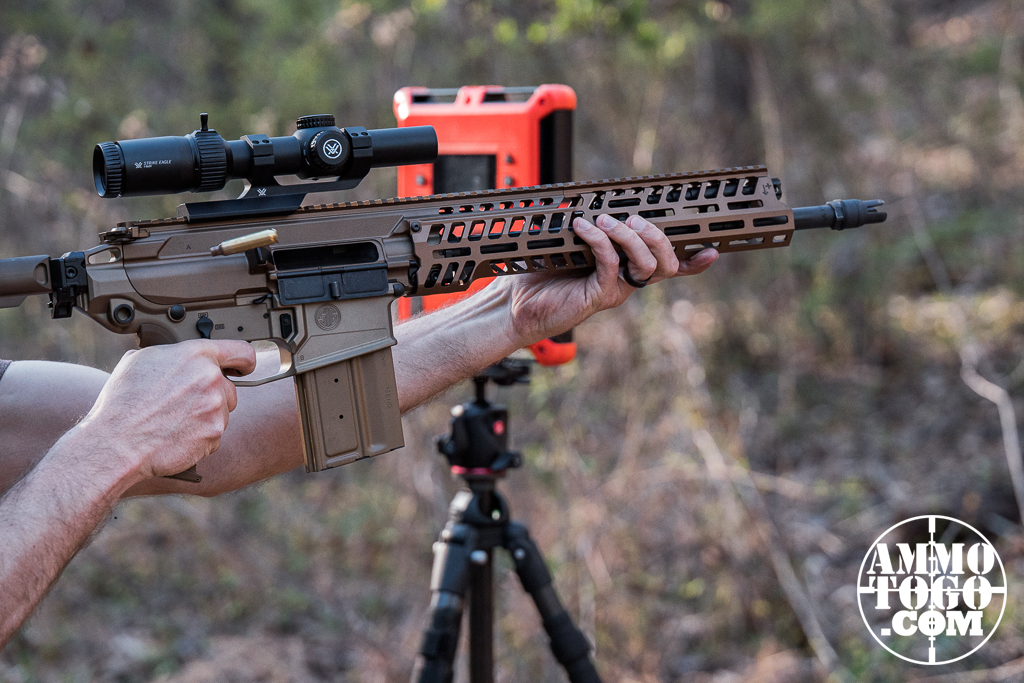
Sig Sauer lists all three at 3,000 feet per second (fps) for muzzle speed. Real-world data will likely show different numbers (it’s unlikely that three cartridges loaded with different weights would have the exact same muzzle speed), but even if they are off by a few fps, it’s still an impressive speed.
Plugging the data into the calculator, we see estimated speeds above 2,000 fps for all three loads. This indicates strong ballistic performance at significant distances, with long-range velocities that allow for accuracy, bullet stability, penetration, and consistent expansion.
Energy
| Muzzle (ft-lbs) | 100 | 200 | 300 | 400 | 500 | |
|---|---|---|---|---|---|---|
| 135-grain Full Metal Jacket Elite Ball | 2,697 | 2,345 | 2,032 | 1,753 | 1,504 | 1,284 |
| 150-grain Hybrid Hunter Nosler Accubond | 2,997+ | 2,624 | 2,291 | 1,992 | 1,724 | 1,485 |
| 155-grain Hybrid Match Sierra MatchKing | 3,097 | 2,744 | 2,426 | 2,138 | 1,877 | 1,641 |
The energies show that the .277 Fury is a powerful round, even from a distance. This aligns with the overall goal of the military’s development, which was a long-range, accurate round that could penetrate body armor from a distance, something the 5.56 NATO could not achieve.
The 135-grain full-metal jacket round and the 155-grain Sierra MatchKing cartridge are not for hunting, so energy is less of a concern. However, the Hybrid Hunter shows promise as an effective deer and elk cartridge, especially if these numbers hold in the real world.
While it’s not the best way to measure a hunting cartridge, 1,000 ft-lbs is often seen as the minimum for deer hunting. The hunting round has 1,485 ft-lbs at 500 yards, so it will surpass the needs of nearly every hunter in America. Even big-game hunters and African safari hunters will find uses for the .277 Fury.
Editor’s Note: When we input the data into the calculator, the muzzle energies aligned with the provided manufacturer data except for the 150-grain product. Therefore, we used the calculated muzzle energy instead of the manufacturer data to maintain consistency with downrange energy.
Trajectory
| 100 | 200 | 300 | 400 | 500 | |
|---|---|---|---|---|---|
| 135-grain Full Metal Jacket Elite Ball | 2 | 0 | -7 | -19 | -39 |
| 150-grain Hybrid Hunter Nosler Accubond | 1 | 0 | -7 | -19 | -38 |
| 155-grain Hybrid Match Sierra MatchKing | 1 | 0 | -6 | -18 | -37 |
The .277 Fury shows impressive stats for a relatively thin caliber. When zeroed to 200 yards, we see a drop of roughly six and a half inches at 300 yards, which should create accurate and consistent placement for most shooters.
As the bullet travels downrange, we see the inevitable drop, but it’s still less than 20 inches at 400 yards and less than 40 inches at 500 yards. If these calculated stats can be trusted, the round should fly with relative consistency; remember that at 500 yards we still have a speed over 2,000 feet-per-second, so performance should be consistent and reliable.
With a properly-sighted rifle and practiced shooting, .277 users should be able to hit the mark at 500 yards and beyond.
Wind Drift (10 mph 90-degree Crosswind)
| Muzzle | 100 | 200 | 300 | 400 | 500 | |
|---|---|---|---|---|---|---|
| 135-grain Full Metal Jacket Elite Ball | 0 | 1 | 3 | 6 | 11 | 18 |
| 150-grain Hybrid Hunter Nosler Accubond | 0 | 1 | 2 | 6 | 10 | 17 |
| 155-grain Hybrid Match Sierra MatchKing | 0 | 1 | 2 | 5 | 9 | 15 |
While many focus on trajectory, shooters in the field know that understanding wind drift is critical. Assuming a 10 mph crosswind, the Fury moves less than three inches at 200 yards. Even at 500 yards, we see the wind pushing bullets less than 19 inches.
Heavier bullets resist wind better than lighter projectiles. It’s no surprise, therefore, that the 155-grain match ammo has the least wind drift, while the 135-grain FMJ rounds are pushed the most.
277 Fury’s Origins
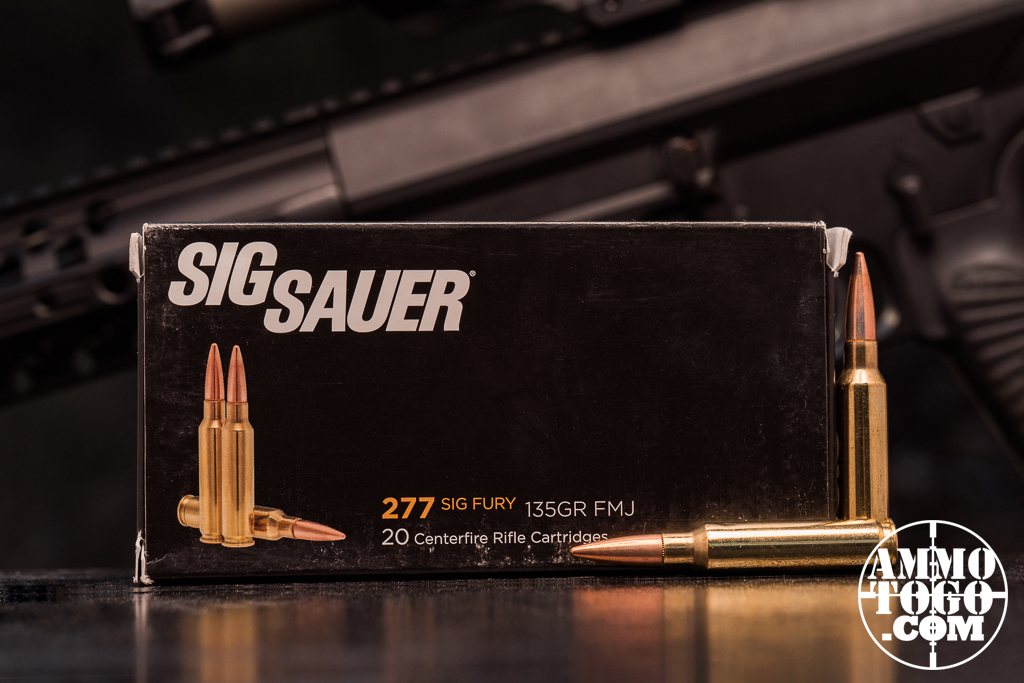
In the late 19th and early 20th centuries, ammunition created by and for the military was typical. Using support and contracts from private companies, the military initiated, designed (more or less), and ordered cartridges for combat. Private companies played a large role, but the needs of soldiers drove the development of ammunition.
In recent history, however, private users drove cartridge development. Hunters, self-defense users, target shooters, and competition marksmen drove the market.
The .277 Sig Fury, in a way, is a throwback. They developed it specifically for military use.
In 2017, the U.S. Army conducted a study into their small arms effectiveness and concluded (among many things) that the current rifle-cartridge combination did not have enough power to punch through the advanced armor of a modern enemy, especially at a distance. Basically, if we had to go against “near-peer” enemies like Russia and China, our rounds did not have the required stopping power.
The Army requested a cartridge that could punch through armor at 500 meters. Sig Sauer got to work and presented the .277 Sig Fury, which, along with two military rifles, won the contract.
The “.277 Fury,” also called the “Sig Fury” or simply the “.277,” is an extremely unique round. Most notable is the bi-metal case, which uses brass for the main body and a harder metal for the base. This metal can be seen at the rear, near the primer.
Why a reinforced metal base? The .277 has a chamber pressure of roughly 80,000 psi. For perspective, the .223 Remington is rated for about 55,000 psi. A normal cartridge would crack and burst under such pressure, so engineers reinforced the cartridge.
This gives the .277 Sig Fury its distinct look, with a grey or chrome cup at the base leading into the traditional brass case and copper bullet jacket.
277 Fury Ammunition Options
Currently, the only manufacturer producing .277 Fury ammo is Sig Sauer. They offer three options:
- A 135-grain FMJ round for target shooting
- A hunting round loaded with 150-grain Nosler Accubond bullets
- A match option that utilizes 155-grain MatchKing bullets
If the .277 gains popularity, other ammo makers may produce their own offerings, but these are the current options for shooters.
Firearms
The .277 Sig Fury appears to be gaining ground. Only a few years back, users were limited to the Sig Sauer CROSS bolt-action rifle and the MCX Spear semiautomatic. These two options fit the needs of most users, but Seekins Precision has now chambered three of their bolt-action products for the .277.
This is speculative, but more manufacturers will likely offer their own rifles for the .277 Sig Fury. We may also start to see manufacturers create their own modifications so AR users can adopt the cartridge.
| .277 Sig Fury | |
|---|---|
| Released | 2019 |
| Bullet Diameter | 0.278 inches |
| Neck Diameter | 0.31 inches |
| Base Diameter | 0.4703 inches |
| Case Length | 2.015 inches |
| Case Capacity | 0.248 cubic inches |
| Overall Length | 2.825 inches |
| Bullet Weights | 135 - 155 grains |
| Typical Firearm | Semi-automatic and bolt-action rifles |
Where Does the .277 Sig Fury Fit in the Ammo Pantheon?
When manufacturers release a new cartridge, shooters are constantly searching for a comparison point. We want context for the new creation. The .277, as we will see, is an elusive creature that’s hard to categorize.
277 Fury vs 270 Win
One of the first cartridges that comes to mind is the .270 Winchester, a popular hunting load that has a nearly identical bullet diameter and similar bullet weights. But it appears the .270, considered one of the fastest cartridges on the market, is a bit slower than the Fury. (Assuming, of course, that manufacturer data holds.) The 150-grain Accubond from Sig Sauer has a muzzle energy of 2,860, so it’s already starting slower. Lighter .270 Winchesters show muzzle speeds that are close (Hornady’s 145-grain Precision Hunter starts at 2,970 fps), but may be less effective at downrange penetration. Most importantly, the .270 is a bolt-action cartridge, while the .277 is made for modern semiautomatic sporting rifles.
277 Fury vs 223 Remington
How about the .223 Remington, America’s favorite centerfire rifle round? This is a cartridge that, like the Fury, is fired from AR-style rifles, but bullets are much lighter in the .223, which has a standard weight of 55 grains. The .223 should have a recoil advantage, as it typically delivers about 1,300 ft-lbs of muzzle energy, but it won’t be nearly as effective for long-range energy.
277 Fury vs .308 Winchester
Perhaps the larger .308 Winchester has similar performance? While heavier in most cases, the .308 is also a bit slow compared to the .277. When loaded with similar bullets as the Fury (150 grains, for instance) the .308 gives less energy downrange. We can likely attribute this to the Fury’s higher ballistic coefficient. (It’s more aerodynamic.) The .308 is similar in muzzle stats, but only achieves the Fury’s high downrange energies when loaded with heavier bullets, such as a 178-grain projectile.
Overall, the .277 Fury is a unique round that could have a special place for downrange hunting and target shooting. Hunters and marksmen who want to extend their range will likely enjoy this unique cartridge.
Find Affordable .277 Sig Fury Ammo Today!
The Sig Fury is a unique cartridge with world-class performance and precision. If you want to give this round a try, visit our site and place your order today. You’ll get the best price backed by our dedicated service!