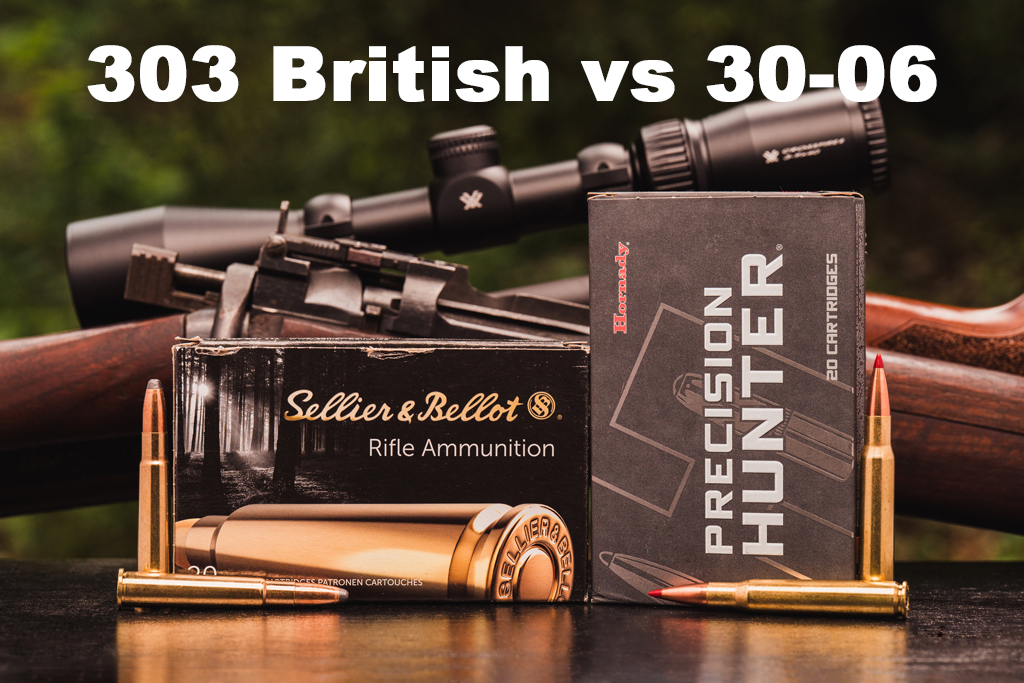

A deep analysis of the .30-06 Springfield and the .303 British cartridges. This article outlines the history, market conditions, size, shape, ballistic performance, and other important factors for these two classic rounds. After reading, you’ll understand the differences so you can make the best choice for target shooting, competition, and hunting.
The .30-06 Springfield is one of the oldest cartridges still used today. Dating back to 1906, the round was standard ammo for American troops in World War I. But there is another rifle cartridge with a military history that outdates even the Springfield. The .303 British, which also saw action in the First World War, was a common load for British and Commonwealth forces, and it has remained a popular option for deer and large-game hunting across North America, especially in Canada.
With many similarities and parallel histories, it’s no surprise that these rounds compete for sales and use. They may also compete for a place in your gun safe.
303 British vs .30-06: Fast Answers
Need answers right now? Here’s a quick summary of the advantages for each cartridge:
Advantages of the .303 British
- Less recoil
- A unique, less typical cartridge
Advantages of the .30-06 Springfield
- Faster speed
- More power
- Straighter trajectories
- Greater variety and availability
- Lower prices
.303 British vs .30-06 Springfield: Specs
| .303 British | .30-06 Springfield | |
|---|---|---|
| Released | 1889 | 1906 |
| Bullet Diameter | 0.312 inches | 0.308 inches |
| Neck Diameter | 0.34 inches | 0.34 inches |
| Base Diameter | 0.46 inches | 0.471 inches |
| Case Length | 2.222 inches | 2.494 inches |
| Case Capacity | 3.64 cubic centimeters | 4.4 cubic centimeters |
| Overall Length | 3.075 inches | 3.34 inches |
| Bullet Weights | 150 - 180 grains | 120 to 220 |
| Typical Firearm | Bolt-action rifle | Bolt-action rifles |
What’s the Same?
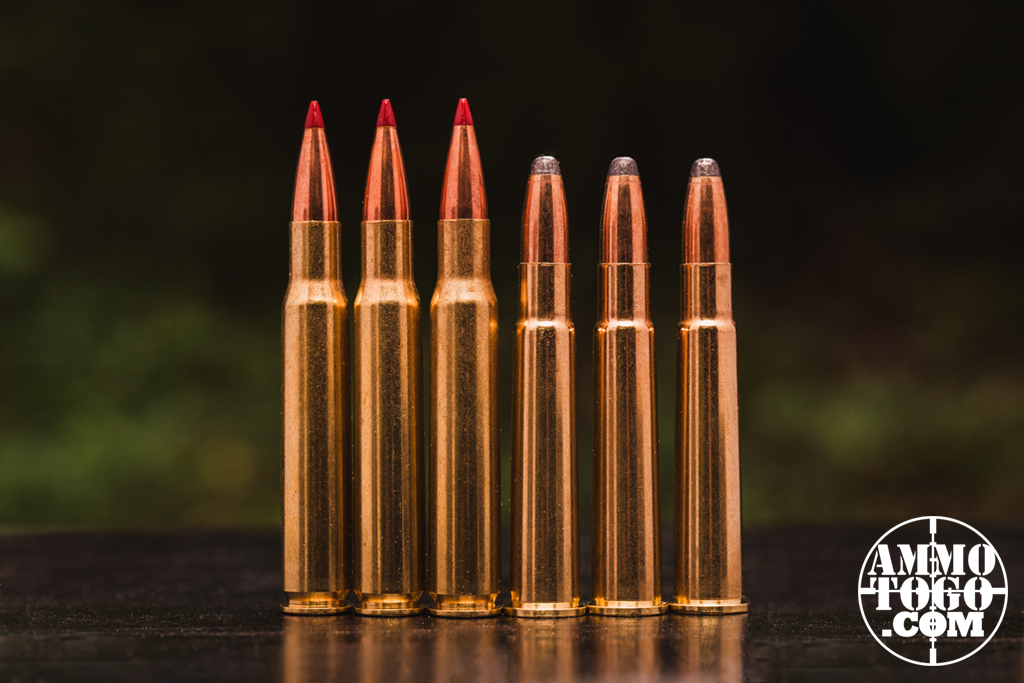
Physically, they are similar in bullet weight and base diameter. They have similarities in size, shape, bullet weight, and many other physical features, but what’s most important to some shooters is the simple fact that they are both loaded into bolt-action rifles. Both the .30-06 and the .303 are fired from easy-to-use bolt actions, which are considered a top choice for long-range accuracy and precision.
Size and Shape
The size and shape differences are most noticeable in the case. The .30-06 Springfield’s case is both wider and longer, making the entire cartridge noticeably bigger. The difference in overall length (3.075 inches vs 3.34 inches) gives the Springfield a larger profile; this difference is manifested in case capacity, where the Springfield has a notable size advantage.
Bullet Weights
The .303 is available with bullets ranging from 150 to 180 grains. The .30-06 is available with the same weights, but users can also find options as light as 120 and as heavy as 220, creating more options for shooters.
Market Conditions
The market matters to shooters. No matter which cartridge you select, you need to know that you can find ammo, and, preferably, the ammo will be reasonably affordable. In this area, .30-06 Springfield ammunition has a clear advantage, as it comes in a greater variety, is more common on store shelves, and often has a better price.
At least here in the U.S., the .30-06 is a better option for availability, variety, and pricing. 303 British ammo options just aren’t as plentiful and are often more expensive.
.303 British vs .30-06 Springfield Ballistics
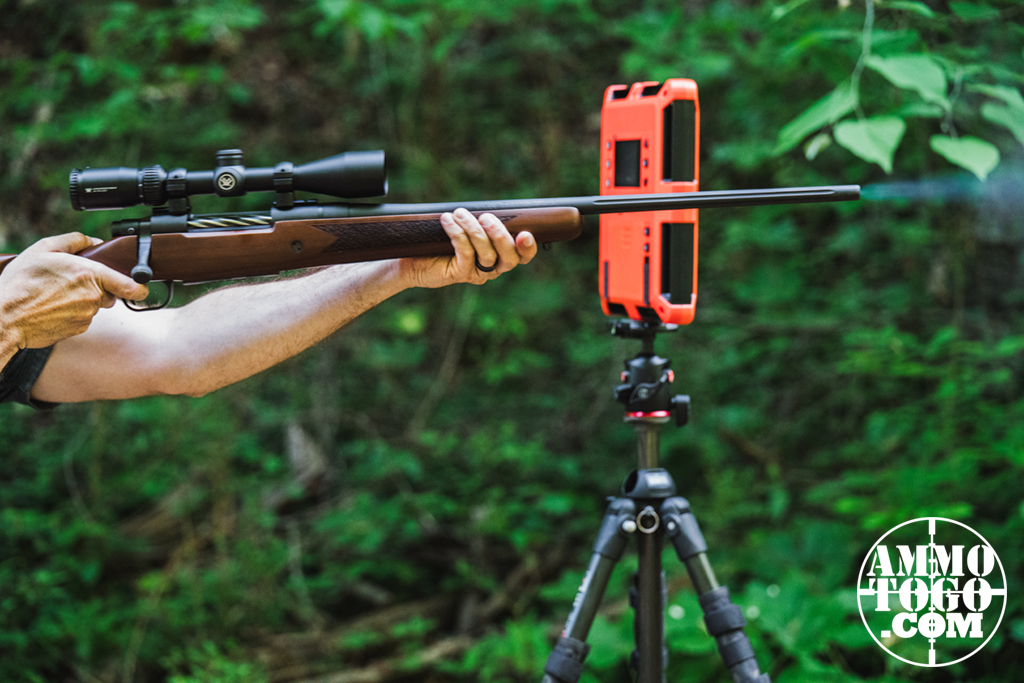
The .30-06 may have an advantage in market conditions, but how does that larger case capacity and different bullet profile impact velocity, trajectory, and performance? We compared four pairs of cartridges, all with the same weights from the same brand, to create a consistent, apples-to-apples examination.
Velocity
| Muzzle (fps) | 100 | 200 | 300 | 400 | 500 | |
|---|---|---|---|---|---|---|
| .303 British 150-gr Power-Shok Rifle (Federal) | 2,690 | 2,442 | 2,208 | 1,988 | 1,780 | 1,590 |
| .30-06 Springfield 150-gr Power-Shok Rifle (Federal) | 2,910 | 2,616 | 2,340 | 2,081 | 1,839 | 1,619 |
| .303 British 180-grain Power-Point (Winchester) | 2,460 | 2,233 | 2,018 | 1,817 | 1,629 | 1,459 |
| .30-06 Springfield 180-grain Power-Point (Winchester) | 2,700 | 2,468 | 2,247 | 2,038 | 1,840 | 1,657 |
| .303 British 180-gr Core-Lokt (Remington) | 2,460 | 2,125 | 1,818 | 1,545 | 1,314 | 1,138 |
| .30-06 Springfield 180-gr Core-Lokt (Remington) | 2,700 | 2,469 | 2,250 | 2,041 | 1,844 | 1,663 |
| .303 British 150-grain InterLock SP (Hornady) | 2,685 | 2,441 | 2,211 | 1,993 | 1,789 | 1,601 |
| .30-06 Springfield 150-grain InterLock SP (Hornady) | 2,910 | 2,637 | 2,381 | 2,139 | 1,911 | 1,700 |
The .30-06 Springfield has a clear speed advantage, although it’s not massive. When comparing two cartridges with the same weights (150 vs 150, for instance), the .30-06 is faster. This should come as no surprise considering the larger case size, which means more propulsion behind the bullet.
Energy
| Muzzle (ft-lbs) | 100 | 200 | 300 | 400 | 500 | |
|---|---|---|---|---|---|---|
| .303 British 150-gr Power-Shok Rifle (Federal) | 2,410 | 1,987 | 1,624 | 1,316 | 1,055 | 842 |
| .30-06 Springfield 150-gr Power-Shok Rifle (Federal) | 2,820 | 2,279 | 1,823 | 1,442 | 1,126 | 873 |
| .303 British 180-grain Power-Point (Winchester) | 2,418 | 1,993 | 1,628 | 1,320 | 1,060 | 851 |
| .30-06 Springfield 180-grain Power-Point (Winchester) | 2,913 | 2,433 | 2,018 | 1,659 | 1,354 | 1,097 |
| .303 British 180-gr Core-Lokt (Remington) | 2,418 | 1,805 | 1,321 | 954 | 690 | 518 |
| .30-06 Springfield 180-gr Core-Lokt (Remington) | 2,913 | 2,436 | 2,022 | 1,666 | 1,360 | 1,105 |
| .303 British 150-grain InterLock SP (Hornady) | 2,401 | 1,985 | 1,628 | 1,323 | 1,066 | 854 |
| .30-06 Springfield 150-grain InterLock SP (Hornady) | 2,820 | 2,317 | 1,888 | 1,523 | 1,216 | 963 |
With faster speeds and bullets of the exact same weight, it’s no surprise that the .30-06 Springfield hits harder. In some of our comparisons, however, the .303 performs well down range. For example, the Federal products (listed at the top) show a power advantage of 410 ft-lbs at the muzzle. However, the .30-06’s advantage has narrowed to 31 ft-lbs at 500 yards.
While the Springfield has more power, the British should not be considered weak. Most of the rounds have over 2,400 ft-lbs at the muzzle and over 800 ft-lbs at 500 yards, which is plenty of force for deer and medium-sized game hunting, especially at moderate distances.
Trajectory
| 100 Yards | 200 Yards | 300 Yards | 400 Yards | 500 Yards | |
|---|---|---|---|---|---|
| .303 British 150-gr Power-Shok Rifle (Federal) | 2 | 0 | -9 | -27 | -57 |
| .30-06 Springfield 150-gr Power-Shok Rifle (Federal) | 2 | 0 | -8 | -24 | -51 |
| .303 British 180-grain Power-Point (Winchester) | 3 | 0 | -11 | -33 | -68 |
| .30-06 Springfield 180-grain Power-Point (Winchester) | 2 | 0 | -9 | -26 | -54 |
| .303 British 180-gr Core-Lokt (Remington) | 3 | 0 | -14 | -43 | -92 |
| .30-06 Springfield 180-gr Core-Lokt (Remington) | 2 | 0 | -9 | -26 | -54 |
| .303 British 150-grain InterLock SP (Hornady) | 2 | 0 | -9 | -27 | -56 |
| .30-06 Springfield 150-grain InterLock SP (Hornady) | 2 | 0 | -8 | -24 | -49 |
Unfortunately for our British cousins, we see another win for the American round. The .30-06 Springfield has straighter trajectories, another advantage we can attribute, at least in part, to the larger case size. Trajectories for the .303 are strong, but it appears the .30-06 flies a little straighter from the rifle to the target.
Recoil
With lighter muzzle energies, we can confidently say that the .303 British will often have a lighter recoil. It should not be considered a low-recoil cartridge, but compared to the .30-06, which has muzzle energies approaching 3,000 ft-lbs, shooters will likely find it more comfortable and easier to shoot, especially for rapid shots.
Which to Choose?
Overall, we can confidently say that most American shooters will prefer the .30-06 Springfield. It’s more affordable, easier to find, and comes in a larger variety. In addition, it delivers stronger downrange speed and energy, as well as better trajectories, thanks in large part to the larger case size.
The .30-06 may be the more famous round in America, but the .303 should not be overlooked. It’s an effective and interesting hunting and target option that delivers lighter recoil; a unique cartridge that is less common at the range and in the field, which many shooters appreciate.
There’s little the Springfield can do that the British can’t, so if you want a refreshing, unique round that is perfectly capable for deer hunting, one that makes a great conversation piece at the range and the field, consider the .303 British.
Choose the .303 British if…
- You want a unique cartridge that few of your shooting buddies use
- You want a little less recoil from a fully capable hunting and target round
Choose the .30-06 if…
- You need greater downrange power for long-distance hunting and large game
- You need an affordable, easy-to-access, well-established American cartridge
Find Ammo Options from Across the Globe
No matter which you choose, we’ll be here to help you find the right cartridges at a price you can afford. Browse our collection today and place your order for affordable, reliable rounds from the world’s leading ammunition manufacturers.