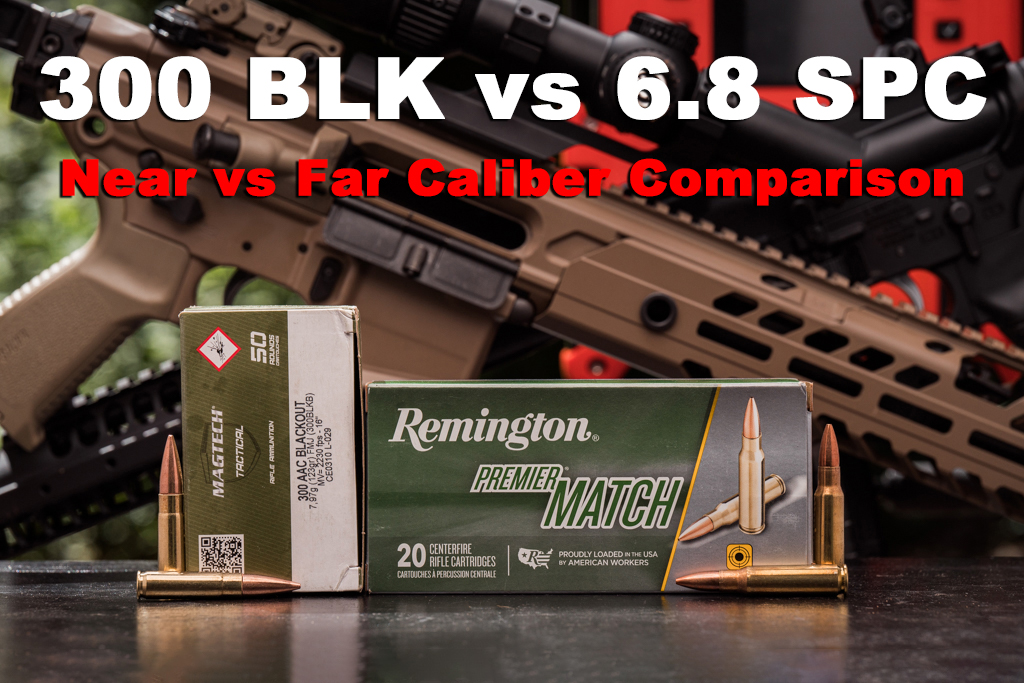


A side by side analysis of 300 Blackout vs 6.8 SPC with ballistic data and more.
If you are looking for a change in your AR-15, something that provides variety from the effective but well-played .223 Remington, the 6.8 Remington SPC and .300 AAC Blackout are two popular options.
The 6.8 Remington SPC, often called the 6.8 SPC, has a reputation as one of the best long-distance rounds for the AR platform. The .300 AAC Blackout, often stylized as the .300 BLK, is known for heavy bullets and subsonic capability.
They are different rounds with distinct purposes. So which is right for your needs? Like everything in the firearms industry, it all depends on how you’ll use the rifle.
.300 BLK or 6.8 SPC: Immediate Differences
| 6.8 Remington SPC | .300 AAC Blackout | |
|---|---|---|
| Released | 2004 | 2010 |
| Bullet Diameter | .277 inches | .308 inches |
| Neck Diameter | .306 inches | .334 inches |
| Base Diameter | .422 inches | .376 inches |
| Case Length | 1.687 inches | 1.368 inches |
| Overall Length | 2.26 inches | 2.26 inches |
| Bullet Weights | 85 - 120 grains | 90 - 220 grains |
| Typical Firearm | AR-style modern sporting rifles | AR-style modern sporting rifles |
Size and Shape Differences
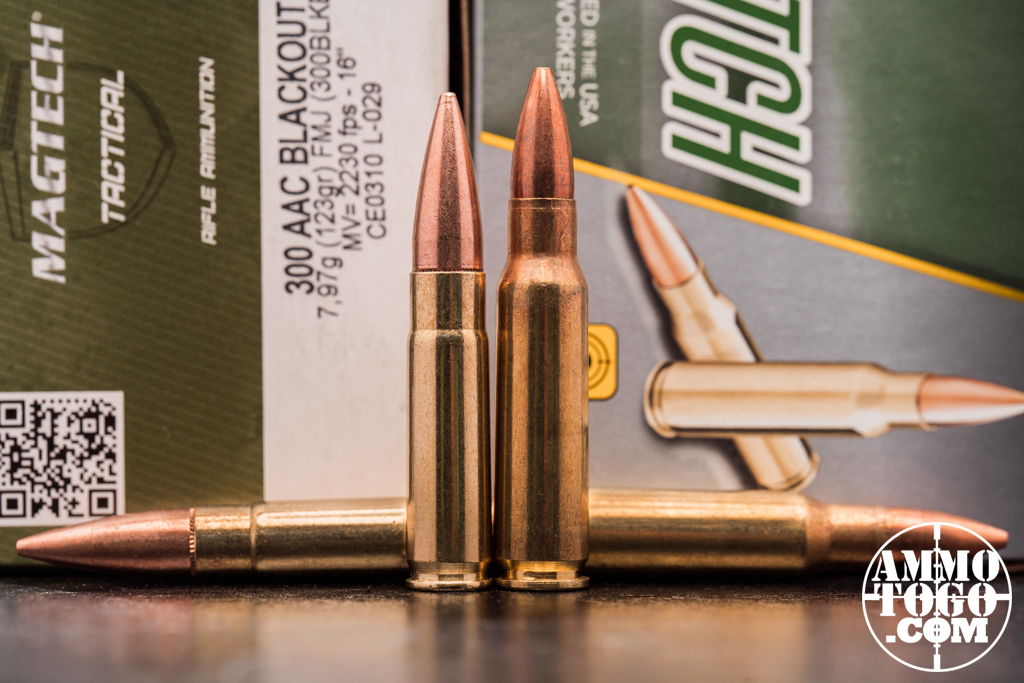
If you study the dimensions of these two cartridges (or simply hold both in your palm), you’ll notice many similarities as well as clear differences. Their similarities include overall length and bullet diameter. (Overall length is exactly the same, while diameter is fairly close.) However, the main difference is the case length.
Despite the same total length, the case on the 6.8 SPC is much larger. In addition, the base length is wider for the 6.8 SPC.
Grain Weight
Although the 6.8 SPC has a larger overall case, the .300 AAC Blackout packs a wider, heavier bullet. There is a lot of overlap in bullet weight, but the 6.8 Remington SPC maxes out at about 120 grains, while the .300 BLK goes as high as 220. (The heaviest bullets give you subsonic 300 Blackout rounds.)
Availability
Finally, there is the simple market reality. If you’re spending hard-earned cash on a rifle, you need to know that ammunition will be available. You can find ammo for either of these rounds typically. That said, most retailers carry more .300 AAC Blackout ammo options than in-stock 6.8 SPC ammo.
When this article was written, we had 50 different options for the .300 BLK. For the 6.8, there were only six options.
.300 BLK vs 6.8 SPC Ballistics
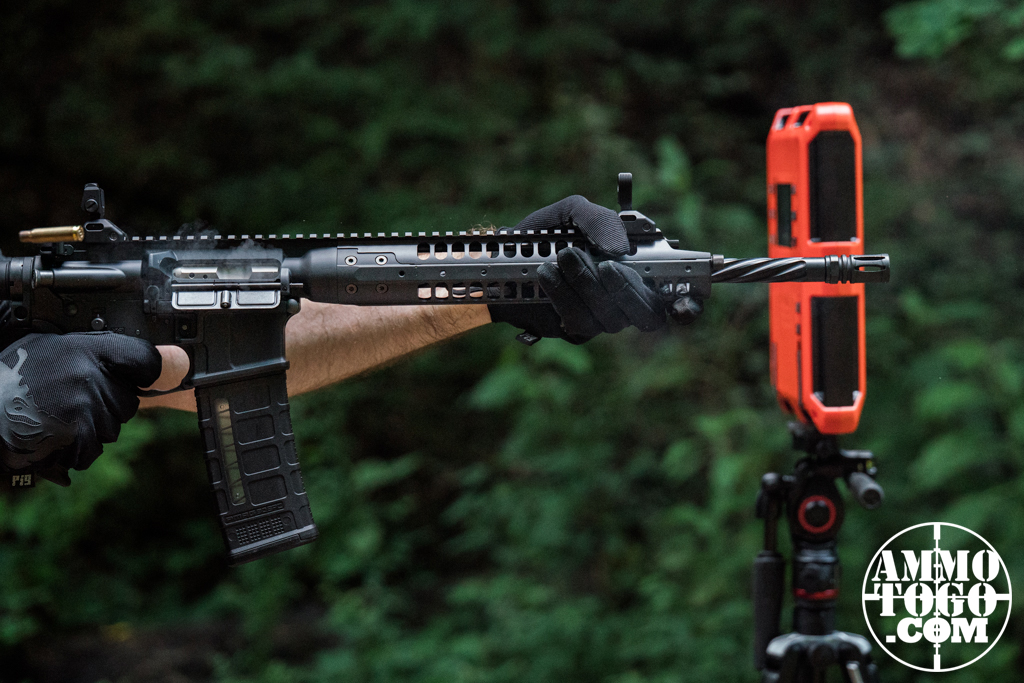
To compare these rounds, we selected two cartridges (one 6.8 and one .300) from three different manufacturers: Hornady, Remington, and Winchester.
One of the pairs holds bullets with the same weight, while the other two have different weights. This should give us a clear picture of the performance differences and capabilities of the rounds. In particular, we selected a 220-grain .300 BLK round, as heavy bullet options are one of the selling points for these cartridges.
Velocity Comparison
| Muzzle Velocity | 200-Yard Velocity |
|
|---|---|---|
| 6.8 SPC 110-grain V-MAX Hornady | 2,550 | 2,100 |
| .300 BLK 110-grain V-MAX Hornady | 2,375 | 1,833 |
| 6.8 SPC 115-grain UMC Remington | 2,625 | 2,053 |
| .300 BLK SPC 220-grain UMC Remington | 940 | 896 |
| 6.8 SPC 115-grain Deer Season XP Winchester | 2,625 | 2,087 |
| .300 BLK SPC 150-grain Deer Season XP Winchester | 1,900 | 1,548 |
The velocity statistics for these two rounds are unsurprising. The 6.8 SPC, with a larger case and more propellant, delivers faster speeds even when the two rounds are packing the same bullet weights. When the .300 BLK is toting heavier bullets, it significantly drops in speed. To be honest, it’s not fair to compare the speed of the 220-grain round to the others, as this is a subsonic cartridge made for suppressed shooting.
Energy Downrange
| Muzzle Energy | 200-Yard Energy |
|
|---|---|---|
| 6.8 SPC 110-grain V-MAX Hornady | 1,588 | 1,077 |
| .300 BLK 110-grain V-MAX Hornady | 1,377 | 820 |
| 6.8 SPC 115-grain UMC Remington | 1,759 | 1,076 |
| .300 BLK SPC 220-grain UMC Remington | 432 | 411 |
| 6.8 SPC 115-grain Deer Season XP Winchester | 1,759 | 1,112 |
| .300 BLK SPC 150-grain Deer Season XP Winchester | 1,202 | 798 |
You may have expected that with heavier bullets, the .300 BLK would have delivered more energy at the muzzle and downrange. However, the speed of the 6.8 SPC appears to make the difference, as it consistently holds strong energies, especially downrange.
The most notable pair is the Winchester group. The 115-grain 6.8, which was much faster than the 150-grain round, has significantly higher energies. At 200 yards, it’s still hitting with 1,112 ft-lbs, indicating that it’s capable of dropping deer and other medium-sized game at this range.
Trajectory
Manufacturers are less consistent with their trajectory information, which makes comparisons more difficult. However, we can say with relative confidence that the 6.8 SPC is more accurate at a distance.
Winchester provides consistent data on their cartridges. When zeroed to 100 yards, the 6.8 SPC drops 4.8 inches. Under the same conditions, the .300 BLK drops 9 inches. Winchester also provides data on the 6.8 when zeroed to 200 yards; they don’t bother providing this information on the .300 BLK, a clear indication of the round’s long-distance limitations.
.300 BLK or 6.8 SPC: How to Choose
The 6.8 SPC is faster, more powerful, and more accurate.
So why even bother with the .300 BLK? If you are looking for a cartridge that can take out varmints, coyotes, and feral hogs within 100 yards, and can be equipped for suppressed shooting, the .300 BLK is your round. You won’t be reaching out to 200 yards, but you can match the bullet with your existing gear for capable shooting.
But if you want more reach, and the ability to knock down larger game animals at a greater distance, the 6.8 SPC is the superior option.
Regardless of your choice, you’ll find affordable rounds right here at ammotogo.com. Whether you need pistol cartridges for your self-defense weapon, shotgun loads for a future hunting trip, or rifle rounds for long-distance target shooting, you’ll find the ammo you need at a price you can afford!