

Deer hunters still rely upon 30-30 Winchester after decades of successful hunts. What makes this a great deer hunting round and what specific ammo choices should you look to if taking a 30-30 into the woods this season?
In 2020, the .30-30 Winchester cartridge celebrated its 125th birthday. Over its lifetime, .30-30 cartridges have put more venison on more family dinner tables than any other cartridge in history.
Far from an outdated relic, .30-30-Winchester is still the go-to cartridge for deer hunters across the country.
Why do deer hunters still love this relatively ancient cartridge when there are newer/faster/cooler cartridges on the market?
One simple reason: It freakin’ works.

What to Feed Your .30-30
Every year, the .30-30 Winchester ranks as one of the top ten best-selling cartridges in America. Every major ammo manufacturer features at least one .30-30 load in their product line-up. Here are a few of our favorites for deer hunting. To see our overall top 30-30 ammo picks, see this broader article here.
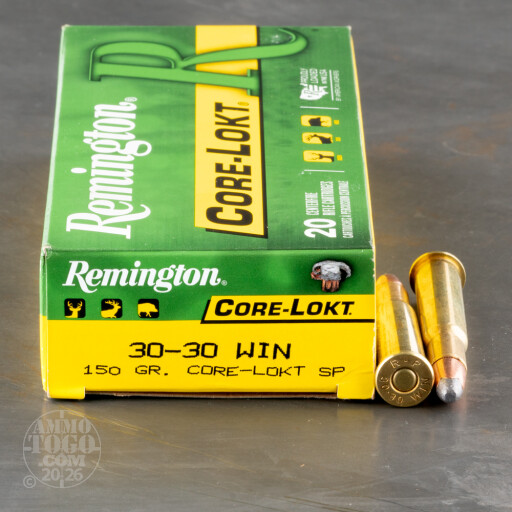
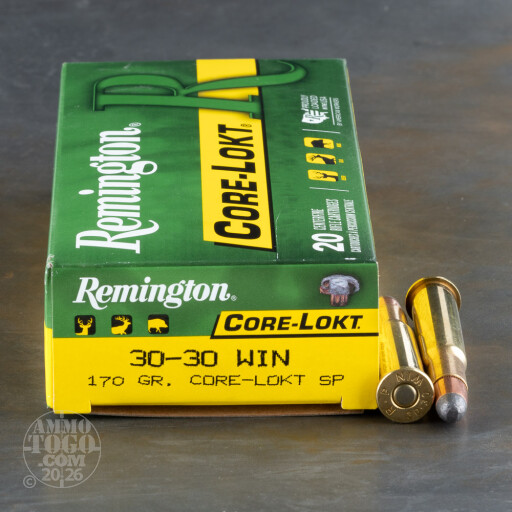
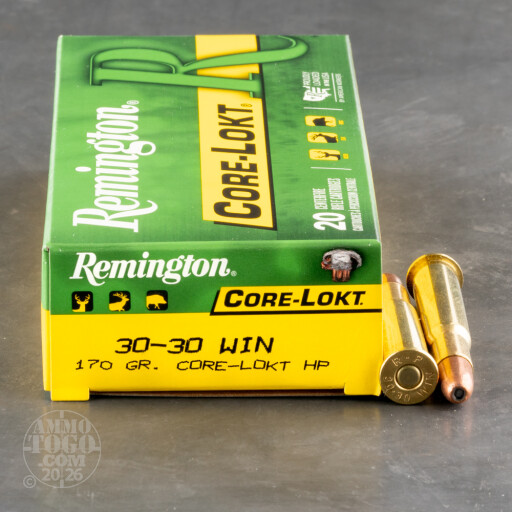
Remington Core-Lokt
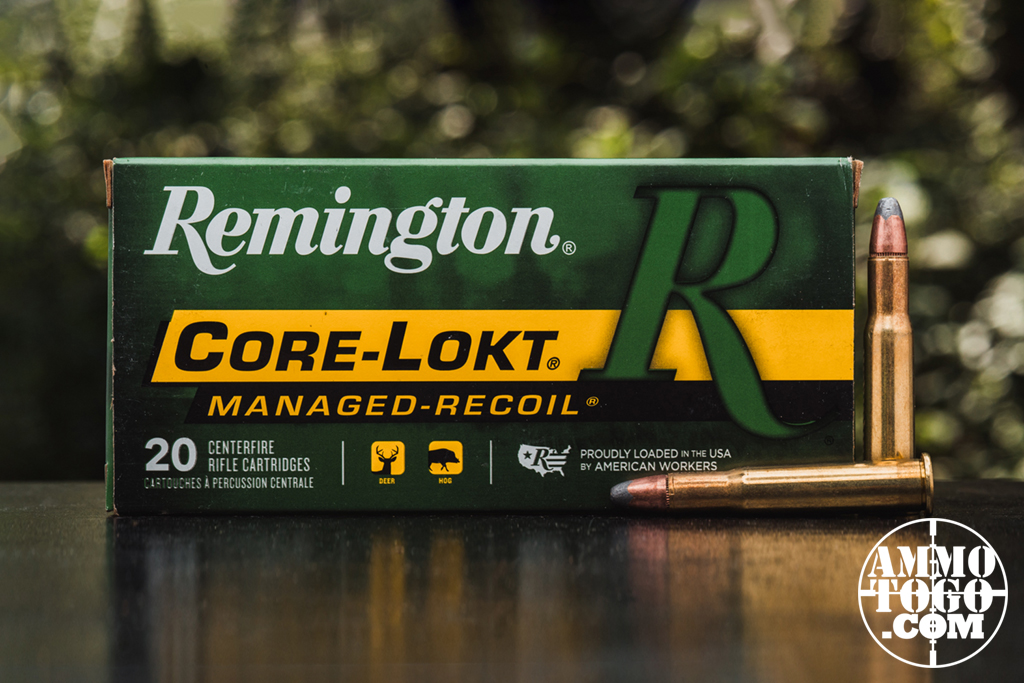
Remington Core-Lokt 30-30 is probably as legendary as the .30-30 lever action. Released in 1939, Core-Lokt has proven its worth on meat poles across the country for more than eight decades.
Core-Lokt’s design is simple, but oh so effective. The basic cup and core bullet offers respectable expansion of about a half-inch in 10% ordinance gel. Surprisingly, because expansion is slow and controlled, a 150-grain Core-Lokt bullet will actually penetrate deeper than a 150-grain .30-caliber bullet fired from a .308 rifle.
Because I’m old-school (and also loyal to a fault), Core-Lokt is what I regularly feed my Winchester ‘94. When I’ve landed one in the boiler room, Core-Lokt has never failed to drop a deer stone-cold dead in its tracks. It’s definitely the “deadliest mushroom in the woods.”




Federal Power-Shok
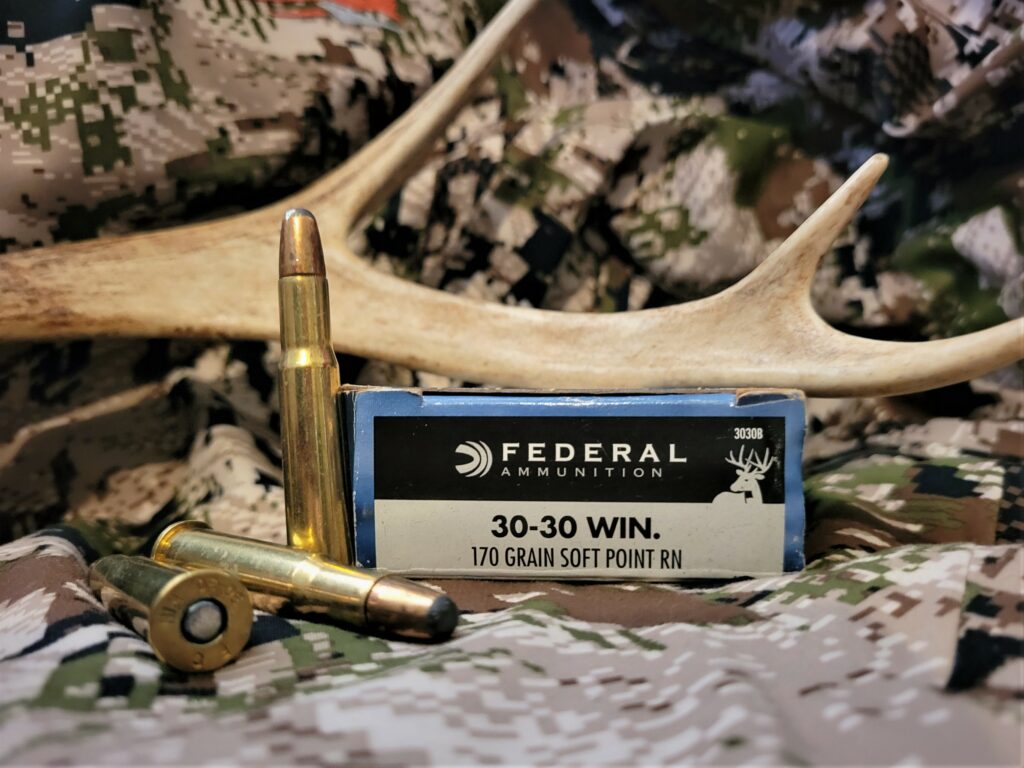
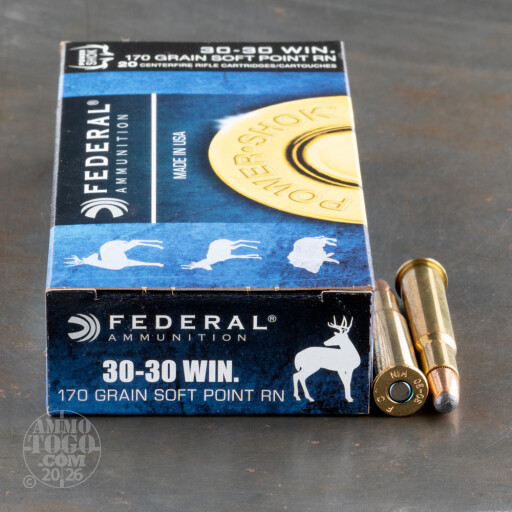
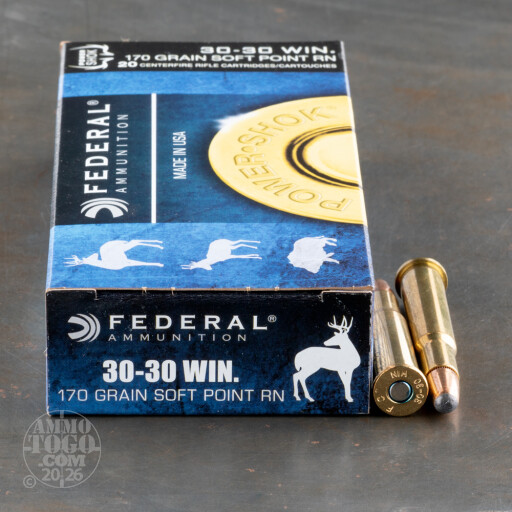
During the great post-Covid ammo shortage, I managed to find a single, dusty box of .30-30 Federal Power-Shok in a random gun store showcase. Although it was insanely over-priced, I snatched it up for the upcoming deer season. It was a smart move on my part because this is the ammo that helped me punch the tag on my biggest North Carolina deer to date.
Like Remington-Core-Lokt, it has a simple jacketed soft point bullet. Although there’s nothing fancy about the Power-Shok projectile, the one fired from my ‘94 managed to plow through a front shoulder like a hot knife through butter.


Federal HammerDown
Engineered specifically for lever actions, Federal HammerDown loads are customized to produce better ballistic performance from the shorter barrels common on lever-action carbines. Federal also tweaked the case geometry to improve function in older side-gate loading lever guns.
Winchester Power Max Bonded
If you prefer the massive expansion of a hollow point projectile, Winchester Power Max Bonded loads work well in a traditional .30-30. Designed specifically for whitetails, these loads feature a notched hollow point that expands violently on impact. The projectile core and jacket are bonded to preserve weight and drive the projectile deeper. Even with the bonded design, these loads are not deep divers. However, they dump a ton of concussive energy on impact and produce a fatally wide wound cavity.
Barnes Vor-Tx
Barnes offers a TSX flat-nose bullet in its Vor-Tx line, and when loaded in a .30-30 cartridge, these bullets are reliable deer slayers. Made from 100% solid copper, these loads are perfect for hunting areas with lead ammo restrictions.
In place of the traditional mushrooming lead core bullet, the TSX expands to form four surgically sharp petals that slice through soft tissue on their way to a deer’s vital organs. The result is massive internal damage and an easy-to-follow blood trail that increases your odds of recovering injured game.
Hornady LEVERevolution
As the name implies, Hornady’s LEVERevolution revolutionized .30-30 ammunition. Before LEVERevolution was released in 2005, lever guns were limited to loads using flat- or round-nose projectiles. Hornady changed all that.
LEVERevolution features a ballistic tip bullet with a sleek spitzer profile that is 100 percent safe for tubular magazines. The patented red elastomer Flex Tip flattens against its neighbor’s primer, preventing that pesky accidental discharge.
Shooters get all the ballistic superiority of a spitzer bullet, minus the danger that pointed projectiles present when loaded end-to-end in a tubular magazine.
The pointed design gives LEVERevolution bullets a higher ballistic coefficient and helps them retain downrange energy. And since Hornady finishes off their LEVERevolution loads with premium powders that produce swifter muzzle velocities, these loads magically transform a 100-yard lever rifle into a 300-yard deer dropper.
If you need to stretch the effective range of your .30-30, there is no better way to do it.
A Brief History Lesson
Once upon a time, in 1895 to be exact, Winchester introduced the first sporting cartridge loaded with modern smokeless powder. Designed to complement Winchester’s now-iconic Model 1894 lever gun, the cartridge was first marketed as .30 Winchester Smokeless. For a time, the cartridge was called .30 WCF (Winchester Center Fire). But like most legendary rock stars with shortened names, today the cartridge is simply and lovingly referred to as “thirty-thirty”.
Winchester’s original .30-30 load was topped with a 160-grain round-nosed bullet. The round nose design was necessary due to the lever guns’ tubular magazine. The long tubular magazine lined up cartridges tip-to-primer. Spitzer-style projectiles could potentially dent the primer of the cartridge in front of it, causing an accidental and catastrophic discharge in the magazine.
Those round-nose bullets left the muzzle at a zippy 1970 fps, which was impressive by 1895 standards. The cartridge’s speed and power certainly contributed to its instant success. So did the lever-action rifle’s easy maneuverability, mild recoil, and reliable, rapid cycling.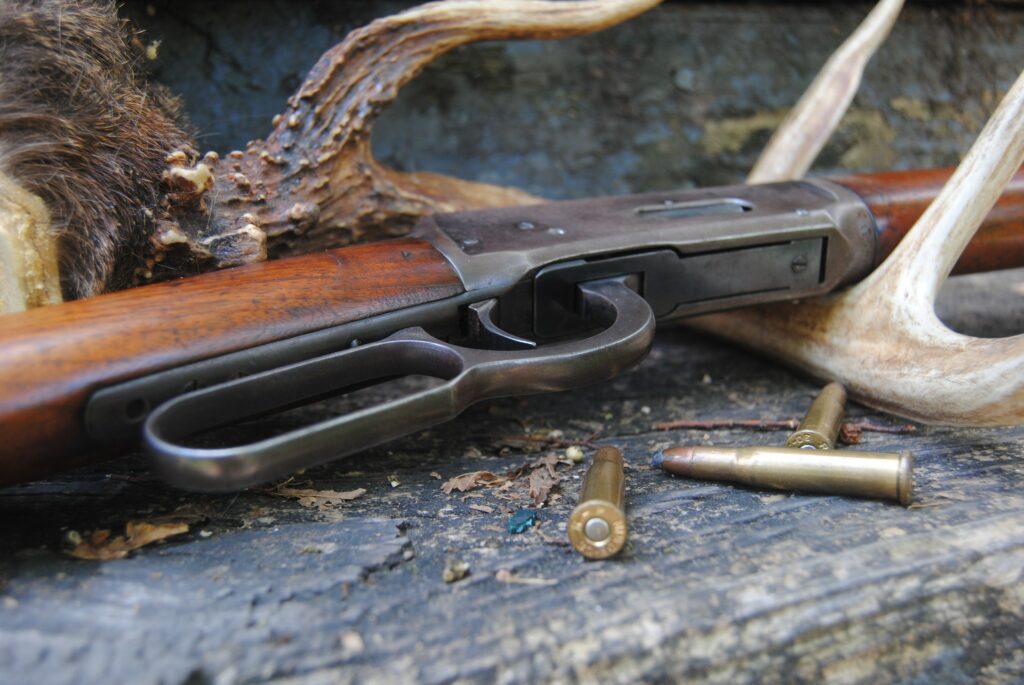
As the .30-30’s early popularity snowballed, ammo companies began producing loads specifically for lever guns. Cartridges topped with 150- and 170-grain bullets became the norm. Today’s .30-30 ammo pushes 150-grain bullets at around 2300 fps. Although modest by modern standards, that is definitely capable of humanely dropping big game at distances within 200 yards.
Modern ammo companies are constantly pushing the technology envelope, and even this vintage cartridge is reaping the benefits. With improved external and terminal ballistic performance, 30-30 Winchester ammo is a better deer cartridge than ever before.
Final Thoughts
The .30-30 Winchester has plenty of critics. There are slews of hunters who regularly deride this time-tested cartridge, calling its performance weak and paltry. However, it is impossible to ignore the hundreds of thousands of deer that have fallen to this cartridge over the past century. While cartridges like the .308 Winchester, .30-06 Springfield, and .270 Winchester are popular hot performers, a well-placed .30-30 round kills deer just as dead, and doing it with a .30-30 lever rifle takes some serious style.