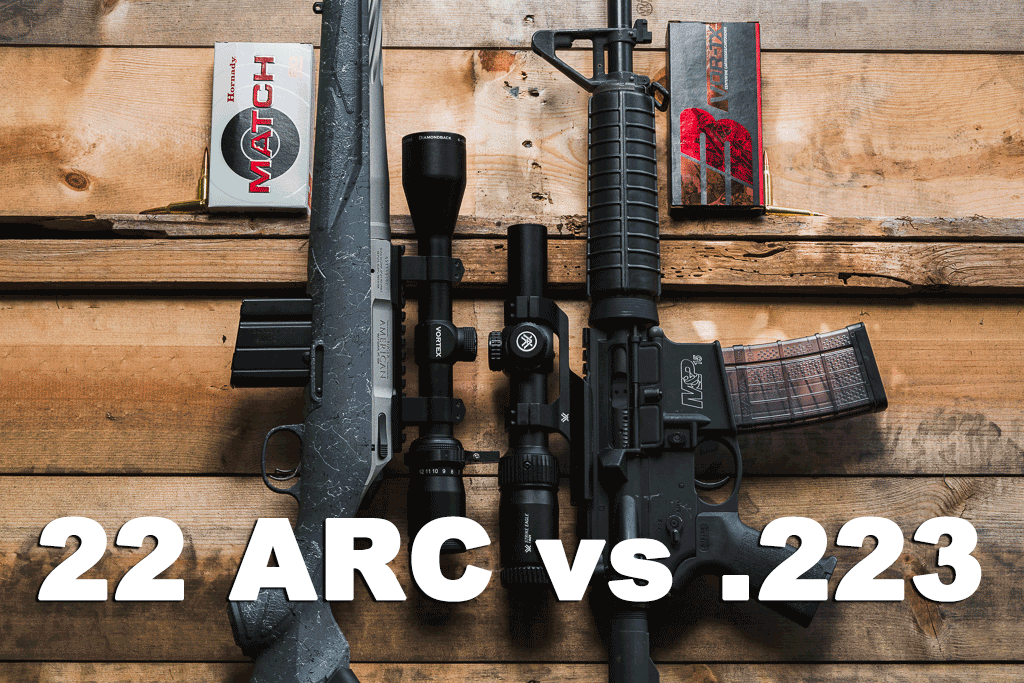


An in-depth look at two 22-caliber rounds, the 22 ARC versus the .223 Remington.
If you go to your local rifle range on a busy Saturday afternoon, you are almost guaranteed to hear the sharp crack of a .223 Remington fired from an AR-15 rifle. The .223 has become the go-to round for the AR platform, essentially dominating the small-arms rifle industry for decades. Numerous rounds have tried to eat away at the .223’s kingdom, and while some have seen decent success, none have taken the throne.
There’s another round trying to take a slice from the .223. The .22 ARC, a fast and powerful round from the free-thinking designers at Hornady, was submitted to SAAMI in 2023. Officially adopted by this industry authority, the .22 ARC is now a commercial factory load. Factory-fresh boxes are ready for American gun owners across the country.
Whenever a new rifle round touches the market, one of the first things people want to know is how the round compares to the .223 Remington. Does it have the speed, energy, and accuracy to become the next great coyote, varmint, and target round? Is it a contender, or just another pretender?
The Short Answer: 22 ARC vs 223
22 ARC delivers better long range velocity than .223 Remington. That also means more power if you’re looking for something to hunt medium game with. Of course, 22 ARC ammo is tougher to come by and is usually more expensive than comparable 223 rounds.
Ultimately, American shooters will decide if the performance upgrades offered by .22 ARC make it viable. So, just how significant are the ballistic differences? Let’s find out by examining these two rounds. With this information, you can decide if one (or both) is right for your needs…
Specs of .22 ARC vs .223 Remington
| .22 ARC | .223 Remington | |
|---|---|---|
| Bullet diameter | .224 inches | .224 inches |
| Case length | 1.525 inches | 1.76 inches |
| Overall length | 2.26 inches (max) | 2.26 inches |
| Bullet weight | 62 - 88 grains | 35 - 77 grains |
| Typical firearm | AR-15 semiautomatic rifles | AR-15 semiautomatic rifles |
Physical Differences
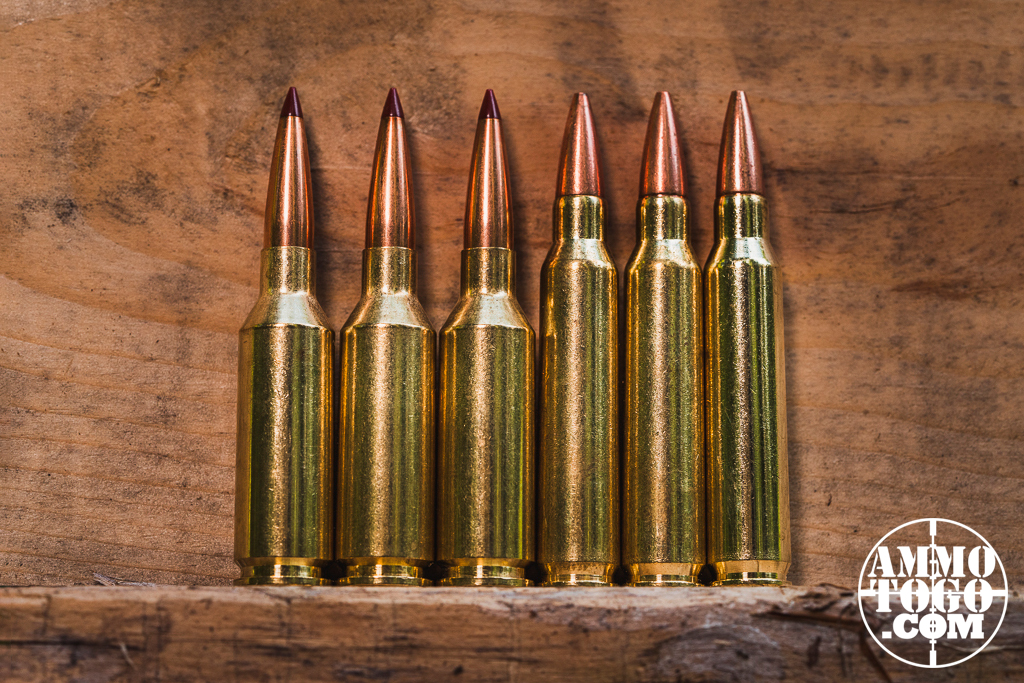
Physically, the .22 ARC is a bit wider. It has a bulkier, fatter appearance compared to the .223 Remington, which is slim by comparison. While they share the same bullet diameter, the wider case allows the .22 ARC to hold more propellant which, we can assume, will come into play when we start comparing ballistic performance.
The .22 ARC also has heavier bullets, although both load projectiles in the range of 62 to 77 grains. The difference is in the margins. The ARC has rounds as large as 88 grains, while .223 Remington ammo is available with lighter bullets, as low as 35 grains.
Market Conditions
There is no contest here. The .223 is a well-established, popular cartridge with massive industry support. Manufacturers make it in droves, gun owners buy it by the pallet. (Possibly an exaggeration, but not entirely.) In contrast, the only major commercial manufacturer currently offering a .22 ARC product is Hornady; they have five options. But for the .223 Remington, they have 20 options. Federal has 19, Remington has 18, and Winchester has 18. (None of these last three offer a .22 ARC.)
If you want affordable rounds in a wide variety of bullets, the .223 Remington is the better choice.
.22 ARC vs .223 Rem Ballistics
To understand the performance differences, we looked at the available ballistic stats directly from manufacturers. We looked at data from the four .22 ARC options that currently have data, as well as four .223 Remington cartridges that represent a range of bullet weights.
Velocity
| .22 ARC | Muzzle (fps) | 100 yards | 200 yards | 300 yards | 400 yards | 500 yards |
|---|---|---|---|---|---|---|
| Hornady 62-grain ELD-VT | 3,300 | 3,044 | 2,803 | 2,574 | 2,357 | 2,150 |
| Hornady 70-grain CX | 3,125 | 2,877 | 2,643 | 2,421 | 2,209 | 2,008 |
| Hornady 75-grain ELD Match Black | 3,075 | 2,868 | 2,672 | 2,483 | 2,302 | 2,129 |
| Hornady 88-grain ELD Match | 2,820 | 2,652 | 2,491 | 2,335 | 2,185 | 2,040 |
| Average for 22 ARC | 3,080 | 2,860 | 2,652 | 2,453 | 2,263 | 2,082 |
| .223 Remington | ||||||
| Hornady 35-grain NTX Superformance | 4,000 | 3,353 | 2,796 | 2,302 | 1,861 | 1,483 |
| Barnes 55-grain VOR-TX | 3,240 | 2,774 | 2,353 | 1,970 | 1,629 | 1,343 |
| Remington 62-grain Core-Lokt | 3,100 | 2,694 | 2,322 | 1,982 | 1,674 | 1,407 |
| Federal 77-grain Gold Medal CenterStrike | 2,720 | 2,471 | 2,235 | 2,012 | 1,803 | 1,612 |
| Average for 223 | 3,265 | 2,823 | 2,427 | 2,067 | 1,742 | 1,461 |
One of the main goals of the .22 ARC was to create superior downrange speeds, which is achieved through higher ballistic coefficients. (Basically, aerodynamic bullets.) This goal has been met. Look at the muzzle velocities; the .223 Remington is, on average, faster. Now look at the 200-yard velocities. The .22 ARC is faster. From 200 yards and out, the .22 ARC ammo is a faster cartridge, a testament to the power of longer, heavier bullets.
Most would call this a win for the .22 ARC, but because the .223 Remington is faster within 200 yards, the maximum distance for many shooters, we’ll call it a draw.
Winner: Draw
Energy
| .22 ARC | Muzzle (ft-lbs) | 100 yards | 200 yards | 300 yards | 400 yards | 500 yards |
|---|---|---|---|---|---|---|
| Hornady 62-grain ELD-VT | 1,499 | 1,275 | 1,081 | 912 | 765 | 636 |
| Hornady 70-grain CX | 1,518 | 1,287 | 1,086 | 911 | 759 | 627 |
| Hornady 75-grain ELD Match Black | 1,575 | 1,370 | 1,189 | 1,027 | 883 | 755 |
| Hornady 88-grain ELD Match | 1,554 | 1,375 | 1,212 | 1,066 | 933 | 813 |
| Average | 1,537 | 1,327 | 1,142 | 979 | 835 | 708 |
| .223 Remington | ||||||
| Hornady 35-grain NTX Superformance | 1,243 | 874 | 607 | 412 | 269 | 171 |
| Barnes 55-grain VOR-TX | 1,282 | 940 | 676 | 474 | 324 | 220 |
| Remington 62-grain Core-Lokt | 1,323 | 999 | 743 | 541 | 386 | 272 |
| Federal 77-grain Gold Medal CenterStrike | 1,265 | 1044 | 854 | 692 | 556 | 444 |
| Average | 1,278 | 964 | 720 | 530 | 384 | 277 |
When looking at velocity, we saw an initial advantage for the .223 Remington but better stats downrange for the .22 ARC. In this comparison, it’s really no contest, as the .22 ARC starts and stays more powerful. All of the ARC rounds sit near 1,500 ft-lbs for muzzle energy, and have nearly 1,000 ft-lbs at 300 yards. The .223 sits around 1,300 ft-lbs, and drops to around 1,000 by 100 yards. With comparable or faster speeds, along with heavier bullets, the .22 ARC is positioned as the more powerful cartridge.
Winner: .22 ARC
Trajectory
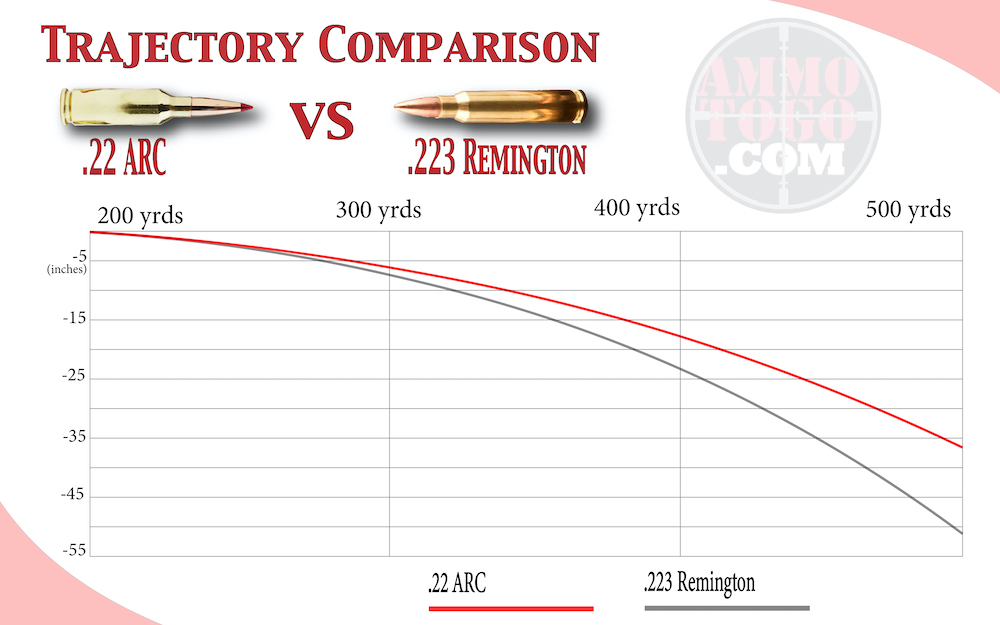
Note: Starting height varies.
The .223 Remington carries a reputation for accuracy, but it appears the .22 ARC actually has superior trajectory stats. The top performer at 400 yards and beyond is the 62-grain ELD-VT .22 ARC product, but the 35-grain .223 performs well also. But with comparable bullets, it seems the .22 ARC, which has better BC ratings, is the more straight-shooting cartridge.
Winner: .22 ARC
Making the Choice between the .22 ARC vs .223 Remington
Shooters won’t be disappointed in either of these cartridges, but one has a clear advantage as a well-established, market-friendly round, while the other is obviously more powerful and delivers straighter trajectories.
Advantages of the .22 ARC:
- Better long-range velocity
- Superior power, suggesting a better round for medium-sized game
- Less drop downrange
- .22-250 performance from an AR-15
Advantages of the .223 Remington:
- A wide range of options from numerous manufacturers
- Lower prices thanks to massive market adoption
- Potential for lighter recoil because of less muzzle energy
From .22-caliber rifle rounds to .45-caliber self-defense pistol loads, we have the ammo you need at a price that fits your budget. Visit our site and place your order today!