

In this article, you’ll find recommendations for low-recoil .308 Winchester ammunition. We’ll go over the uses and limits of low-recoil ammo, then provide our recommendations for both subsonic and sonic rounds.
For some, the .308 Winchester is a hard-hitting, high-recoil cartridge.
Compared to larger, more powerful rounds, the .308 can be mild, largely because it’s fired from a semiautomatic AR-10, which absorbs some of the recoil energy and uses it to cycle the next round. The .308 is considered soft next to rounds like the 7mm Remington Magnum, the .338 Winchester Magnum, and the .450 Bushmaster.
But it can pack a kick. With typical muzzle energies around 2,500 to 3,000 ft-lbs, the .308 overpowers popular rifle cartridges like the 6.5 Creedmoor, .243 Winchester, and .223 Remington.
There are many reasons to consider low-recoil .308 ammunition. Perhaps you want to introduce a new shooter to .308 target practice. Perhaps a smaller, younger, or less experienced shooter wants to take a deer with your AR-10. Perhaps you simply want a softer cartridge for a full day of range shooting.
Whatever your reason, you can find low-recoil ammunition for your .308 rifle while still delivering excellent ballistics.
How We Selected “Low Recoil” .308 Win Ammo
Because it’s the best readily available stat (not necessarily the best, but one that’s available for virtually every product), we use muzzle energy as our defining factor. All of the selected .308 rounds have below 2,500 ft-lbs of energy, making them easier on the shoulder.
Our Picks for Low-Recoil .308 Winchester Ammo
Low-Recoil .308 Ammo: Subsonic Options
One of the best ways to find low-recoil rounds is to start with subsonic .308 ammo. These rounds are intended to be quiet; they are slowed down, ensuring they don’t create a sonic “crack.” They are loaded with heavy bullets and, because they are slow, often have energies below 600 ft-lbs.
Performance between subsonic and sonic ammo is extremely different, so we are separating the two. Comparing them in an even analysis, frankly, would be unfair.
It’s important to remember, however, that most subsonic ammo is not recommended for AR-10 shooting, as it won’t generate enough force to cycle cartridges. That said, here are three excellent options…
Lapua 200-grain Full Metal Jacket
Muzzle Energy: 506 ft-lbs
If you need a low-recoil option for quiet target shooting or close-range varmint control, this round is a fine option. It uses a 200-grain bullet that is non-expanding, making it less effective for medium game hunting.
Winchester 168-grain Super Suppressed Open Tip
Muzzle Energy: 419 ft-lbs
Winchester is one of the leading manufacturers of .308 ammo, making a wide variety of products for nearly every purpose. This large selection includes a 168-grain subsonic .308 round that uses an open-tip bullet. Made for the range, this round offers surprising accuracy and tight grouping.
Standard Velocity Low Recoil .308 Ammo
Now we’re ready to move into low-recoil .308 Winchester ammo that offers excellent downrange ballistics and terminal energy. Each one is different, but even these light options deliver advanced ballistics at a distance.
Black Hills 125-grain Gold CX
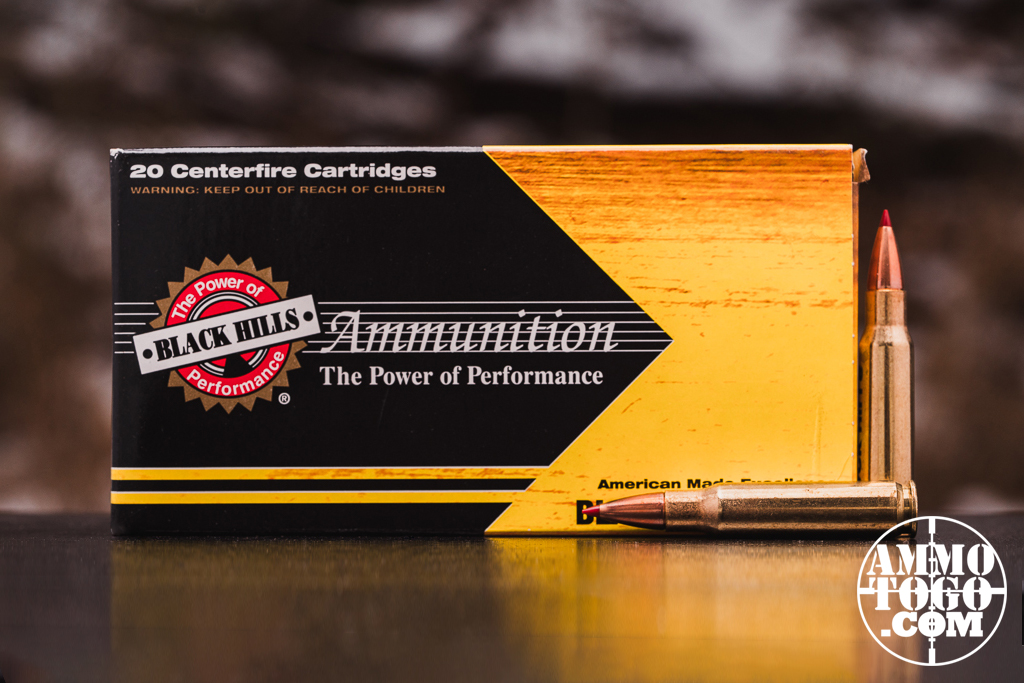
Muzzle Energy: 2,498 ft-lbs
Black Hills Ammunition is one of the most trusted names in the ammo industry. While they are known for high-performance hunting cartridges, this 125-grain round ensures lighter recoil thanks to a muzzle energy rated below 2,500 ft-lbs.
The CX bullet from Hornady has a ballistic polymer tip, colored red for easier identification. It’s also a lead-free option, creating habitat-friendly hunting and target shooting. It also has a Heat Shield tip that keeps it from deforming in midair.
Nosler 110-grain Varmageddon FB Tipped
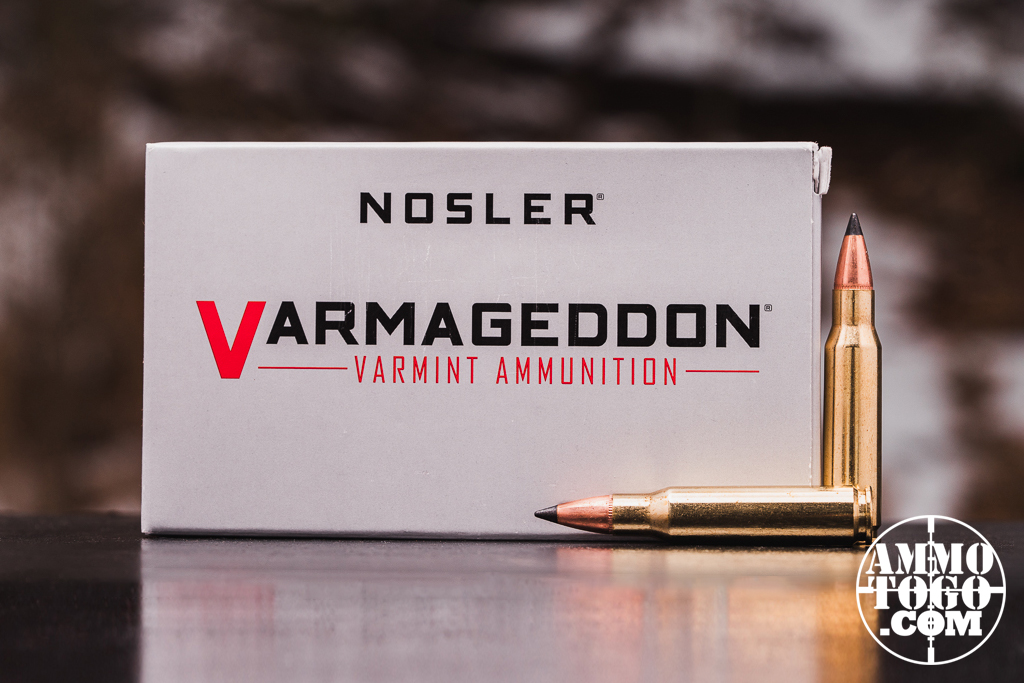
Muzzle Energy: 2,423 ft-lbs
Varmint hunters are familiar with the Varmageddon brand, a line of ammo that delivers high velocities and advanced terminal performance. Made specifically for small game and varmints, this is a go-to choice for coyotes, wood chucks, and even prairie dogs. With a lighter bullet, it has excellent muzzle speed yet maintains an easy recoil.
Downrange accuracy is excellent with this 110-grain product. When zeroed to 100 yards, it only drops 2.9 inches at 200 yards. At this distance, varmint hunters get nearly laser-straight performance.
Sellier & Bellot 180-grain Full Metal Jacket
Muzzle Energy: 2,324 ft-lbs
Other than the subsonic cartridges, this is the heaviest load in our low-recoil list. With a 180-grain bullet, this package is among the biggest typical loads for .308 Winchester ammo. It not only delivers excellent muzzle power, it’s one of the top rounds for trajectory despite having a muzzle speed of only 2,411 fps.
The FMJ bullet is perfect for target shooting, and with a manageable price the cartridge is great for an afternoon at the range.
Barnes 110-grain VOR-TX Reduced Recoil
Muzzle Energy: 2,069 ft-lbs
We see a lot of 110-grain bullets on this list. It seems to be a sweet spot for high performance with low recoil, especially for varmint hunting and target shooting.
This all-copper round is perfect for moderate recoil and downrange accuracy. Even at 300 yards, it has excellent stats. When zeroed to 100 yards, it only drops 3.7 inches at 200 yards and still hits with 1,311 ft-lbs. This makes it a great option for light yet effective long-range deer hunting.
Hornady 125-grain Custom Lite SST
Muzzle Energy: 1,986 ft-lbs
When it comes to advanced engineering and ballistic research, few companies do it better than Hornady. While not a household name like Winchester or Remington, no company has influenced the firearms and long-range shooting industries more than Hornady.
This reduced-recoil ammo is a prime example. The round has less than 2,000 ft-lbs of muzzle energy, yet maintains nearly 1,000 ft-lbs of energy at 300 yards.
Remington 125-grain Managed Recoil Core-Lokt PSP
Muzzle Energy: 1,964 ft-lbs
Remington’s Core-Lokt brand is a go-to option for deer and elk hunters, delivering advanced penetration and expansion. With this Managed Recoil product, which uses a pointed soft-point bullet, recoil-sensitive hunters can enjoy the same consistency without a massive kick. Remington even claims that the cartridge gives “50% less recoil” than similar products.
The Core-Lokt brand has been in action since 1939 and has remained relatively unchanged. It’s trusted by hunters and has become a common option for deer and elk.
Sellier & Bellot 110-grain eXergy Blue
Muzzle Energy: 1,868 ft-lbs
This ammunition has all the benchmarks of a high-cost product. With a polymer tip and all-copper construction, this could be among the most expensive .308 Winchester products on the market. But somehow Sellier & Bellot can offer this low-recoil round at an affordable price.
Although the product is not marketed as “low recoil,” it sits among others that do. With a muzzle energy of only 1,868, this is one of the lightest-thumping .308 cartridges you can buy, regardless of marketing.
How to Pick Low-Recoil Rifle Ammo
We’ll provide specific ammo recommendations, but you can make your own selection. Choosing low-recoil ammo is easier than you might think; just look for a few specific characteristics.
First, search for ammo with low muzzle energy. While muzzle speed can indicate recoil, muzzle energy is a better factor. As we know from science class, for each action there is an equal and opposite reaction. Using this principle, we know that when muzzle energy, the initial forward-moving power, is higher, the rearward force will also be higher. So while muzzle energy is not a perfect indication of recoil, it’s the best factor outside of felt recoil statistics, which literally measure the recoil force and take into account rifle style, weight, and other factors. These numbers are not available from manufacturers. Muzzle energy, however, is a commonly available stat, one that most manufacturers publish on their ammo boxes or websites.
Next, look for light bullets. Generally speaking, a lighter bullet will deliver easier recoil. The .308 Winchester runs from about 100 to 200 grains, with the majority of products around 150 to 180 grains. Most low-recoil .308 Winchester ammo (as we’ll see) runs from about 100 to 125 grains. This is not always the case, however. If the round has a low velocity, energy will decline and so will recoil. The 180-grain FMJ from Sellier & Bellot, for instance, is a heavy cartridge that we’ve included in our list.
Lower muzzle velocities also suggest low recoil, but it will need to be factored with light bullets. A heavy bullet paired with low velocity can still deliver a kick.
So if you’re choosing your own ammo, look for low energies, light bullets, and slow muzzle velocities.
Basic Rule: Low Recoil = Limited Range
Before we give you our top choices and recommendations for low-recoil .308 ammunition, we must discuss one important factor: if recoil is low, downrange performance often declines. While there are ways around this principle, generally speaking if you need low-recoil ammo you will have less downrange speed and energy. The trajectory and accuracy of the bullet could suffer as well. This may not be a concern for a casual target shooter plinking cans at 100 yards, but for a hunter or long-range competition shooter, it is an issue. Keep this in mind and act responsibly when selecting low-recoil ammo, especially when using it on deer, elk, and other game animals.
Low-Recoil, Low Cost: It’s All Right Here
Whether you need a soft recoil cartridge or a hard-hitting long-distance round for big-game hunting, we have what you need. Visit our site today and you’ll get all the rounds you need at a price you can afford!