


This article reviews the basics of AR magazines, including the main components and most popular features. You’ll learn how to make the best choice for your next magazine, and we’ll also review the benefits and downsides of the top magazine brands.
This article will review the basics of an AR magazine, including the main components and most popular features. Readers will learn how to make the best choice, and we’ll also review the benefits and downsides of the top magazine brands.
The modern AR user has countless options. Not only are there numerous companies making hundreds of different rifles, there are thousands of features and accessories, from custom stocks to barrel modifications.
Even choosing a magazine has become difficult, as there are numerous companies creating a huge variety of magazine options.
Choosing an AR-15 Magazine: The Top Brands
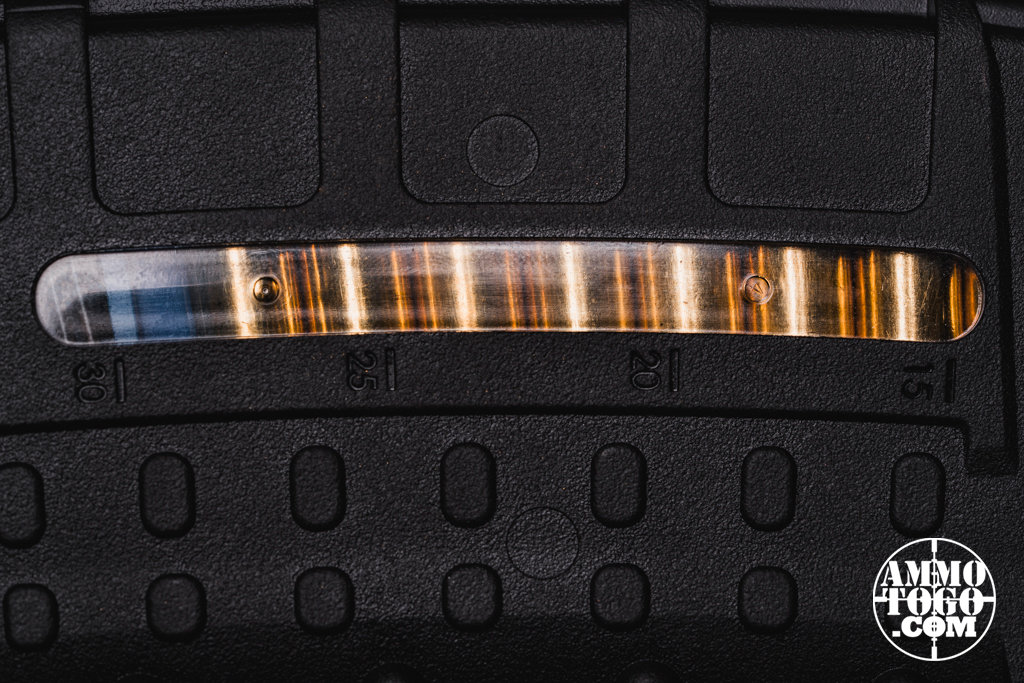
There’s a lot to consider in a magazine, but once you understand the basic components and factors to consider, you are well-equipped to make the right choice.
Today’s AR user has many options, thanks in large part to the dozens of companies (possibly hundreds) that make AR rifles, magazines, and accessories. Here are three of the top names in AR magazine production…
Colt
Officially known as Colt’s Manufacturing LLC, this is one of the original AR companies. They create magazines with simple, no-nonsense designs and have many options, primarily metal magazines. Reasonably priced at roughly $10 to $30, Colt magazines have a reputation for quality and performance. They are trusted and tough, although a few generations of their followers have a poor reputation. While sturdy, the metal construction can dent or bend, and they lack modern high-tech features like anti-tilt followers and round windows.
But if you want a classic magazine with no frills, look to Colt.
Magpul
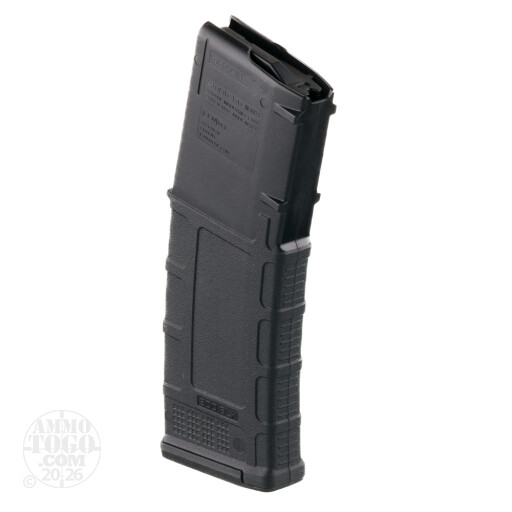


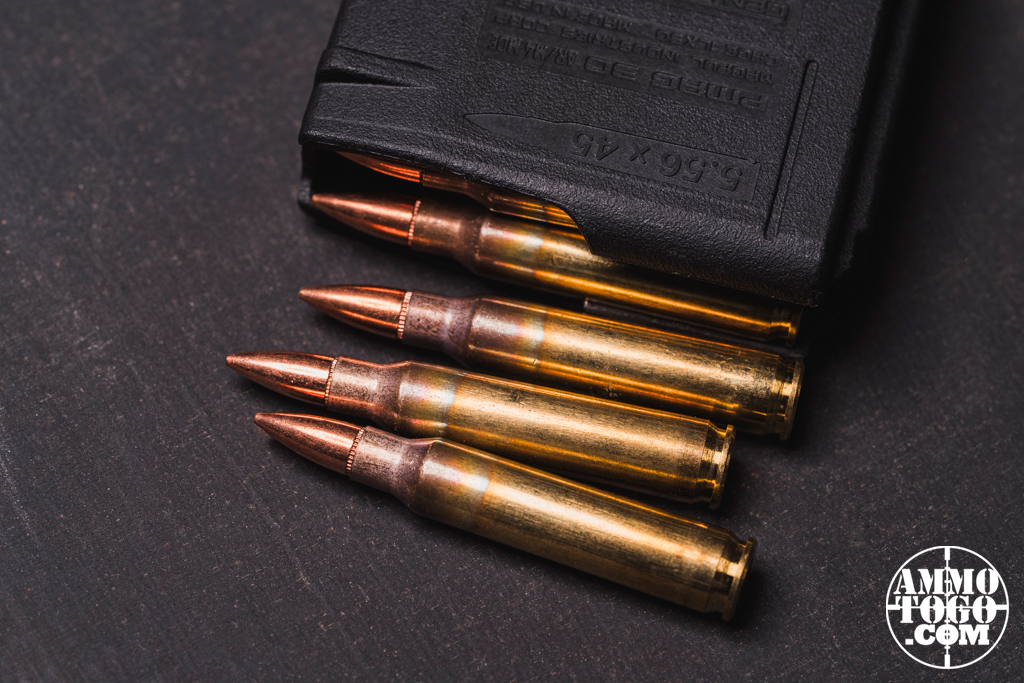
Creator of the PMAG magazines, Magpul is a popular choice for both civilians and law enforcement. These products use innovative designs that make them attractive to shooters of all skill levels, and the company has a reputation for highly reliable performance. They are also affordable despite being made from advanced polymers. This company makes windowed and non-windowed options, giving shooters plenty of choices.
Lancer
Another extremely popular brand, Lancer magazines blend steel and polymers, giving shooters the benefits of both. They come with a higher price compared to most, but they have a polymer body with steel feed lips, creating one of the most durable AR magazines on the market. They are favored by tactical and competition shooters across the country.
Understanding Magazines: A Brief Tutorial
To make the right choice, you need to understand the magazine itself, as well as the most important factors. After all, we’re here to teach you to fish, not just hand you a nice seafood dinner.
While there are a variety of detailed components and various features, broadly speaking a magazine is built with four main components. Understanding these parts, and the role they play in the magazine’s performance, will help you make more informed decisions when you purchase a magazine. For the most part, these components are not exclusive to AR magazines; they apply to handgun and other rifle magazines as well.
Body
The main part is the body, sometimes called the shell. This is the outer frame of the magazine, the component that houses all the other features.
Traditionally, AR-15 magazines were built from metal, either aluminum or steel. Metal magazines remain a common sight in the AR community, but polymer has become the industry standard. Polymer magazines, which are made popular by brands like Magpul, are lighter and more resistant to damage and dents. But beware; cheap, low-quality polymers can be brittle and easy to damage.
Magazines with metal bodies can be durable and rigid, and they often have durable feed lips, the parts that connect the magazine to the chamber. Metal is also considered more resistant to heat damage, and often has a low price thanks to advanced mass production.
Follower
The follower is a piece of polymer or metal that sits underneath the ammunition in the magazine. It’s pushed upward by the follower spring, which we will discuss below. It helps keep the ammo aligned so that it can be fed into the rifle. Essentially, it acts as a platform that keeps the ammunition in the right place.
There are many types of followers, including metal and polymer. There are also self-lubricating and hybrid followers, which help reduce friction as the ammo moves upward toward the rifle. Anti-tilt followers are made to prevent jams by maintaining a proper alignment.
High-visibility magazines are a popular feature in magazines. These help users easily see the follower, telling them how much ammo is left. (If the follower is approaching the top, it tells the shooter that ammo is almost gone.)
A reliable magazine follower is crucial for feeding the rounds properly into the chamber.
Follower Spring
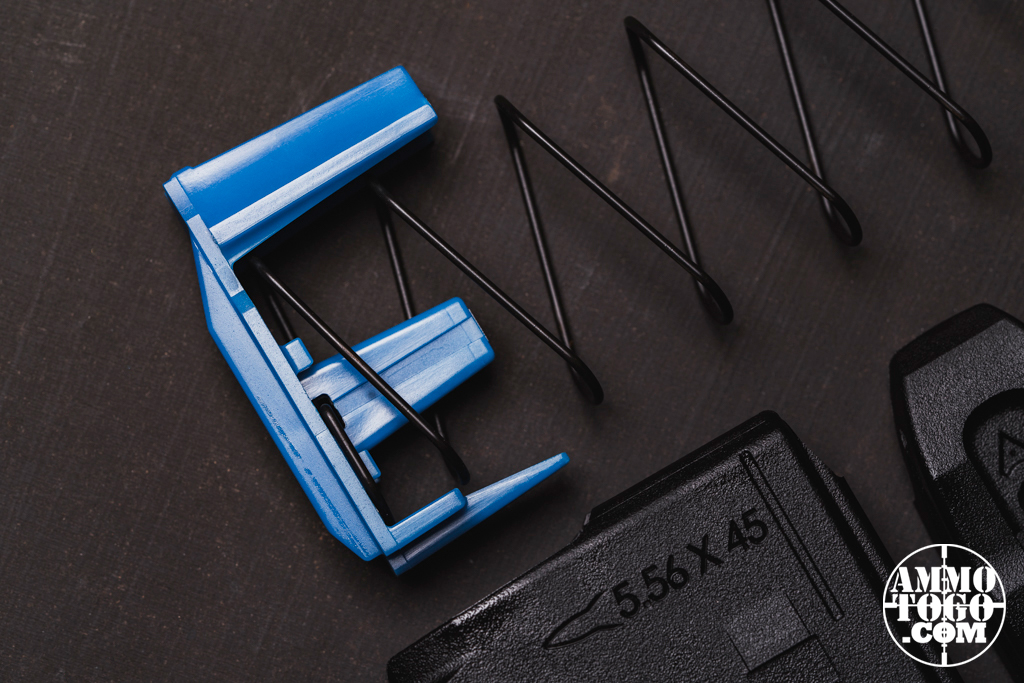
Underneath the follower is the follower spring. This component pushes the follower and ammunition upward, forcing the rounds into the chamber. By applying upward force, the spring ensures consistent and reliable feeding.
Magazine springs are usually made from steel, with round wire being the most common design type.
Manufacturers have started to design “constant force” springs. The thought is that traditional coiled springs have more pressure when pressed down, such as when the magazine is fully loaded. However, when the magazine is nearly empty, the spring is elongated and delivers less pressure. There is a “force gradient,” with more pressure when the mag is full, less when it’s nearly empty. This impacts feeding and also makes it harder to load a nearly-full magazine.
Floor Plate and Base
At the bottom of the spring is the base, also known as the base plate. This component sometimes has a removable plate called the floor plate, although in many designs the floor and base plates are one piece.
What to Consider When Choosing an AR-15 Magazine
Materials
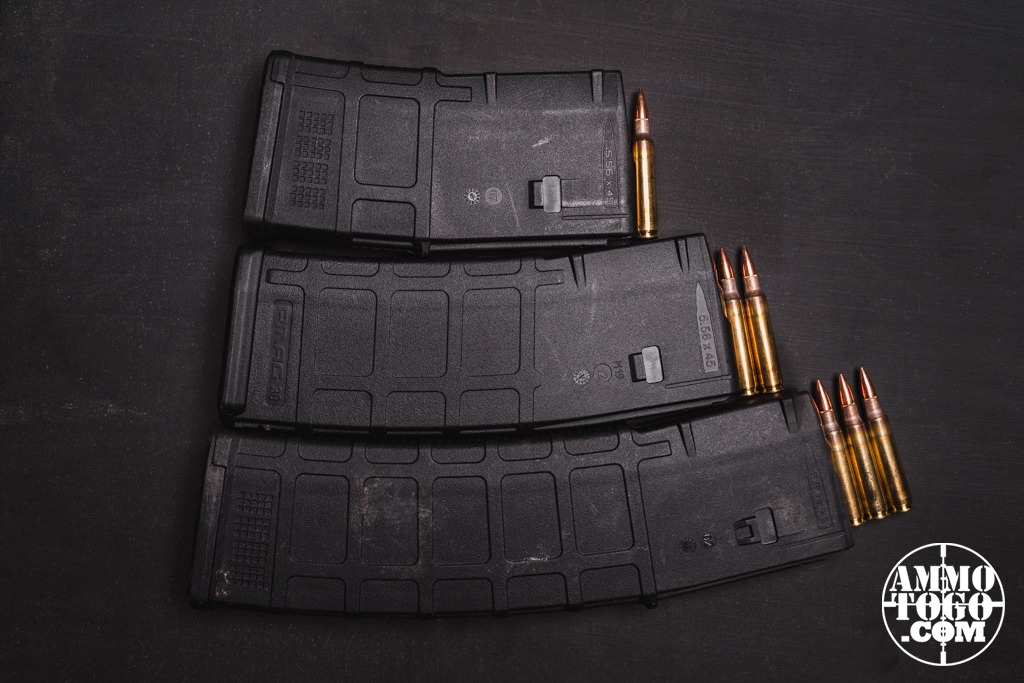
The construction material makes a huge impact on the performance of a magazine. As we discussed above, magazine bodies are typically made from either metal or polymer, although some, called “hybrids,” are made with both. Each material offers a trade-off of benefits and disadvantages.
Generally speaking, polymer magazines are resistant to damage and corrosion, but they often crack at the feed lips, making them difficult, if not impossible, to use. Polymer is flexible, making it more resistant to smashing or breaking if dropped. Most polymer magazines are lighter than a typical metal magazine, although aluminum options are lightweight as well.
Metal magazines offer superior strength, although they are not necessarily more durable, as their rigidity makes them breakable.
Capacity
This is one of the defining factors for magazines; more capacity is often the motivation for purchasing a different magazine. A typical AR-15 magazine holds 30 rounds, although higher- and lower-capacity magazines are available. A high-capacity magazine allows for more shots with less reloading, an advantage at the firing range. However, these magazines add bulk and weight.
Low-capacity magazines may be required by law in your area, but there are other advantages to using these accessories. They can be useful in hunting and precision shooting while creating a smaller profile for the rifle.
Intended Use
The intended use for your firearm matters when you are choosing a magazine. Whether you are hunting, using the rifle for home defense, or participating in shooting competitions, the activity makes a big difference in your choice.
For hunting, many prefer a low-capacity magazine, which has a smaller profile and makes the rifle easier to carry, shoulder, and operate in thick brush. Some hunters, however, prefer large-capacity magazines for clearing pests and varmints. Hog or prairie dog hunters, for example, may want a large-capacity magazine.
Lightweight magazines are usually the preferred choice for anyone participating in competitive events. Rugged, durable magazines that balance capacity and weight are selected for tactical and defensive purposes. Consider a variety of factors, such as weather and environmental conditions, and choose a magazine that fits these needs.
Price
We all want the best equipment, but everyone operates on a budget. There are some excellent magazines available that offer a superior value, giving users access to reliable products at a fair price. Like all types of equipment, the cost varies widely. You can purchase a magazine for roughly $15, or you can spend $150.
The choice is yours, but consider the needs and challenges you’ll be facing before you decide on a budget. If you are simply using the AR for hobby shooting, a low-cost magazine is probably fine. But if you are using the rifle for personal protection or elite competition, you may have a larger budget.
Features
You’ll also want to consider the various features available from a magazine. We won’t cover every single available feature, but items like anti-tilt followers or removable plates enhance the effectiveness and convenience of your AR.
For example, an anti-tilt follower improves the reliability by improving the chambering process in your weapon. You are less likely to experience jams with these features, so they are often preferred by tactical shooters and home-defense AR users.
Removable floor plates are another popular feature for AR magazines. These make it easier to clean and maintain the magazine, so they are especially popular in dusty environments or for ARs that will be used for hunting.
If you want to track ammunition capacity as you fire, a round indicator is a great choice. These are basically brightly-colored followers that can be seen through a clear portion of the magazine. Essentially, they give a visible indication when a magazine is getting low.
Fill Your Magazine with Affordable .223 Remington Ammo
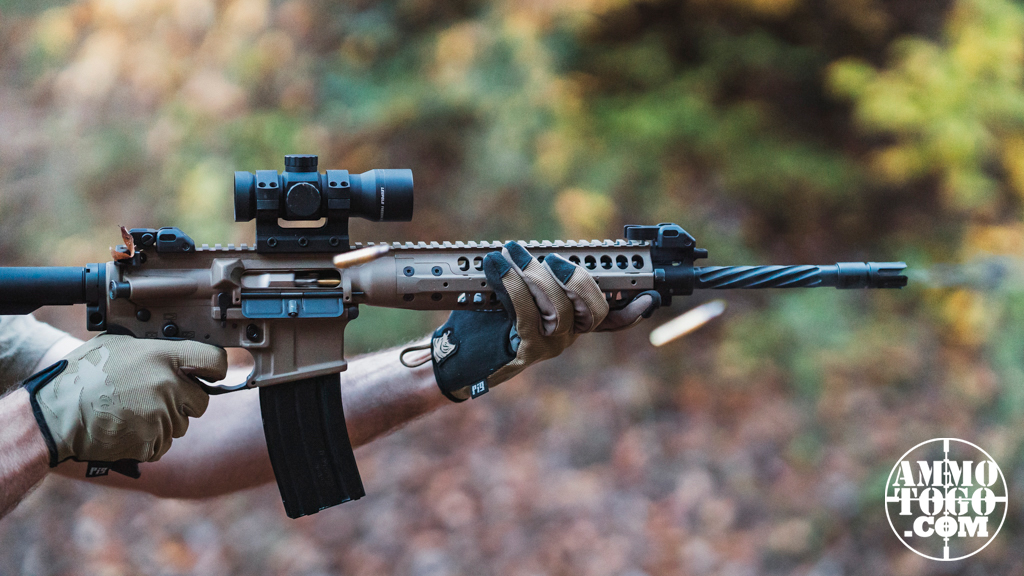
The .223 Remington is the most popular AR cartridge in the country. But it’s not the only one! When you visit our site, you can browse through the most popular AR cartridges, including the 6.5 Grendel, .300 AAC Blackout, and the .450 Bushmaster. Of course, we have a ton of .223 and 5.56 ammunition in-stock too!
When you need high-performance rounds at a fair price, visit our site and place your order today!