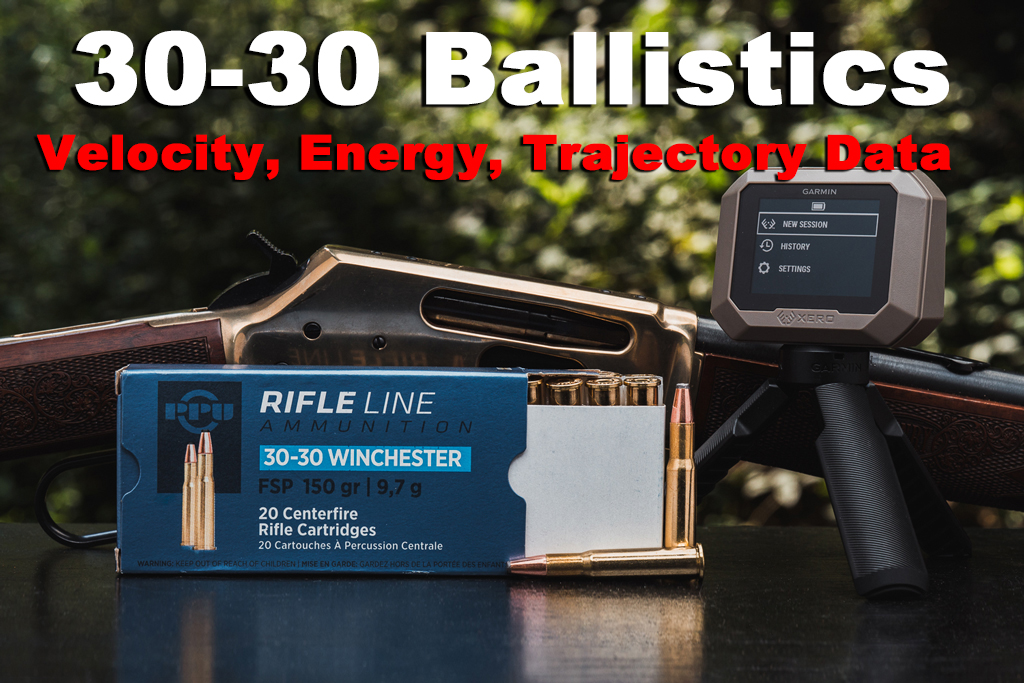
A look at 30-30 Winchester ballistics including velocity, energy and drop data for some of the most popular loads among American shooters.
30-30 is among the most tried-and-true calibers among American outdoorsmen and shooters. So, what about the rifle caliber’s ballistics gave it staying power? Let’s explore what it’s capable of to find out.
.30-30 Win Fast Facts
- While over 100 years old, the 30-30 Winchester ammo one of the most popular rifle cartridges in America.
- Considered the entry-level round for hunting large game. Effective at dropping deer and black bear, yet most factory 30-30 loads lose efficacy for such hunting at distances greater than 200 yards.
- Best suited for hunting in wooded areas where long distance shots don’t present themselves.
- Outdated according to modern standards, but its nostalgia and some measurable advantages ensure the 30-30 will not fade into obscurity anytime soon.
30-30 Ballistic Chart
| Energy (Ft. Pounds) | Bullet Drop (Inches) | Ballistic Coefficient | ||||||||||||||||||||
|---|---|---|---|---|---|---|---|---|---|---|---|---|---|---|---|---|---|---|---|---|---|---|
| Ammo Name | Barrel Length | Muzzle | 100 Yards | 200 Yards | 300 Yards | 400 Yards | 500 Yards | Muzzle | 100 Yards | 200 Yards | 300 Yards | 400 Yards | 500 Yards | Muzzle | 100 Yards | 200 Yards | 300 Yards | 400 Yards | 500 Yards | G1 | G7 | Sect. Density |
| Prvi Partizan 170 Grain FSP | 24 | 2182 | 1878 | 1605 | 1369 | 1182 | 1054 | 1798 | 1332 | 973 | 707 | 527 | 419 | -1.5 | 4.2 | 0 | -17.8 | -54.3 | -115.7 | 0.254 | 0.136 | 0.254 |
| Federal Power Shok 170 Grain SPRN | 24 | 2200 | 1894 | 1619 | 1380 | 1191 | 1060 | 1827 | 1354 | 990 | 719 | 535 | 424 | -1.5 | 4.2 | 0 | -17.4 | -53.5 | -114.4 | 0.258 | 0.148 | 0.254 |
| Federal Power-Shok 150 Grain JSP | 24 | 2390 | 2019 | 1686 | 1399 | 1179 | 1037 | 1902 | 1358 | 947 | 652 | 463 | 358 | -1.5 | 3.6 | 0 | -15.9 | -50.1 | -109.8 | 0.218 | 0.11 | 0.224 |
| PMC 150 Grain SPRN | 24 | 2390 | 1902 | 0.224 | ||||||||||||||||||
| Winchester Super-X 170 Grain Power Point | 24 | 2200 | 1879 | 1591 | 1346 | 1158 | 1034 | 1827 | 1333 | 955 | 684 | 506 | 404 | 0.6 | 0 | -9 | -32 | -74.2 | -141.7 | 0.246 | 0.14 | 0.254 |
| Prvi Partizan 150 Grain FSP | 24 | 2379 | 2026 | 1707 | 1431 | 1209 | 1060 | 1885 | 1367 | 971 | 682 | 487 | 374 | -1.5 | 3.5 | 0 | -15.6 | -48.3 | -104.9 | 0.229 | 0.12 | 0.224 |
| Hornady LeveRevolution160 Grain FTX | 24 | 2400 | 2150 | 1917 | 1700 | 1504 | 1332 | 2047 | 1643 | 1305 | 1027 | 804 | 630 | -1.5 | 3 | 0 | -12.5 | -37.2 | -77.2 | 0.33 | 0.166 | 0.241 |
| 24 | 2390 | 1973 | 1606 | 1304 | 1095 | 975 | 1902 | 1297 | 859 | 566 | 399 | 316 | -0.2 | 0 | -7.56 | -28.8 | 0.193 | 0.224 | ||||
| Hornady LeveRevolution 140 Grain MonoFlex | 24 | 2465 | 2165 | 1887 | 1634 | 1412 | 1228 | 1889 | 1457 | 1107 | 831 | 620 | 469 | -1.5 | 3 | 0 | -12.8 | -38.8 | -82.2 | 0.277 | 0.14 | 0.211 |
| Winchester Deer Season 150 Grain XP | 24 | 2390 | 2021 | 1689 | 1404 | 1182 | 1038 | 1903 | 1360 | 950 | 657 | 465 | 359 | -1.5 | 3.6 | 0 | -15.9 | -49.6 | 108.2 | 0.219 | 0.123 | 0.224 |
| Winchester Super-X 150 Grain JHP | 24 | 2390 | 2025 | 1697 | 1414 | 1192 | 1046 | 1903 | 1367 | 960 | 666 | 473 | 364 | -1.5 | 3.6 | 0 | -15.7 | -49 | -106.8 | 0.222 | 0.125 | 0.224 |
History of the Caliber
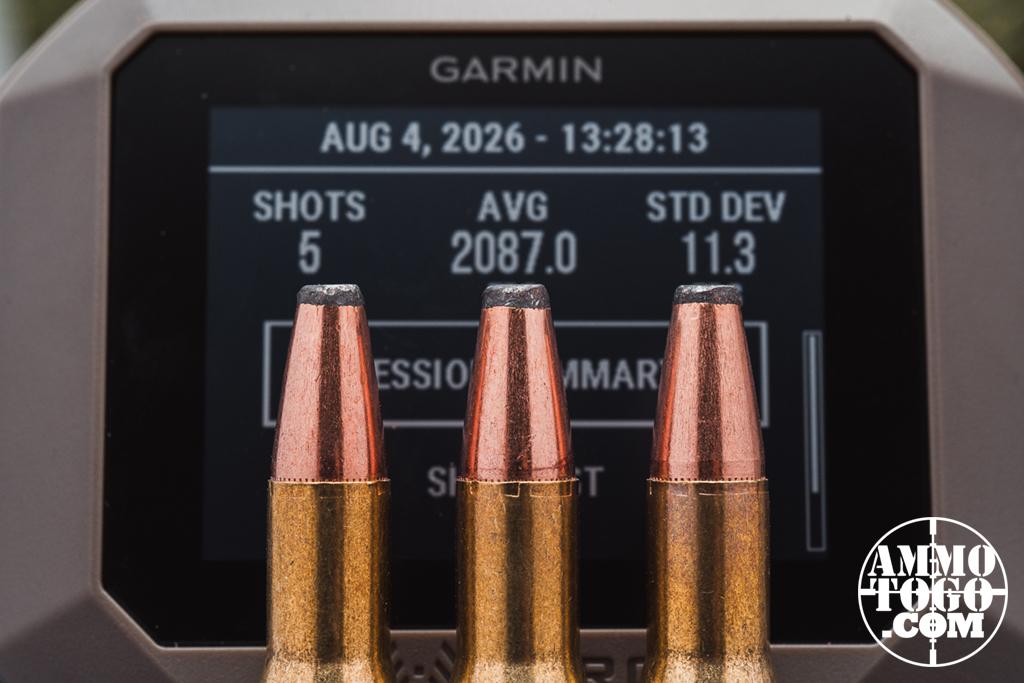
The 30-30 was introduced in 1895 as America’s first small-bore rifle round featuring smokeless powder. UMC, which was already partnered with Winchester at the time, first offered the 30-30 with a 160 grain bullet. UMC introduced the 170 grain bullet the following year, and today it and the 150 grain bullet are the most popular among 30-30 shooters.
A 30-30’s 150 grain bullet typically offers a 2,390 fps muzzle velocity, with 1,903 ft lbs muzzle energy. Its velocity becomes subsonic after 300 yards, yet its effective range is usually set at 200 yards. Many 30-30 cartridges boast a ballistic coefficient that isn’t too much higher than 0.2. These stats are relatively unimpressive, and trounced by several modern rifle cartridges. Nevertheless, the 30-30 is one of the most popular rifle rounds in America.
Staying Power
So what keeps such an old, underperforming round alive? Tradition, for one thing — hunters like the cartridges they grew up with, and hunters have grown up with the 30-30 for more than 125 years. The 30-30’s light recoil is another of its merits. A standard round with a 150 grain bullet produces approximately 10 ft lbs of recoil energy, which is about 7 ft lbs less than a 30-06 with the same projectile. (Although the 30-06’s muzzle velocity is around 21 percent faster.)
The 30-30’s lower muzzle velocity is gentle on bullets, preventing deformation and permitting the use of basic, more affordable designs. (A no-name soft point should serve a thrifty handloader just fine.) The 30-30’s relatively short range wouldn’t suit it for hunting on the plains or in the mountains, but hunters who stick to the woods would rarely need a round capable of performing past 200 yards. More than anything else, the 30-30 just works — what kills a deer kills a deer, simple as that.
The 30-30 is a lever-action round. Some shooters disparage the old design, but traditionalists can’t do without a satisfying “tchik-tchak” punctuating their shots. Because lever-actions utilize tubular magazines, in which rounds are stored tip-to-primer, 30-30 bullets tend to have flat meplats. This prevents the tip of the bullet from accidentally igniting the primer it touches. That’s not necessarily the most dangerous mishap, but it’s certainly disastrous to any rifle it occurs within.
30-30 Winchester Specs
| Parent case | 38-55 Winchester |
| Case type | Rimmed, bottlenecked |
| Bullet diameter | 0.308-0.309" |
| Neck diameter | 0.330" |
| Shoulder diameter | 0.401" |
| Base diameter | 0.422" |
| Rim diameter | 0.506" |
| Rim thickness | 0.063" |
| Case length | 2.039" |
| Overall length | 2.550" |
| Case capacity | 45 gr H2O |
| Maximum pressure (SAAMI) | 42,000 psi |
Other 30-30 Winchester Attributes
- Federal’s fourth best selling rifle round in 2014, after the 223/5.56, 308/7.62, and 30-06, respectively.
- Some handguns that can chamber the rifle round are available, such as Magnum Research’s Big Frame Revolver.
- There is a debate as to whether the 30-30’s energy is sufficient for moose at any range, and several Scandinavian countries have banned it for that purpose.
- Not to be confused with the 30-01, 30-03, or 30-06. Don’t confuse it with a ham sandwich, either, or you’ll mess up your rifle and chip your teeth.