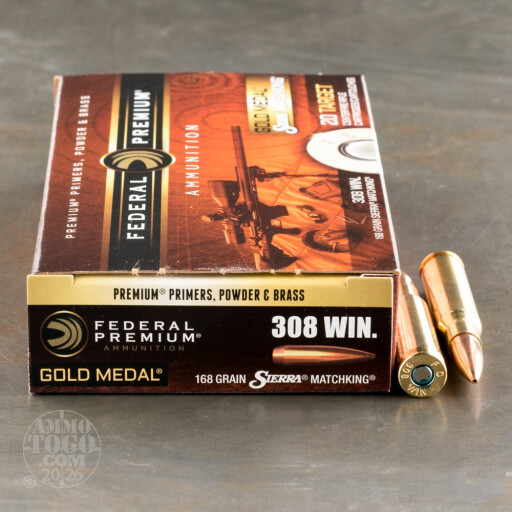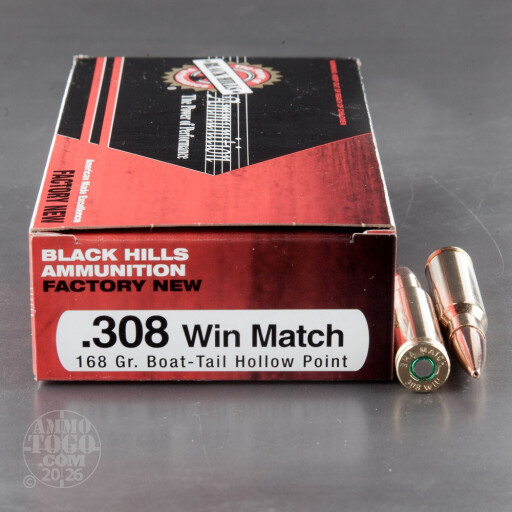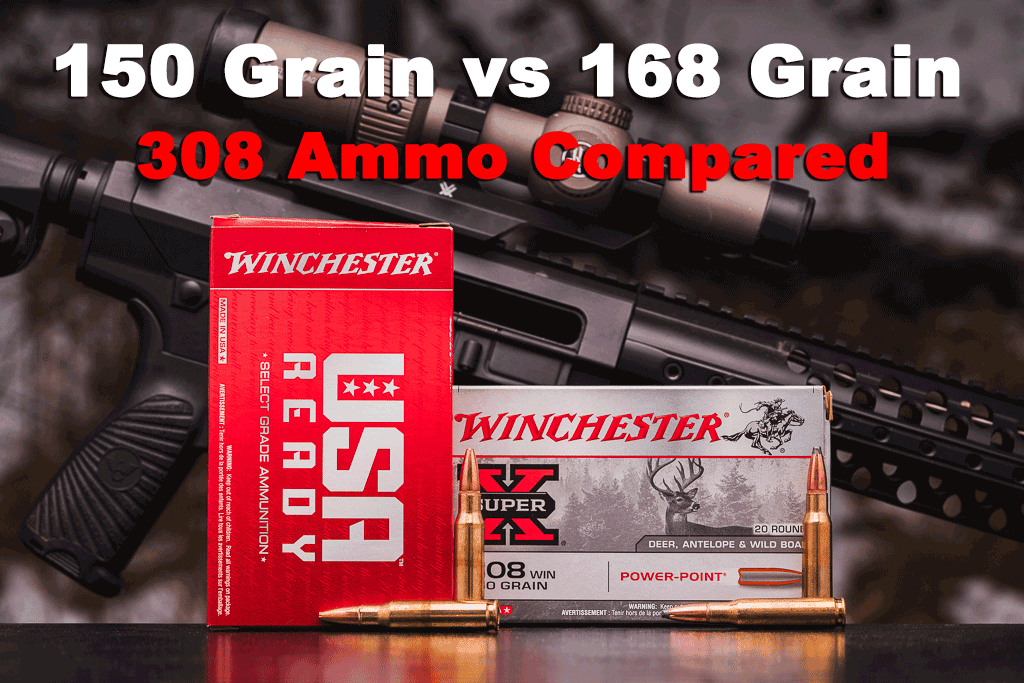


In this article, you’ll find a deep comparison of 150-grain and 168-grain bullets in .308 Winchester ammunition. We’ll examine the ballistic differences and various purposes of each weight, helping you understand which is right for your specific needs.
The .308 Winchester is one of the most versatile cartridges on the market. Used for hunting, varmint control, target shooting, home defense, and match competition, this round has a special place in gun safes across the country.
As a testament to its incredible versatility, it ranges in bullet weights from roughly 110 grains to over 180, and can be used to harvest everything from varmints to moose. Choosing the .308 with a semiautomatic AR-10 is a virtual no-brainer. But with such a large range of options, choosing a bullet weight can be tough.
150-grain and 168-grain bullets, combined, make up about half the total .308 Winchester market. For example, at the time of writing this we had 101 total .308 ammo options encompassing 13 different bullet weights; 51 of our products were either 150 or 168 grains. (For the curious, there were 21 150-grain options and 30 168-grain options.) No other weight had more than ten.
These are the most prevalent for a reason. Over the span of seven decades, these two weights have proven themselves to be the most effective for a variety of uses. But which should you select? As always, it depends on your overall goals for the cartridge.
Quick Summary:
Advantages of 150-grain bullets
- Higher velocities from the muzzle to 200 yards
- Usually made for hunting
- More versatile bullet options
Advantages of 168-grain bullets
- Stronger downrange performance
- Made primarily for match competition
- Less wind drift
Ammo Purposes
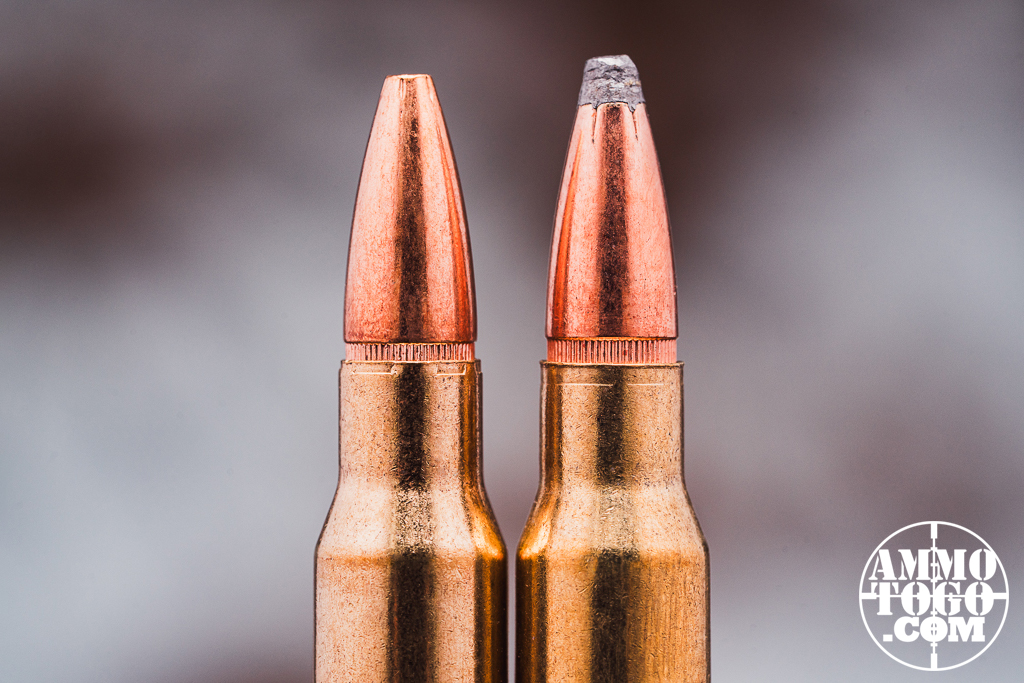
While there is variation, most 150-grain ammo is made for hunting, with numerous soft-point and ballistic-tip bullets. There are some FMJ rounds available in 150 grains, but a quick review of available products shows that this weight is primarily used for hunting.
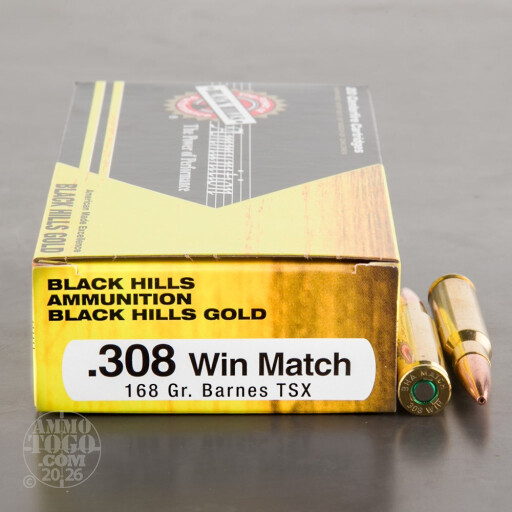
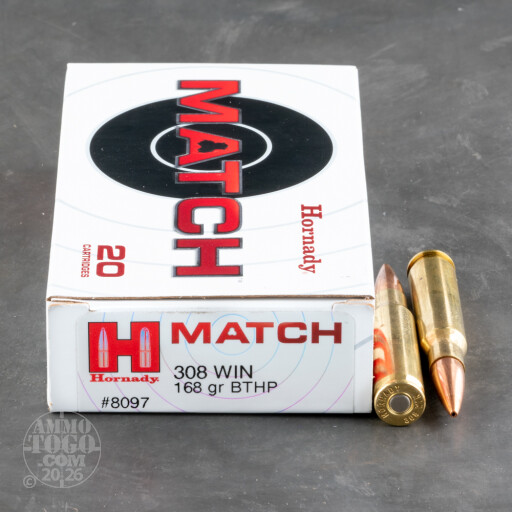
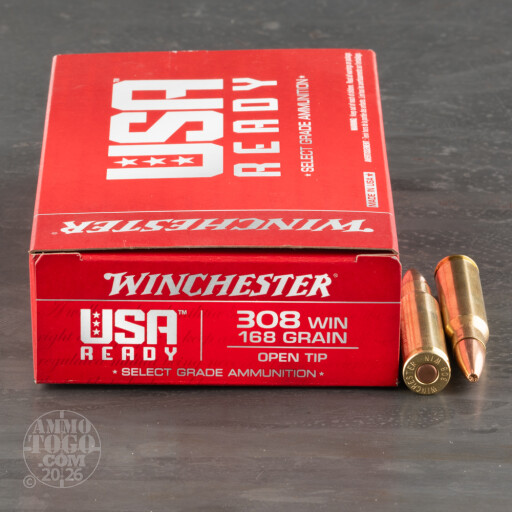
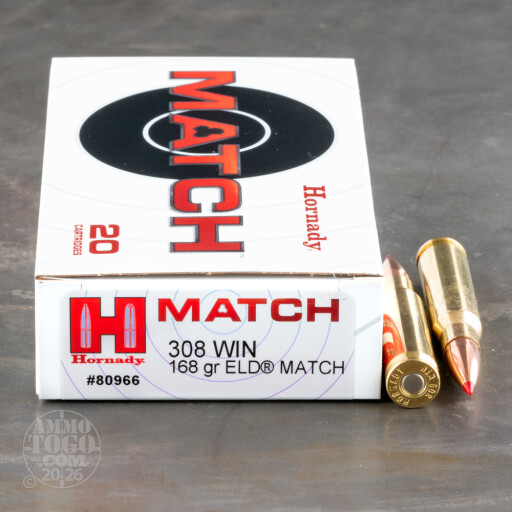
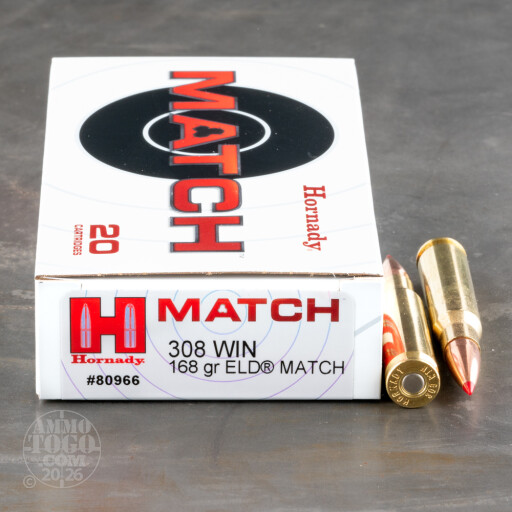
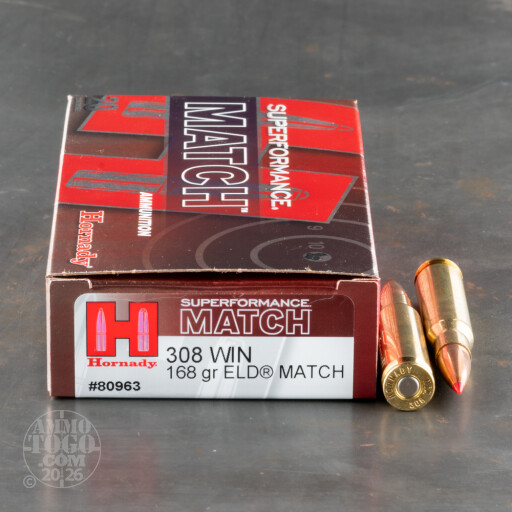
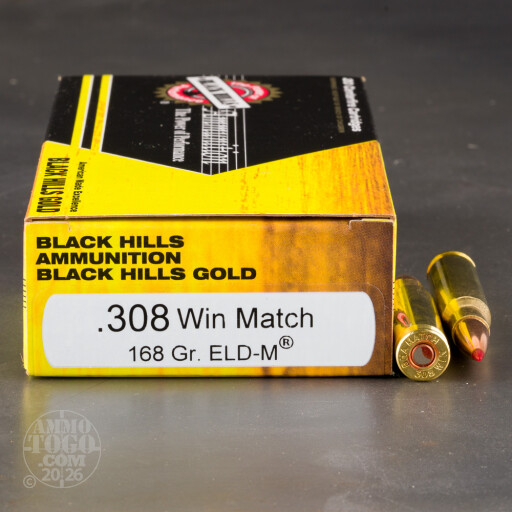
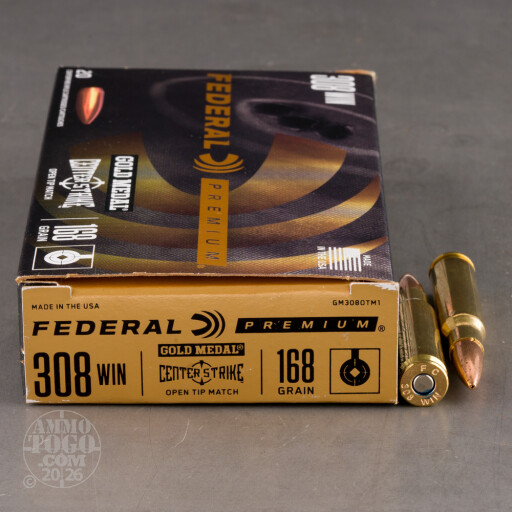
The 168-grain options, on the other hand, are primarily for match competition. If you search for 168-grain rounds, you’ll see the weight is dominated by open-tip and open-tip match rounds. There are some hunting options, such as Black Hills’ 168-grain Barnes TXS load, but nearly all of them have the word “match” somewhere in the labeling.
Pricing Analysis
You might assume that 150-grain bullets would be less expensive; after all, there’s less material in the bullet. However, it seems these two rounds largely overlap in pricing. It’s hard to compare the two, as they serve very different purposes, but most options (for both) are around $1.00 to $1.50, with specialty cartridges going as high as $3.00 or more.
Overall, we can’t really say that one is more expensive than the other.
Ballistics Review
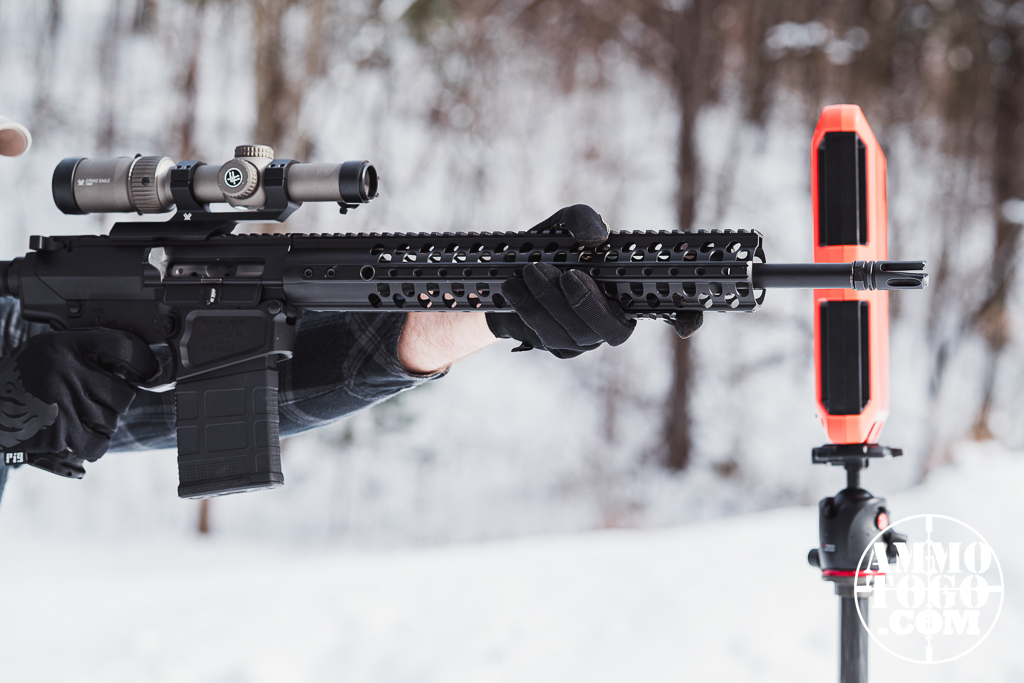
Based on product options alone, we can see that 150-grain rounds are primarily used for hunting, while 168-grain rounds are mostly used for match competition. But why? An analysis of velocity, energy, and other stats may provide the answer.
We selected four 150-grain rounds and four 168-grain rounds, then tallied their stats and calculated the averages. This provides some clues as to why 150 grains are used for hunting, while 168 is used for competition.
Velocity
| Muzzle (fps) | 100 yards | 200 | 300 | 400 | 500 | |
|---|---|---|---|---|---|---|
| 150-grain Barnes TSX (Federal) | 2,820 | 2,574 | 2,341 | 2,120 | 1,911 | 1,717 |
| 150-grain Ballistic Silvertip (Winchester) | 2,810 | 2,601 | 2,401 | 2,211 | 2,228 | 1,856 |
| 150-grain UMC Centerfire FMJ (Remington) | 2,820 | 2,532 | 2,262 | 2,009 | 1,774 | 1,560 |
| 150-grain CX Superformance (Hornady) | 2,900 | 2,679 | 2,468 | 2,267 | 2,076 | 1,894 |
| AVERAGE | 2,838 | 2,597 | 2,368 | 2,152 | 1,997 | 1,757 |
| 168-grain Berger Hybrid Hunter (Federal) | 2,700 | 2,518 | 2,343 | 2,176 | 2,015 | 1,860 |
| 168-grain Ballistic Silvertip (Winchester) | 2,629 | 2,484 | 2,306 | 2,134 | 1,971 | 1,815 |
| 168-grain Premier Match OTM (Remington) | 2,680 | 2,494 | 2,315 | 2,143 | 1,979 | 1,823 |
| 168-grain ELD Superformance Match (Hornady) | 2,840 | 2,665 | 2,496 | 2,334 | 2,177 | 2,027 |
| AVERAGE | 2,712 | 2,540 | 2,365 | 2,197 | 2,036 | 1,881 |
If we were to stop at 200 yards, the .308 Winchester would be the faster cartridge. At the muzzle, it has an advantage of about 100 feet per second (fps).
At 200 yards, however, the speed advantage is three feet per second, a barely-noticeable difference. From then on, the 168-grain cartridges have the edge; by 500 yards, the speed difference is over 100 fps in favor of 168 grains. Essentially, the heavier bullet maintains momentum and speed better than the lighter projectile.
Energy
| Muzzle (ft-lbs) | 100 yards | 200 | 300 | 400 | 500 | |
|---|---|---|---|---|---|---|
| 150-grain Barnes TSX (Federal) | 2,648 | 2,207 | 1,825 | 1,497 | 1,217 | 982 |
| 150-grain Ballistic Silvertip (Winchester) | 2,629 | 2,253 | 1,920 | 1,627 | 1,370 | 1,147 |
| 150-grain UMC Centerfire FMJ (Federal) | 2,648 | 2,136 | 1,705 | 1,344 | 1,048 | 811 |
| 150-grain CX Superformance (Hornady) | 2,801 | 2,390 | 2,029 | 1,712 | 1,435 | 1,195 |
| AVERAGE | 2,682 | 2,247 | 1,870 | 1,545 | 1,268 | 1,034 |
| 168-grain Berger Hybrid Hunter (Federal) | 2,719 | 2,365 | 2,048 | 1,766 | 1,514 | 1,291 |
| 168-grain Ballistic Silvertip (Winchester) | 2,659 | 2,301 | 1,983 | 1,699 | 1,449 | 1,229 |
| 168-grain Premier Match OTM (Remington) | 2,679 | 2,320 | 1,999 | 1,714 | 1,461 | 1,239 |
| 168-grain ELD Superformance Match (Hornady) | 3,009 | 2,649 | 2,324 | 2,032 | 1,769 | 1,533 |
| AVERAGE | 2,767 | 2,409 | 2,089 | 1,803 | 1,548 | 1,323 |
From the muzzle to the target, the 168-grain bullets are more powerful. It’s no surprise, as heavier projectiles often have higher energies, as long as speed is not significantly lower.
At the muzzle, we see similar numbers, although the 168-grain bullets maintain an advantage. From the start, they are less than 100 ft-lbs (on average) more powerful. But as the bullets travel downrange, the 150-grain projectiles lose momentum faster, which we witnessed with the velocity stats. At 200 yards, the advantage has risen to over 200 ft-lbs, and at 500 yards the difference is nearly 300 ft-lbs.
Let’s ponder these stats for a moment. The 150-grain bullets are mostly for hunting, while the 168-grain bullets are mostly for match competition. But wouldn’t a hunter want more power? Shouldn’t the roles be reversed? Remember that most hunting occurs within 100 yards, not beyond 500, so the lighter bullets are completely capable. Also consider that the energy stats for the 150-grain rounds are more than sufficient for deer hunting, especially within 300 yards, which is plenty of distance for the vast majority of hunters.
More Powerful: 168 grains
Trajectory
| 100 yards (Inches) | 200 | 300 | 400 | 500 | |
|---|---|---|---|---|---|
| 150-grain Barnes TSX (Federal) | 2 | 0 | -8 | -24 | -50 |
| 150-grain Ballistic Silvertip (Winchester) | 2 | 0 | -8 | -23 | -46 |
| 150-grain UMC Centerfire FMJ (Federal) | 2 | 0 | -9 | -26 | -55 |
| 150-grain CX Superformance (Hornady) | 2 | 0 | -7 | -22 | -44 |
| AVERAGE | 2 | 0 | -8 | -24 | -49 |
| 168-grain Berger Hybrid Hunter (Federal) | 2 | 0 | -8 | -24 | -48 |
| 168-grain Ballistic Silvertip (Winchester) | 2 | 0 | -9 | -25 | -50 |
| 168-grain Premier Match OTM (Remington) | 2 | 0 | -9 | -25 | -50 |
| 168-grain ELD Superformance Match (Hornady) | 2 | 0 | -7 | -21 | -42 |
| AVERAGE | 2 | 0 | -8 | -24 | -47 |
Trajectory matters to shooters, but frankly the difference in these stats is not significant. At 500 yards, the difference in average drop is about 1.4 inches. That’s less than an inch and a half of drop across the distance of five football fields!
With these stats, it’s hard to say that one is more accurate than the other. For trajectory, it seems other factors like bullet design and shape will make a bigger difference. However, we’ll have to give a razor-thin edge to the 168-grain rounds.
Better Trajectory: 168 grains (Slight advantage)
Winddrift
| 100 yards (Inches at 10 mhp) | 200 | 300 | 400 | 500 | |
|---|---|---|---|---|---|
| 150-grain Barnes TSX (Federal) | 1 | 4 | 9 | 16 | 27 |
| 150-grain UMC Centerfire FMJ (Federal) | 1 | 4 | 10 | 20 | 33 |
| AVERAGE | 1 | 4 | 10 | 18 | 30 |
| 168-grain Berger Hybrid Hunter (Federal) | 1 | 3 | 7 | 12 | 20 |
| 168-grain Premier Match OTM (Remington) | 0.7 | 2.9 | 7 | 12.9 | 20.9 |
| AVERAGE | 1 | 3 | 7 | 13 | 20 |
Here we can see a clear indication of why the heavier bullets are favored by match shooters. While trajectory stats were close, the heavier bullet is far less likely to be pushed by the wind, giving greater consistency and tighter groupings to the shot.
At 500 yards, a 10 mph wind will push a 150-grain bullet nearly ten inches further than the 168. Competitors need the best accuracy, which is why heavier bullets are favored for long-distance shooting and competition.
Recoil
There is very little difference in noticeable recoil between a 150-grain and 168-grain bullet. If we were to use sophisticated measuring tools, we would likely find that the heavier bullet delivers a little more kick, but the difference is so slim that few people would ever notice.
The .308 Winchester is not for recoil-sensitive shooters or beginners, and the lighter 150-grain rounds, which have a bit less muzzle energy, will still bring a strong recoil, especially if shooting technique is poor. While advanced measuring tools may detect less recoil for 150-grain rounds, we’re calling this a draw.
150-Grain Bullets or 168-Grain Bullets? Making the Decision
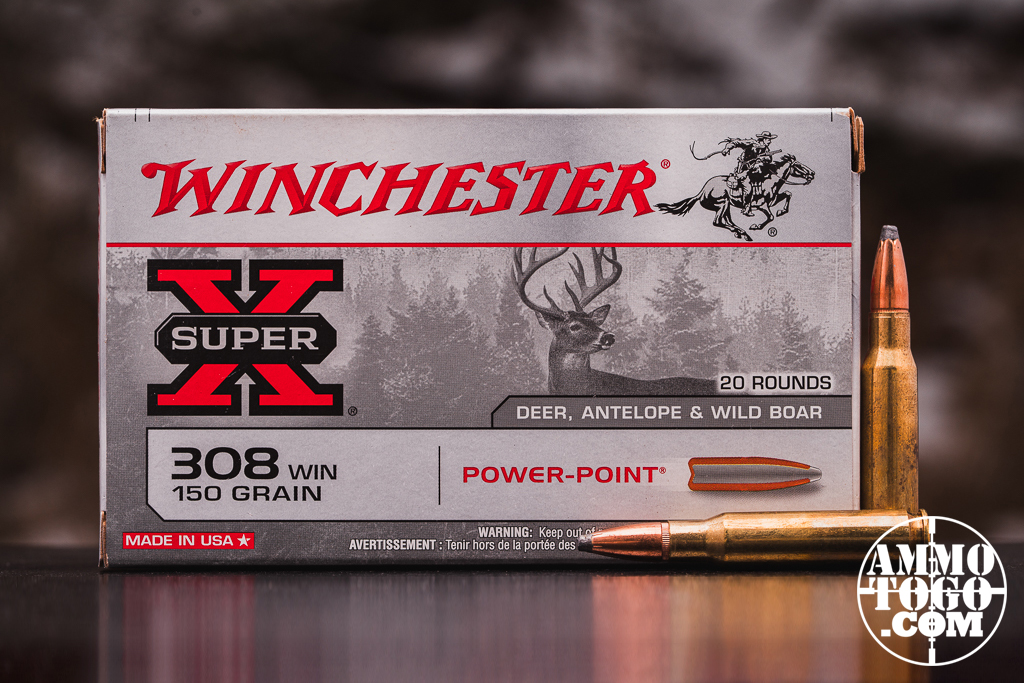
Both of these bullet weights have obvious advantages and purposes. Overall, you should select 150-grain rounds if you need something for hunting or a bullet that gives you greater versatility. A 150-grain soft-point, for example, could be a reasonable option for hunting and target shooting.
Alternatively, if you are looking for high-quality match rounds built to some of the most demanding standards, look to the 168-grain options. This is especially true if you are placing shots at 300 yards or longer.
Ultimately, bullet design matters most. Although 150-grain ammo is generally used for hunting, you can’t use a FMJ, OTM, or other non-expanding bullet for hunting, regardless of the weight. Look at bullet design first, then consider grain weight.
The .308 Winchester remains one of the most important hunting and target cartridges in the country, and with the right ammo weight, you can maximize performance and capability.