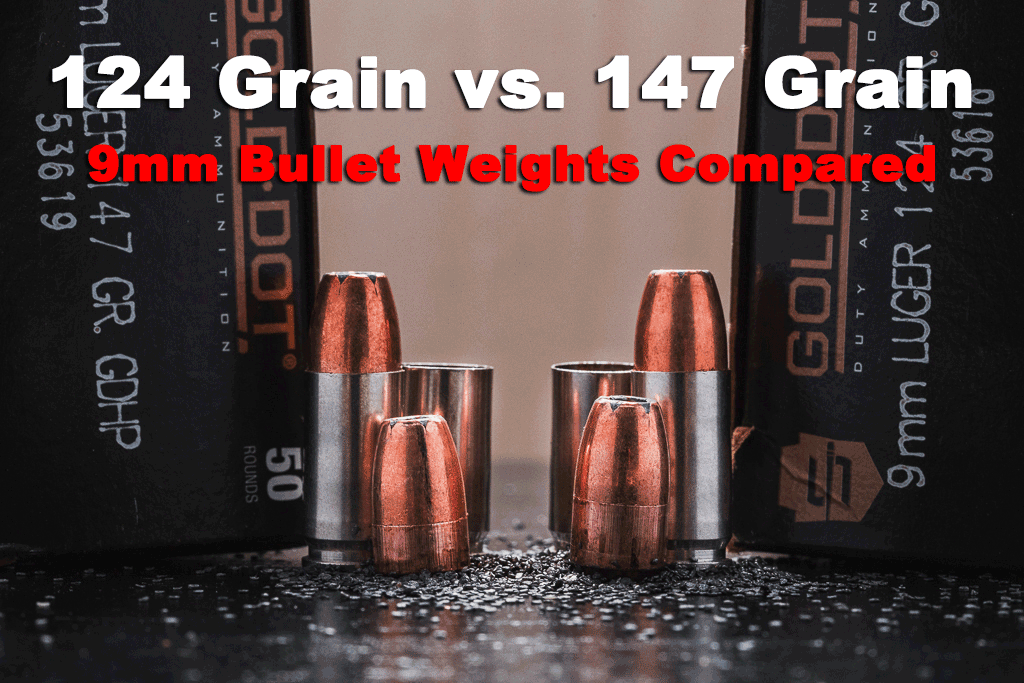


A side by side comparison of 124 vs 147 grain ballistics and self-defense capabilities for 9mm shooters.
9mm Luger is one of the most popular and widely manufactured cartridges on the market, comes in a dazzling variety of bullet types. You can choose between full metal jackets, hollow points, all copper rounds, total metal jackets, and more. The selection can be confusing, if not downright frustrating.
The problem is also compounded when you consider bullet weights. While there are numerous options, the majority of 9mm Luger ammo comes in one of three sizes: 115, 124, and 147 grains. Two in particular, the 124 and 147, are popular for self-defense.
Which is right for your personal protection and concealed carry needs? To help you decide between a box of 124-grain 9mm ammo or 147-grain cartridges, we’ve put together this detailed analysis. With this information, you can make the right choice for your weapon of choice.
124 Grain vs 147-Grain 9mm Ammo
Advantages of 124-grain ammo:
- Faster speeds
- More energy
- More affordable
Advantages of 147-grain ammo:
- Better terminal ballistics
- Some prefer the recoil push of a 147-grain round
124 vs 147: A Look at the Stats

Let’s begin by looking at the stats. We selected three pairs of rounds from a specific brand to compare the performance of a 124 grain and a 147, with as little variation as possible. We found Speer Gold Dot, Remington Golden Saber, and Federal Personal Defense HST (all defense products) for the most consistent analysis. The sample size is small, but it gives us a strong indication of the speed and energy for these two rounds.
| Ammo | Muzzle (fps) | 25 yards | 50 yards |
|---|---|---|---|
| 124 grain Speer Gold Dot | 1,150 | 1,092 | 1,044 |
| 124 grain Remington Golden Saber | 1,125 | 1,074 | 1,031 |
| 124 grain Federal Personal Defense HST | 1,150 | 1,095 | 1,049 |
| Average for 124 Grain | 1,142 | 1,087 | 1,041 |
| 147 grain Speer Gold Dot | 985 | 957 | 932 |
| 147 grain Remington Golden Saber | 990 | 964 | 941 |
| 147 grain Federal Personal Defense HST | 1,000 | 976 | 953 |
| Average for 147 Grain | 992 | 966 | 942 |
Lighter bullets, if all other factors are the same, almost always have a higher muzzle velocity. This is the situation when we compare 124- and 147-grain bullets; the 124 is easily the faster bullet.
The muzzle velocity is especially distinct. While the 147-grain bullets have an average muzzle speed of 992 feet-per-second (fps), the 124-grain products start with an average of 1,142 fps. However, the 124-grain loses velocity at a faster rate. The average goes from 1,142 at the muzzle to 1,041 at 50 yards, a loss of over 100 fps. This indicates that at some point, the 147-grain products could likely catch the 124 option.
Energy
| Ammo | Muzzle (ft-lbs) | 25 yards | 50 yards |
|---|---|---|---|
| 124 grain Speer Gold Dot | 364 | 328 | 300 |
| 124 grain Remington Golden Saber | 348 | 317 | 293 |
| 124 grain Federal Personal Defense HST | 364 | 330 | 303 |
| Average for 124 Grain | 359 | 325 | 299 |
| 147 grain Speer Gold Dot | 317 | 299 | 284 |
| 147 grain Remington Golden Saber | 320 | 304 | 289 |
| 147 grain Federal Personal Defense HST | 326 | 311 | 297 |
| Average for 147 Grain | 321 | 305 | 290 |
Speed is nice (and plays a role in many other factors), but if you are using the cartridge for personal protection, you must pay attention to energy. You may assume, quite fairly, that the 147-grain round would hit harder simply because it’s heavier. But as we see from the above stats, this is actually not the case.
The additional speed of the 124-grain round appears to give the smaller load a power advantage. The difference in muzzle averages (359 vs 321 fps) is 38 ft-lbs, but once again we see the 147-grain option catching up to the 124. At 50 yards, the difference is narrowed to only nine ft-lbs. This is unsurprising, as heavier bullets tend to maintain speed and energy downrange better than lighter options.
More Energy Inside of 50 Yards: 124 Grain Rounds
More Energy Beyond 50 Yards: 147 Grain
Terminal Performance: Penetration and Expansion

Considering that both weights are used for personal protection, it helps to look at both penetration and expansion. However, since this information is not provided by manufacturers, we can turn to our ballistic testing project where we performed ballistic tests on a variety of 9mm rounds. We pulled out the 124-grain and 147-grain options and tallied the averages, giving us a clear picture of terminal performance.
| Average Penetration | Average Expansion | |
|---|---|---|
| 124 grains | 21.42 inches | 0.47 inches |
| 147 grains | 19.8 inches | 0.513 inches |
This analysis provides some very interesting results and hints that for personal protection, the 147-grain option holds an edge. Why? Because the 147-grain bullets had a wider average expansion while staying closer to the desired penetration depth.
First, let’s review expansion. The 147-grain has a clear advantage in mushrooming, expanding to an average diameter of 0.513 inches. With an average of 0.47 inches, the 124-grain does not create pin holes, but it falls short of the 147-grain’s benchmark.
Penetration
But what about penetration? The 124 penetrates deeper (again, on average) so this must be an advantage. Not exactly. Both have average penetration beyond the desired depth for the FBI’s ballistic protocol. (They prioritize 12 to 18 inches of gel penetration.) So while both over-penetrate, the 124 grain goes further.
Sticking with the FBI’s standard, we found that only one out of twelve 124-grain rounds had penetration below 18 inches, while six out of twelve 147-grain rounds were below 18 inches.
With better expansion and penetration, it appears that the 147-grain round is a superior choice for terminal ballistics.
Note: While this study is useful, remember that you’re not shooting averages. For specific ammo selections, it’s best to focus on rounds that have ideal penetration with the widest expansion. Of course, your specific firearm, barrel length and other variables may come into play as well.
Does One Have More Recoil?
Recoil is a tough subject to measure and compare, largely because it depends on so many factors beyond the cartridge and bullet. Firearm design, weight, size, and barrel length play a role, as do shooter skill and technique.
Frankly, for the 124 verses 147 debate, the verdict is still out. Some report that recoil on the 124 is easier, simply because the bullet is lighter. This seems rational, and would seem to align with the basic laws of physics. But go back to the energy data we reviewed earlier. Remember that the 124-grain options had stronger muzzle power and faster speeds. A high muzzle energy is not the only recoil factor, but it plays an important role in the manageability or unwieldiness of a firearm.
Even if the energy is higher, there is a common belief that heavier pistol rounds create a workable recoil, one that creates a steady push rather than a rapid snap. Many shooters feel that a 147-grain 9mm Luger provides the most manageable shot compared to the snappier 124-grain and 115-grain options.
Ultimately, you need to try different grain weights to see which feels best in your pistol. You may find that the 147-grain option is right, or you may discover that 124-grain rounds feel better and provide faster follow-up shots.
Is One Cheaper Than the Other?
If cost is an issue (isn’t it always?), the 124 grain generally provides a lower price. When comparing two products from the same manufacturer and brand, you’ll find that a 124-grain round is often one to three cents cheaper per shot. This is not a massive difference, but it can add up over time. When firing thousands of rounds through your 9mm Luger, using a 124-grain round could save hundreds of dollars.
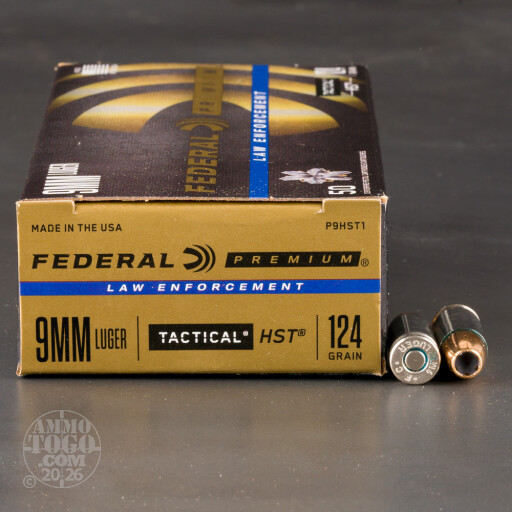

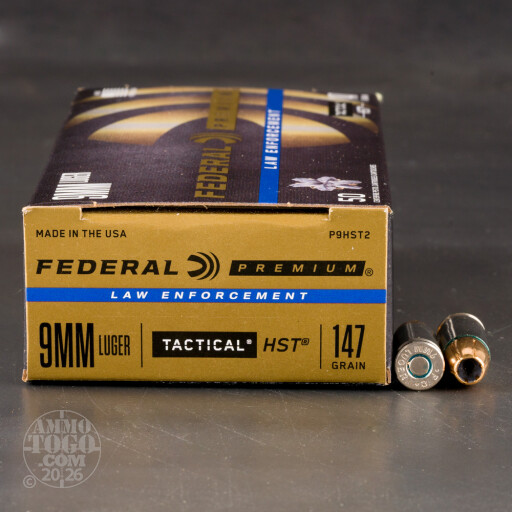
Making the Choice: 124-Grain or 147-Grain
Both of these weights are ideal for personal protection and target shooting, but we found that each weight has its own specific advantages. For 124-grain ammunition, the advantages are higher speeds, greater recoil, and a lower price. This makes the round a strong choice for target shooting, although it is certainly no slouch for personal protection.
The 147-grain ammo, however, holds a clear advantage as a personal defense load. With greater expansion diameters and ideal penetration (remember, the 124-grain rounds often over-penetrated), this is a better choice for concealed carry and home defense.