


It’s a battle – two colossal rifle calibers, 338 Lapua vs. 50 BMG. Which of these is best for your long-range shooting needs?
Not satisfied with common cartridges like the .30-06 Springfield or the .223 Remington? Perhaps it’s time to move into larger, longer, more powerful rounds? Well, welcome to the thunder dome! Prepare for heaps of fun as we bring the noise in this .338 Lapua vs. .50 BMG comparison.
Both of these cartridges will give you big distance at the range, impressing even the most experienced sharpshooters and long-range hunters.
But which one is best for your needs? Let’s compare the two and find out which would be right for your needs and preferences. Just don’t forget your ear protection!
Fast Results: .50 BMG vs .338 Lapua Magnum
Need answers now? Here are the main benefits of the .338 Lapua Magnum and the .50 BMG:
Benefits of the .50 BMG:
- Slightly more velocity
- Far more power
- Longer range
Benefits of the .338 Lapua Magnum:
- Much less recoil
- Better ammo prices (although not cheap!)
Comparing the .338 Lapua Magnum to the .50 Browning Machine Gun
| .50 Browning Machine Gun (BMG) | .338 Lapua Magnum (aka .338 Lapua) |
|
|---|---|---|
| Released | 1921 | 1989 |
| Bullet Diameter | 0.511 inches | 0.339 inches |
| Neck Diameter | 0.56 inches | 0.372 inches |
| Base Diameter | 0.804 inches | 0.587 in |
| Case Length | 3.91 inches | 2.724 in |
| Max Overall Length | 5.45 inches | 3.681 in |
| Case Capacity | 19 cubic centimeters | 7.5 cubic centimeters |
| Bullet Weights | 647 - 750 grains | 210 - 300 grains |
Getting to Know the .50 BMG
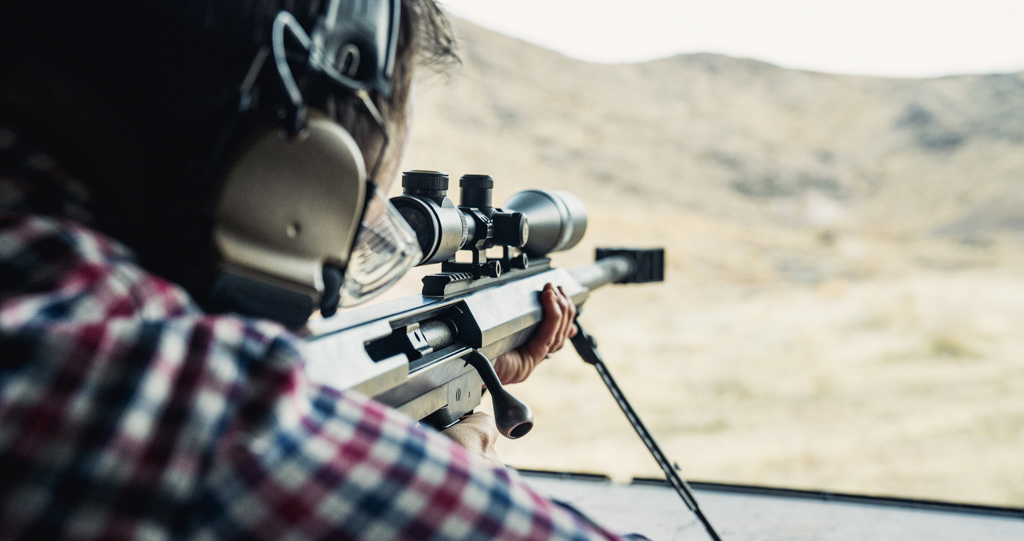
Before and during the first World War (1914-1918), forces on both sides started to develop armored artillery vehicles that would become the modern tank. In direct response, they also started to develop rifle cartridges that could punch through the enemy’s armored protection. After the war, designers continued to create anti-armor cartridges; for American forces, this lead to the .50 Browning Machine Gun or “.50 BMG,” a large, powerful round that, even to this day, can penetrate the sides of most armored vehicles.
It has become one of the most dependable cartridges for American and NATO forces, and has seen major use in practically all conflicts involving American troops. In civilian circles, it is used for recreational shooting, competition, and even hunting large animals at massive distances.
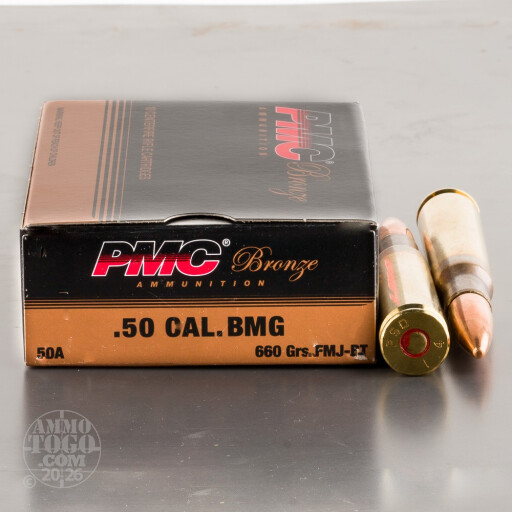



Getting to Know the .338 Lapua Magnum
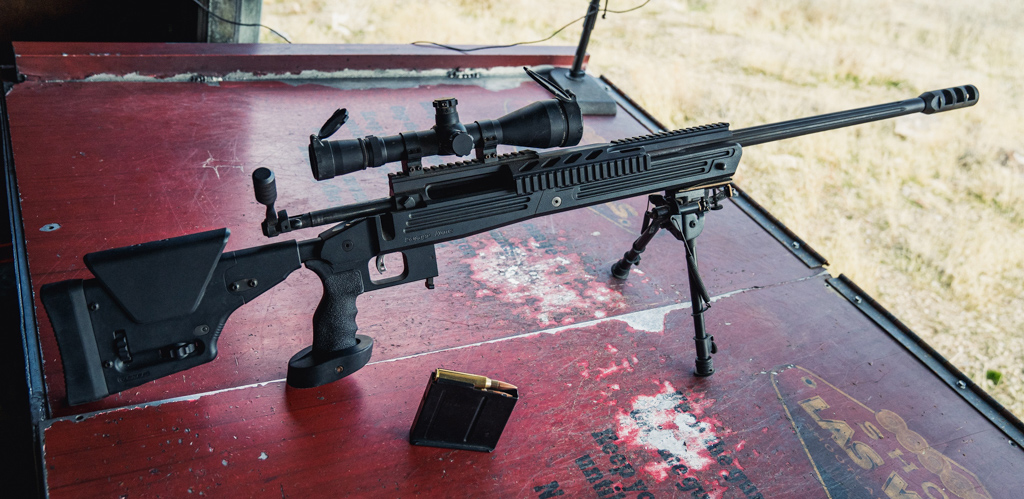
The .338 Lapua Magnum, also known as the “.338 Lapua” or “.338 Lapua Mag,” is a newer addition to the world of rifle shooting. Designed and released in the late 1980s, this cartridge gives shooters a long-range shot with excellent terminal ballistics. It’s become one of the most prominent sniper cartridges in the world, and it has enough force to penetrate body armor at long distances.
Although a popular round for highly-trained military personnel, it’s also useful for civilians. It makes an enjoyable target-shooting cartridge, and it can be used for hunting virtually any large game in North America, as well as large African safari animals.
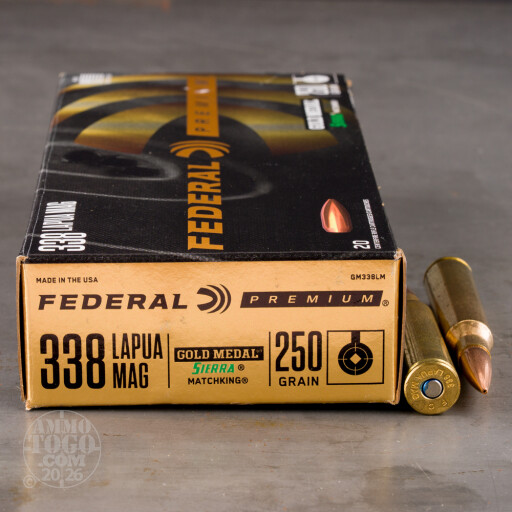
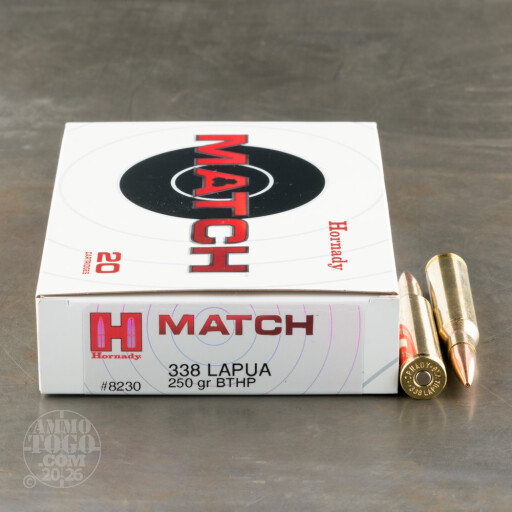
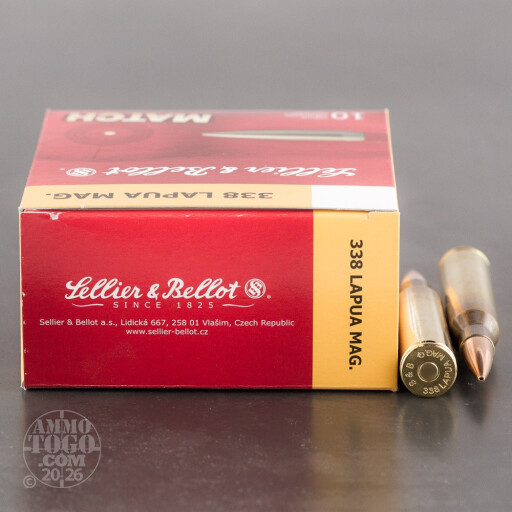
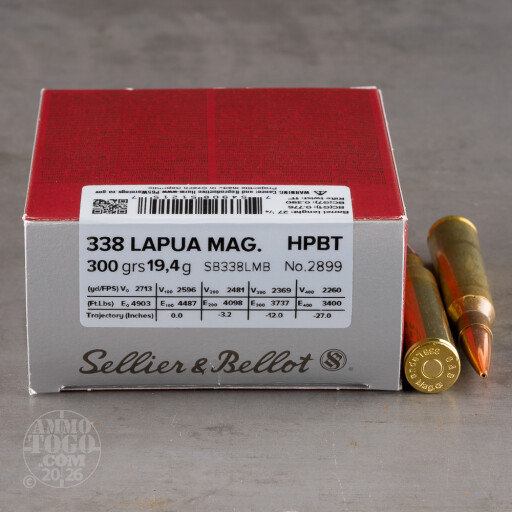
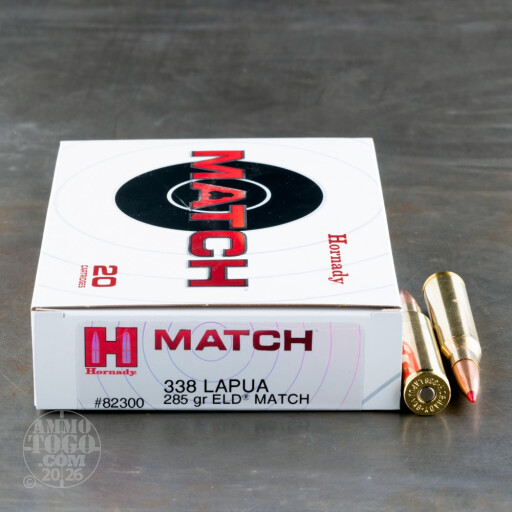
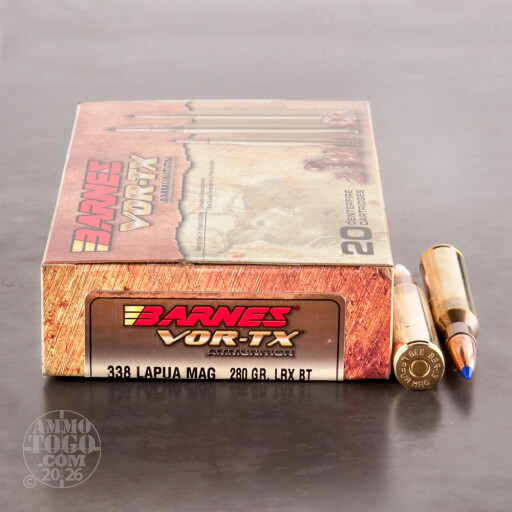
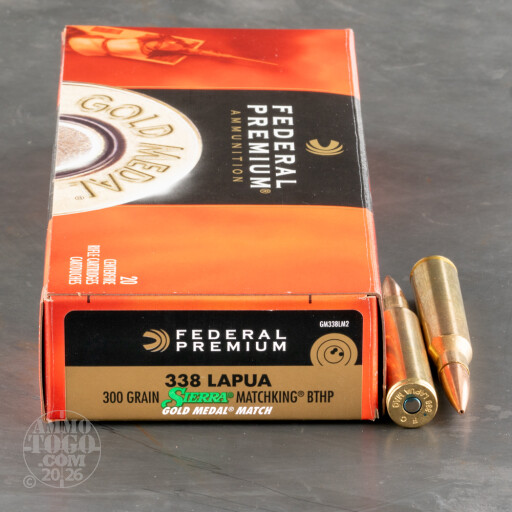
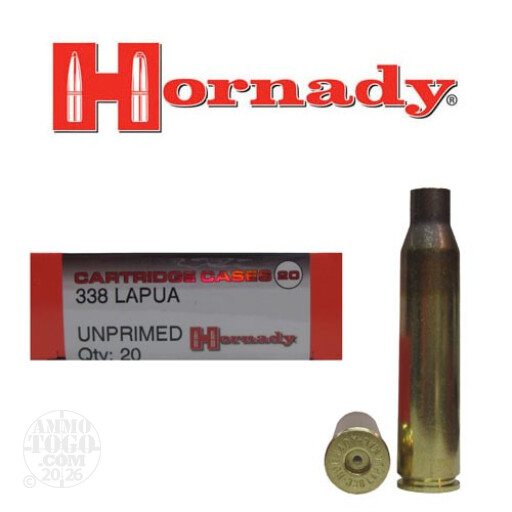

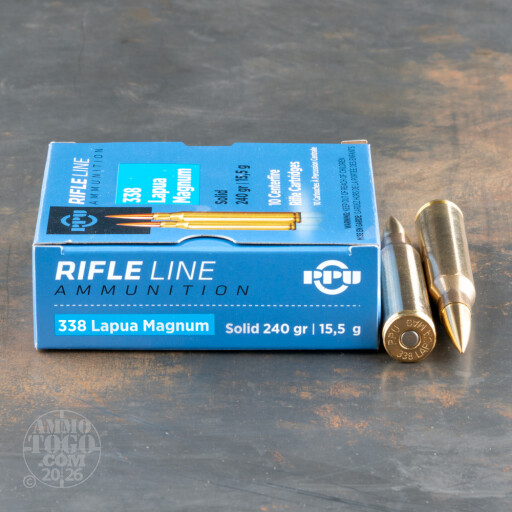
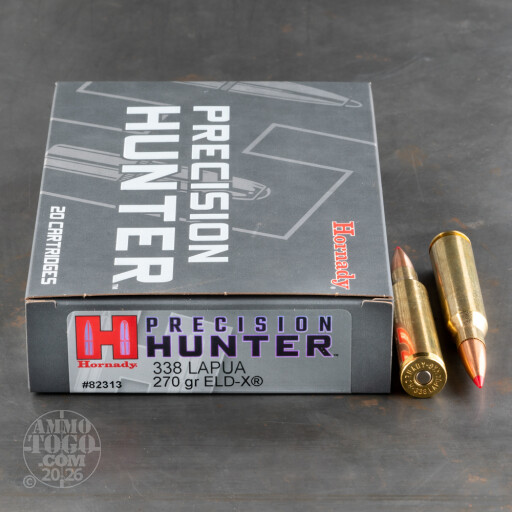
Caliber Comparison: .338 Lapua Magnum vs .50 BMG
Side by Side
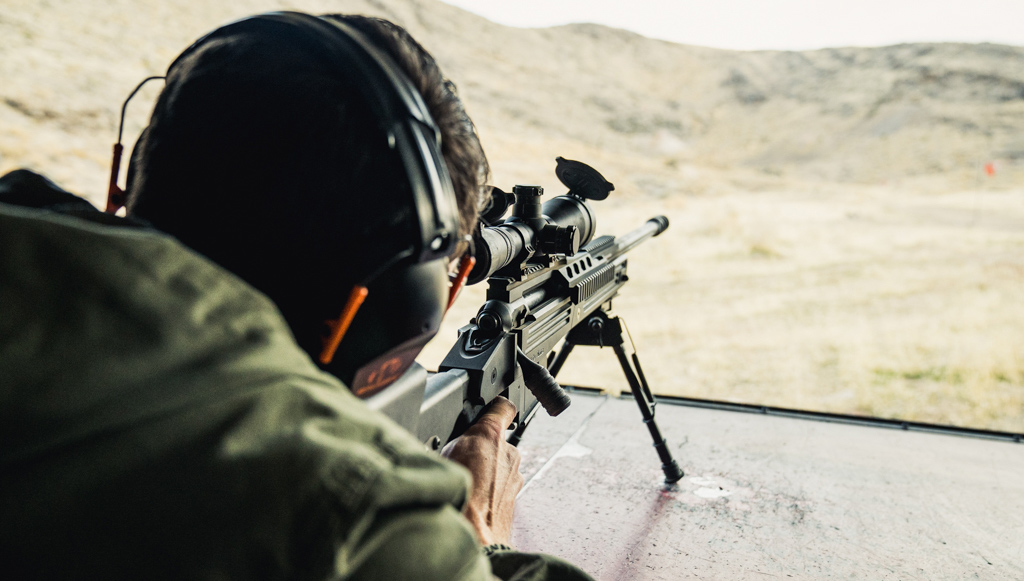
We had a chance to sit down with both of these rifles thanks to our friends at Shoot Las Vegas. Their 500-yard range and in-house rifle options gave us a chance to compare both of these firearms and calibers side-by-side.
Are there Similarities?
The .50 BMG and .338 Lapua Magnum don’t seem to have a lot in common. (The .50 BMG doesn’t have much in common with any cartridge!) Physically, the BMG is just so much larger than any other round that it stands in a category all its own.
The only noticeable similarity between them is the rifle type. The .50 BMG and the .338 Lapua are both fired from bolt-action rifles, although semiautomatics are available for both. They are typically used for long-range target shooting, although the .338 Lapua Magnum has a legitimate use as a large-game hunting round. (Unless you’re hunting rhino or elephant, the overpowering .50 BMG is impractical as a hunting cartridge.)
Price
The owner of a large RV camper was once asked about the vehicle’s miles-per-gallon; his response was, essentially, “if you’re worried about the cost of gas, don’t buy an RV.”
A similar statement could be said for both of these cartridges, as neither is priced for thrifty shooters. But it’s still worth looking at the prices, and we see that the .338 Lapua Magnum tends to be slightly more affordable, most likely because of the smaller size.
At the time when this article was written, the lowest cost .50 BMG was $3.00 per round, while the lowest .338 Lapua was $2.70. However, the highest-priced .50 BMG was around $5.80, while the highest per-round cost for the Lapua was in that same neighborhood at $5.86.
So, the .338 Lapua Magnum appears to have a larger range of pricing. (This is likely due to a larger selection of .338 rounds.)
But what if we look at similar products from the same manufacturer? In this case, the .338 Lapua still tends to have a slightly lower price. For example, the .50 BMG match ammo from Hornady (750 grain)is $5.80 per round, while Hornady match ammo in .338 Lapua (285 grain)is $4.50 per round.
There is plenty of overlap, but it appears the .338 Lapua, while certainly not cheap, is slightly more affordable.
Winner: .338 Lapua Magnum (Slight advantage)
.338 Lapua vs .50 BMG: Velocity
| .50 BMG | Muzzle (fps) | 100 yards | 200 | 300 | 400 | 500 |
|---|---|---|---|---|---|---|
| 750-grain A-Tip ELD Match (Hornady) | 2,815 | 2,727 | 2,641 | 2,557 | 2,474 | 2,393 |
| 740-grain X-Tac Match Solid Brass (PMC) | 2,830 | 2,728 | 2,659 | 2,532 | 2,438 | 2,345 |
| 660-grain FMJ-BT Bronze (PMC) | 2,950 | 2,854 | 2,639 | 2,444 | 2,248 | 2,061 |
| 625-grain M33 FMJ RangeMaster (PPU) | 2,940 | 2,811 | 2,686 | 2,564 | N/A | N/A |
| Average | 2,884 | 2,780 | 2,656 | 2,524 | 2,388 | 2,266 |
| .338 Lapua Magnum | Muzzle (fps) | 100 yards | 200 | 300 | 400 | 500 |
| 280-grain Copper Boat Tail VOR-TX Rifle (Barnes) | 2,600 | 2,469 | 2,341 | 2,218 | 2,098 | 1,982 |
| 250-grain FMJ-BT Match (PPU) | 2,995 | 2,810 | 2,675 | 2,540 | N/A | N/A |
| 300-grain SierraMatchKing Gold Medal (Federal) | 2,580 | 2,466 | 2,355 | 2,248 | 2,143 | 2,040 |
| 240-grain CX Custom (Hornady) | 2,900 | 2,747 | 2,600 | 2,458 | 2,320 | 2,186 |
| Average | 2,769 | 2,623 | 2,493 | 2,366 | 2,187 | 2,069 |
We see some very interesting results from this comparison, but the simple answer is that the .50 BMG has a slight velocity advantage. Usually, we try to compare similar-weight bullets, such as a 150-grain round from both cartridges. But the .50 BMG is so much heavier than the .338 that this apples-to-apples comparison is impossible.
While the fastest single cartridge in our small sample is a .338, the average speed of the .50 caliber is about 100 fps faster. From the muzzle to the target, we see an overall speed advantage for the .50 BMG.
Winner: .50 BMG (Slight advantage)
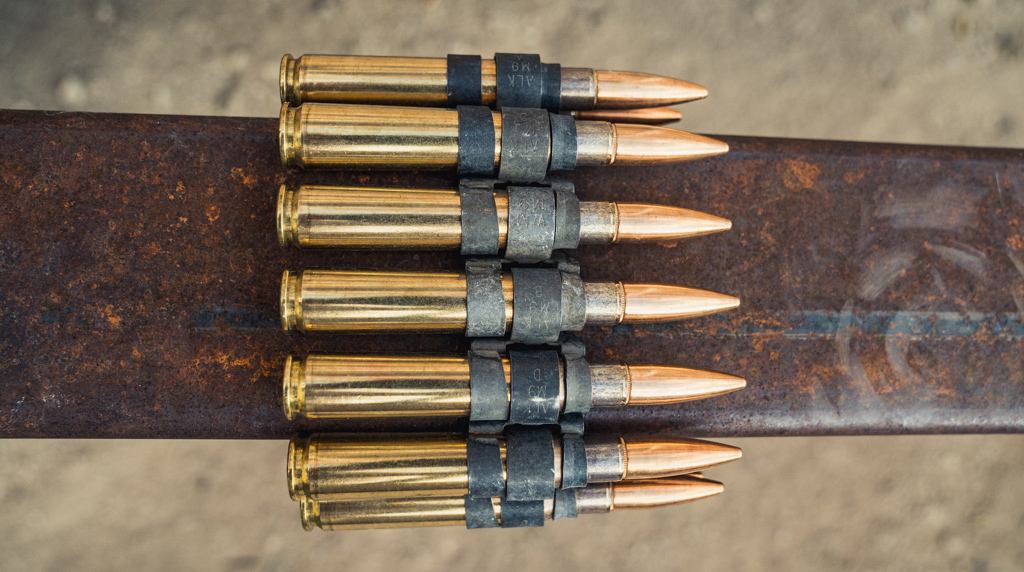
.338 Lapua vs .50 BMG: Energy
| .50 BMG | Muzzle (ft-lbs) | 100 yards | 200 | 300 | 400 | 500 |
|---|---|---|---|---|---|---|
| 750-grain A-Tip ELD Match (Hornady) | 13,196 | 12,386 | 11,619 | 10,889 | 10,196 | 9,538 |
| 740-grain X-Tac Match Solid Brass (PMC) | 13,337 | N/A | N/A | N/A | N/A | N/A |
| 660-grain FMJ-BT Bronze (PMC) | 13,688 | N/A | N/A | N/A | N/A | N/A |
| 625-grain M33 FMJ RangeMaster (PPU) | 11,994 | 10,966 | 10,012 | 9,126 | N/A | N/A |
| .338 Lapua Magnum | Muzzle (fps) | 100 yards | 200 | 300 | 400 | 500 |
| 280-grain Copper Boat Tail VOR-TX Rifle (Barnes) | 4,204 | 3,791 | 3,410 | 3,059 | 2,737 | 2,442 |
| 250-grain FMJ-BT Match (PPU) | 4,847 | 4,389 | 3,968 | 3,579 | N/A | N/A |
| 300-grain SierraMatchKing Gold Medal (Federal) | 4,434 | 4,052 | 3,696 | 3,365 | 3,058 | 2,772 |
| 240-grain CX Custom (Hornady) | 4,482 | 4,022 | 3,603 | 3,219 | 2,867 | 2,546 |
The velocity was close. The energy? Far from it. With significantly heavier bullets, the .50 BMG has energies that dwarf the .388 Lapua. This is really no surprise, as the .50 caliber cartridge is one of the most powerful rounds on the civilian market – it was, after all, made for destroying vehicles!
Honestly, if you look at these numbers it’s a wonder that anyone can even shoot this cartridge. The .338 has over 4,000 ft-lbs of muzzle energy, making it a hard-hitting round. Yet the .50 BMG approaches 14,000 ft-lbs of muzzle force; that is an unfathomable number!
The .338 is among the most powerful rounds on the market. It just can’t match the strength of the .50 Browning Machine Gun!
Winner: .50 BMG (Major advantage)
Shot Trajectory
The .50 BMG has more force pushing the bullet forward, so you might assume that it would have less drop downrange. But the .338 Lapua Magnum could also have less drop thanks to the significantly lighter bullets. So which is it?
Trajectory is difficult to analyze, as manufacturers are inconsistent with their data. However, we can cobble enough information to make a solid conclusion.
Overall, the .50 BMG tends to have better shot trajectory, dropping less over extreme distances than the .338.
The Hornady rounds from our table highlight this trend. When zeroed to 200 yards, the 750-grain BMG drops 35.6 inches at 500 yards. The 240-grain .338 Lapua Magnum, despite a lighter projectile, drops 38.1 inches. It’s a small advantage for the .50 caliber. This trend is repeated on multiple rounds; when data is similar, we see a slight advantage for the .50 BMG.
| 100 yards (Inches) | 200 | 300 | 400 | 500 | |
|---|---|---|---|---|---|
| .50 BMG 750-grain A-Tip ELD Match (Hornady) | 1.4 | 0 | -6.4 | -18.2 | -35.6 |
| .338 Lapua Magnum 240-grain CX Custom (Hornady) | 1.6 | 0 | -6.7 | -19.2 | -38.1 |
The advantage is so small it likely won’t drive your decision. Shooters won’t choose the .50 BMG “because it’s more accurate than the .338.” There are other differences that are more important, but overall we can say the .50 BMG offers better long-range potential.
Winner: .50 BMG
Recoil Analysis
| .50 BMG | Recoil Energy (Ft-lbs) | Recoil Velocity (fps_ |
|---|---|---|
| 750-grain A-Tip ELD Match (Hornady) | 111 | 15 |
| 740-grain X-Tac Match Solid Brass (PMC) | 110 | 15 |
| 660-grain FMJ-BT Bronze (PMC) | 100 | 15 |
| 625-grain M33 FMJ RangeMaster (PPU) | 93 | 14 |
| .338 Lapua Magnum | Muzzle (fps) | 100 yards |
| 280-grain Copper Boat Tail VOR-TX Rifle (Barnes) | 26 | 10 |
| 250-grain FMJ-BT Match (PPU) | 27 | 10 |
| 300-grain SierraMatchKing Gold Medal (Federal) | 29 | 11 |
| 240-grain CX Custom (Hornady) | 25 | 10 |
Nothing beats real-world testing, and everyone’s experience will be different, but using ballistic calculators*, we found that the BMG has roughly four times the recoil energy of the Lapua Magnum!
Just glancing at the numbers, and not placing them in proper context, the Lapua Magnum looks like a light-shooting round. After all, its recoil energy is “only” 25 to 29 ft-lbs, while the BMG goes as high as 111.
But similar calculations on popular rifle rounds reveal less recoil than the .338. For example, when examining the .30-06 Springfield, we typically estimate a recoil around 15 to 20 ft-lbs, while the .30-30 goes down to about 10 ft-lbs. Neither of these rounds would be considered “light” kickers, although they’re certainly not shoulder busters.
So if we compare the Lapua Magnum to other rounds, it’s almost always the harder round. But compared to the BMG, it’s easily the softer option.
*Calculations were done on shooterscalculator.com/recoil-calculator.php. For .50 BMG ammo, we entered a 225-grain powder charge and a 30-pound rifle. For .338 Lapua Mag, we used an 85-grain powder charge and a 16-pound rifle. These numbers were chosen based on typical rifles and loads for each cartridge.
Winner: .338 Lapua Magnum
BMG vs Lapua Magnum Comparison Summary:
| Winner | |
|---|---|
| Price | .338 Lapua Magnum |
| Velocity | .50 BMG (Slight advantage) |
| Energy | .50 BMG (Major advantage) |
| Shot Trajectory | .50 BMG (Slight advantage) |
| Recoil | .338 Lapua Magnum |
You can see that either of these cartridges will deliver impressive performance. Both allow you to place accurate, powerful shots at distances beyond the reach of other rounds.
When to Choose the .50 BMG
If you want to deliver a long-range shot with outstanding power, and you’d also like to impress everyone at the range, the .50 BMG could be your new favorite round. It’s large, powerful, and head-turning, but it’s not cheap to shoot. And it will, without a doubt, be the most powerful round at any range. Frankly, most shooters will have trouble finding a range long enough for the .50 BMG’s full potential!
When to Choose the .338 Lapua Magnum
When selecting the best cartridge, you need to decide if saving a little money, or having a softer kick, would be worth it. The Lapua is more powerful and far-reaching than nearly every rifle cartridge, yet it delivers softer recoils with a lighter price compared to the massive .50 BMG. Choose this round when you want an impressive cartridge that’s not as bulky as the .50 BMG. And don’t worry, in nearly every trip, you’ll have the most powerful round at the range!
Order Your Heavyweight Ammo Now
Compared to other matchups, the .338 Lapua Magnum vs .50 BMG is like a heavyweight title fight. When you’re ready to order the most affordable ammo for your large rifle, let us help. With a large selection and outstanding service, we are your source for top-quality ammo, so place your order today!