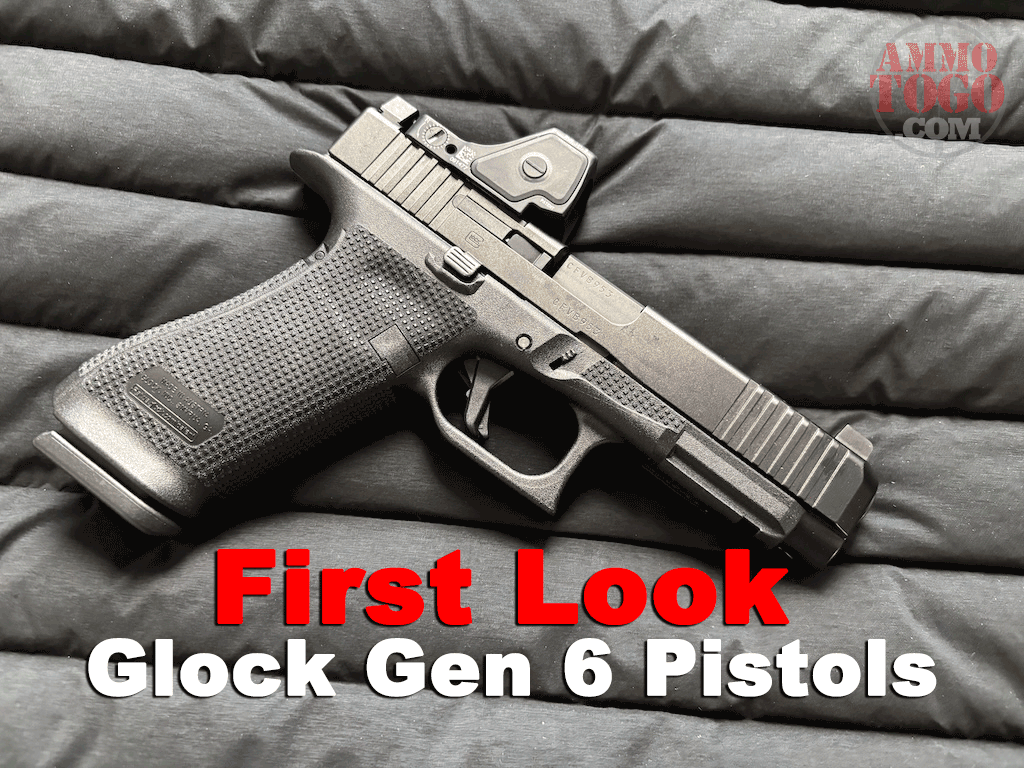


What improvements did Glock make in their Gen 6 lineup that could reasonably persuade Gen 5 owners to retire their pistols? Follow along as we dissect and examine everything from functionality, ergonomics and aesthetics.
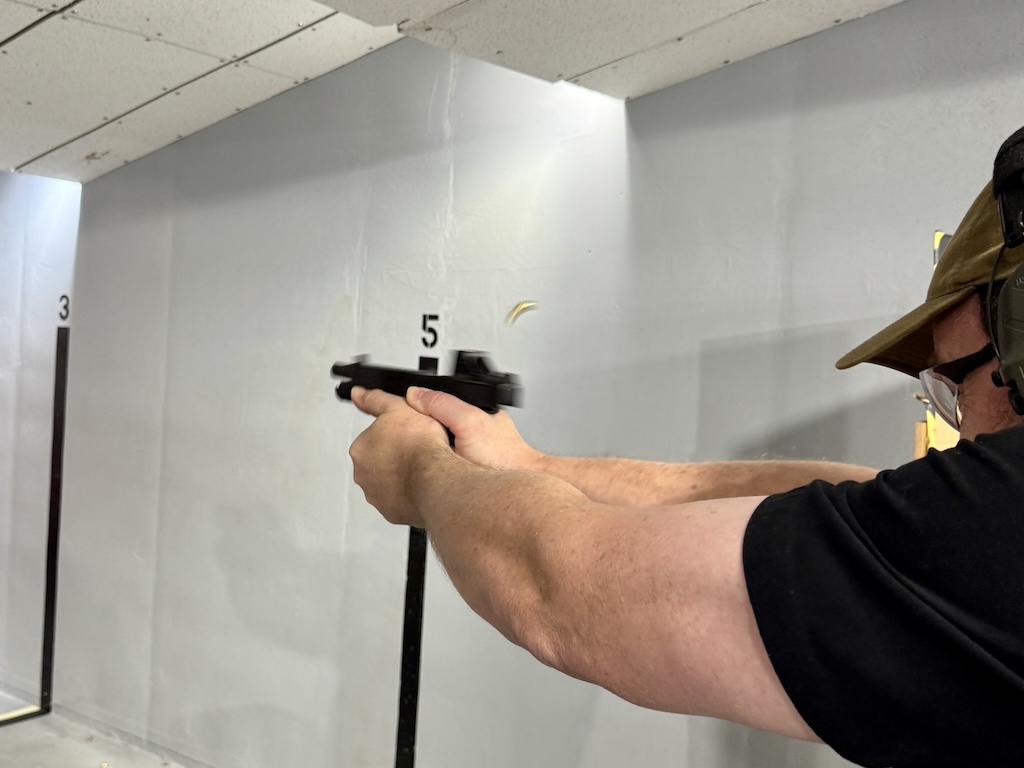
For more than four decades, Glock has earned its reputation for reliability and ease of use, defining six distinct generations. Now, the newest—Gen 6—delivers the most dramatic transformation yet. So, what’s new with the GLOCK Gen 6, and how do these changes affect how the GLOCK performs?
Recently, at a media event in Atlanta, I had a chance to shoot the new Gen 6 Glock. Here’s the breakdown:
GLOCK Gen 6 Model Lineup
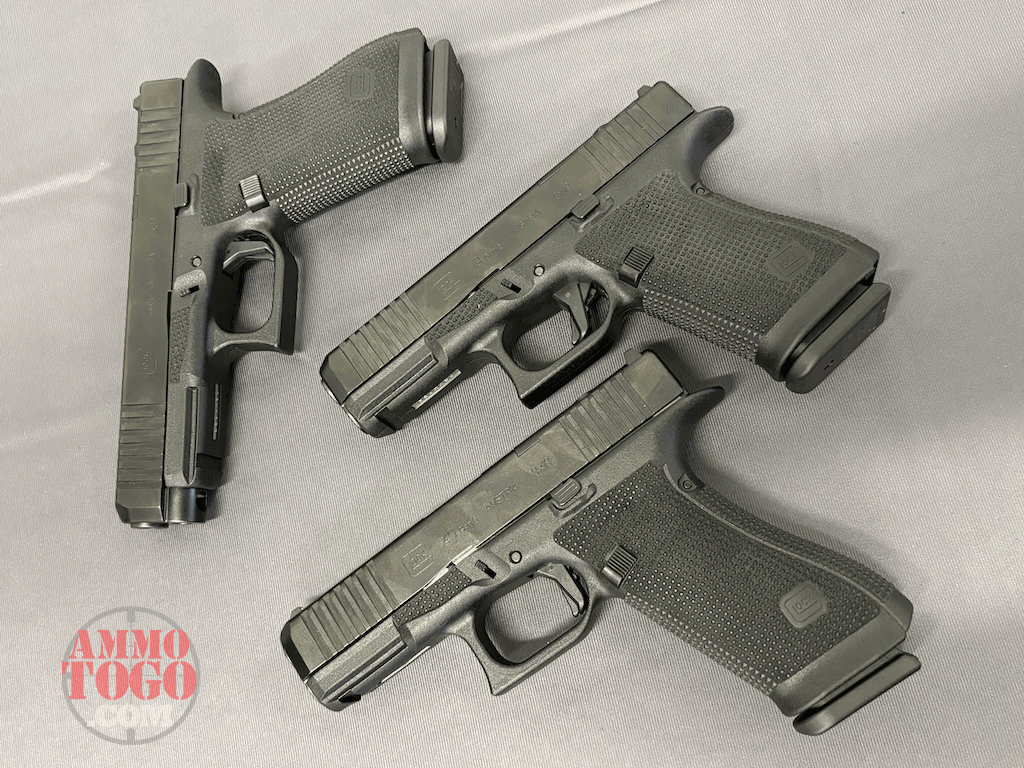
Above, you see three of the four Gen 6 models to be launched in the US:
G17: This is a G17, but it looks a bit like a G47, in that it is optics ready and has the shorter guide rod set up.
G19: This is a standard in the GLOCK catalog, and instantly recognizable.
G45: The G17 length grip on the G19 length slide.
Gen 6 G49: Reverse the G45 and you get a 9mm with a longer slide on a shorter grip—but this one isn’t launching in the US.
GLOCK Gen 6 Ergonomics
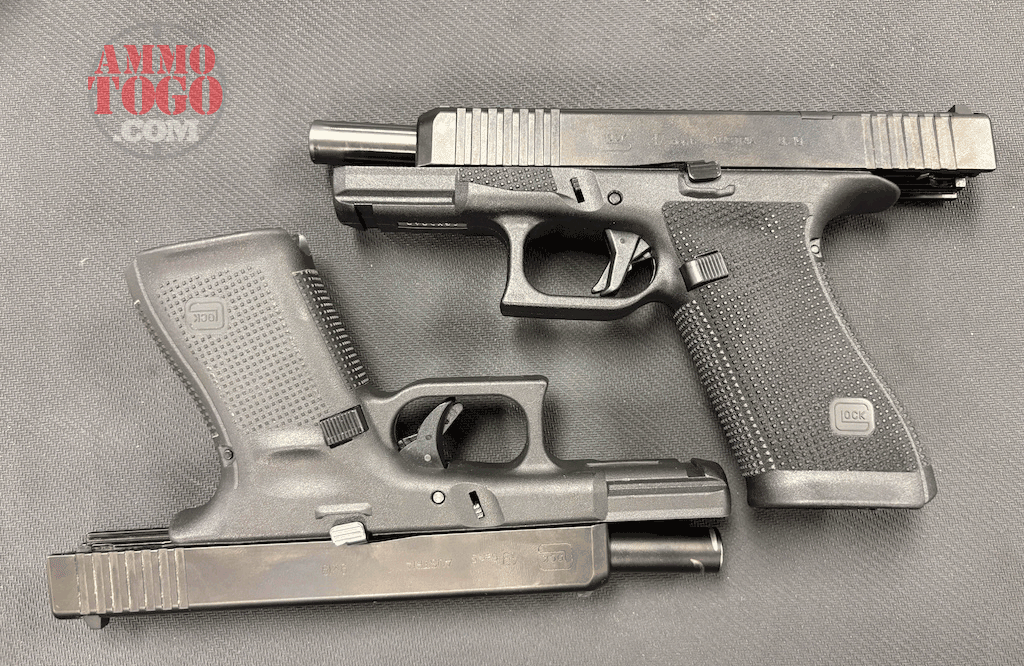
I’ll start with a breakdown of the external changes. For 99% of us, this is as deep as we’ll ever get with a GLOCK.
The texture:
RTF6 is the next evolution of grip texturing combining the braille polk-a-dot pattern mixed with peppered sand texture across the background. It is the first of the GLOCK grip textures that I haven’t wanted to rough up with some stippling.
The grip now carries a continuous texture, unlike previous models that used distinct panels separated by smooth surfaces. The Gen 6 closes those smooth texture gaps. Also, the texture extends higher on the frame, almost all the way up to the slide release.
Palm swell:
Older generations kept the grip relatively flat, but Gen 6 introduces a subtle palm swell that’s barely visible yet fills more of the hand’s natural contour. This is in no way as dramatic as grips on guns like Echelon or PDP, but it is a distinct step up for a GLOCK.
Reductions:
Gen 6 guns have a deeper groove under the trigger guard. By undercutting this space, as many of us did with Dremel tools, you can get that middle finger’s knuckle higher behind the trigger.
Higher up on the back of the grip, there’s been a slight reduction of the width that runs from the trigger to the underside of the beavertail. This narrowing means you can get a higher grip more fluidly, even if it is only a slight reduction (again, measurement TBD once I can get calipers on a couple for a compare/contrast).
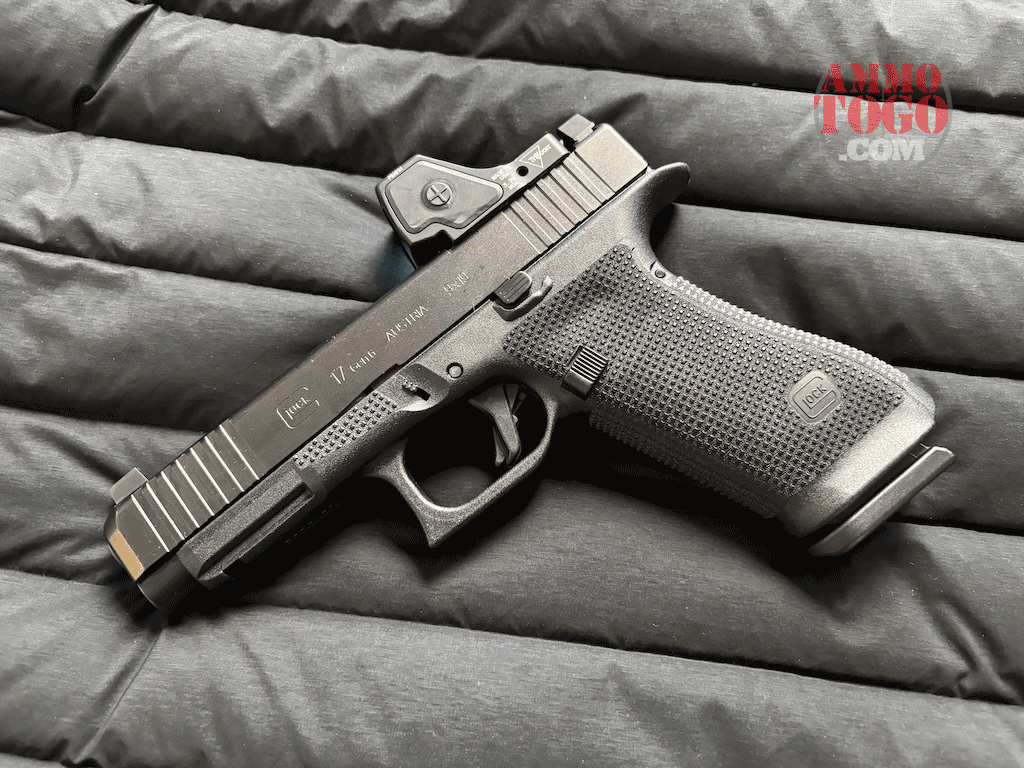
Beavertail:
The Gen 6 features a generously enlarged beavertail that enables a higher grip while reducing the risk of the slide biting the webbing of your firing hand.
Thumb ledge:
A decade ago, many shooters dismissed this feature as a fad when early adopters added gas pedals to Glocks to manage recoil, but now nearly everyone runs one. This is a recessed ledge, though, and not one that protrudes like a wing. GLOCK took material away rather than adding to the frame.
Slide serrations:
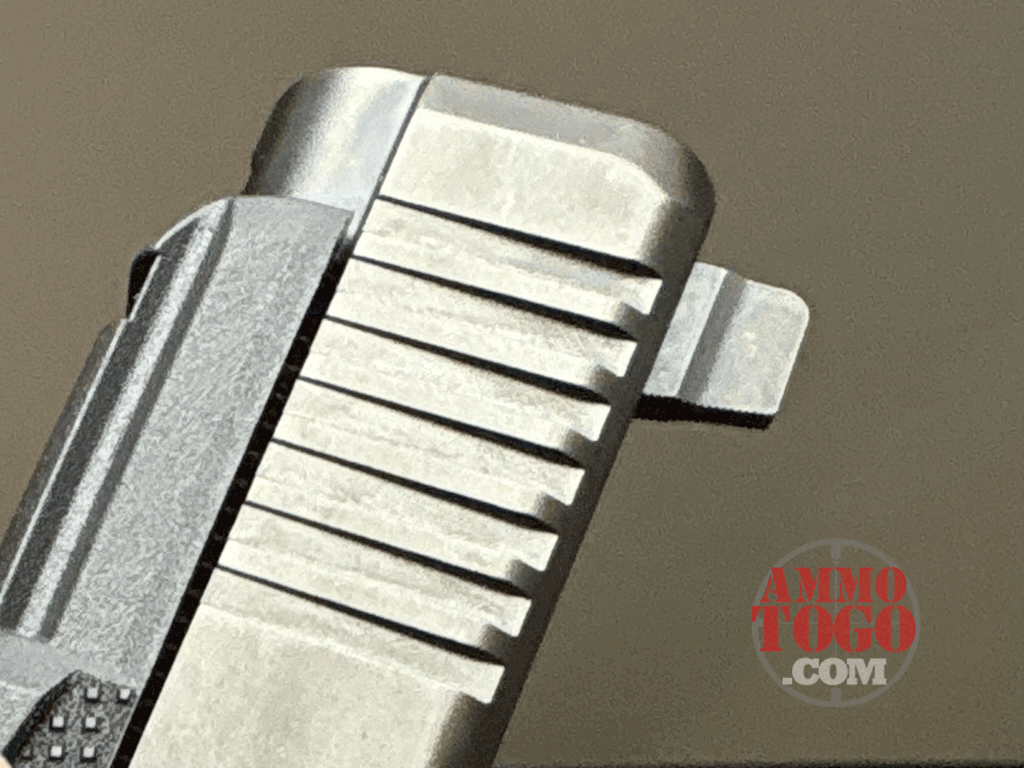
Slide serrations are angled downward and recessed deeper than many of the Gen 5 Glocks for more tactile manipulation.
Optics cut:
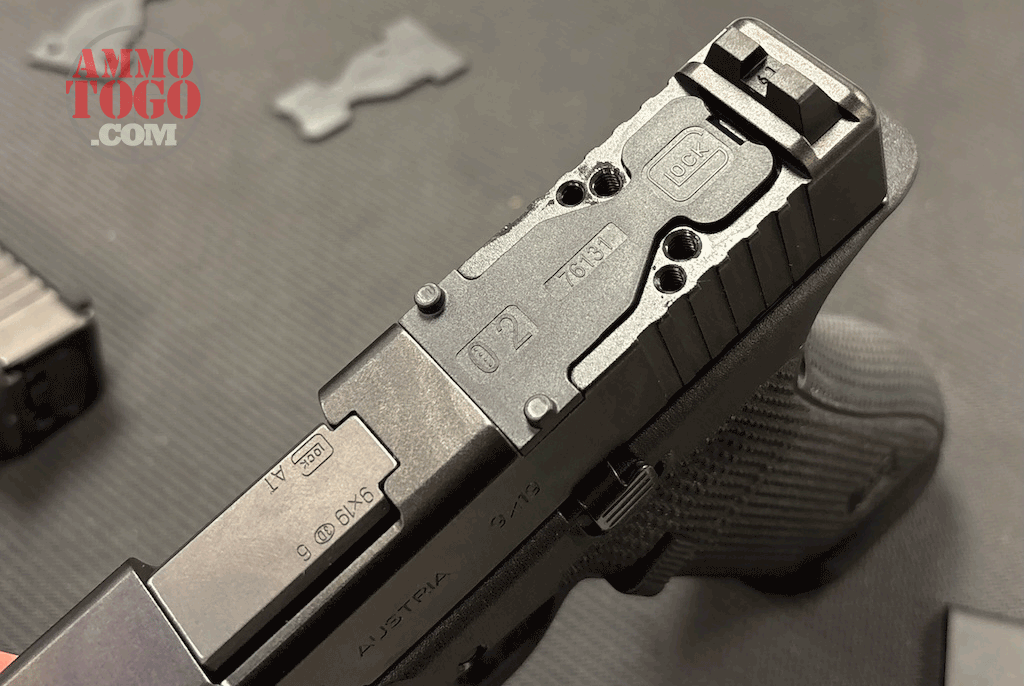
For those who use optics, the older MOS was a mixed bag. While adaptive, you would have to mount a plate to the slide and then the optic to the plate. Hardly optimal. The new system uses polymer plates in an hourglass shape that will ride between the slide and the optic, with the optic anchoring directly to the slide itself. Using the polymer plates will allow for different optics to be indexed correctly. The new mounting system sits lower than the MOS. I wouldn’t know by how much though.
GLOCK Gen 6 Internals:
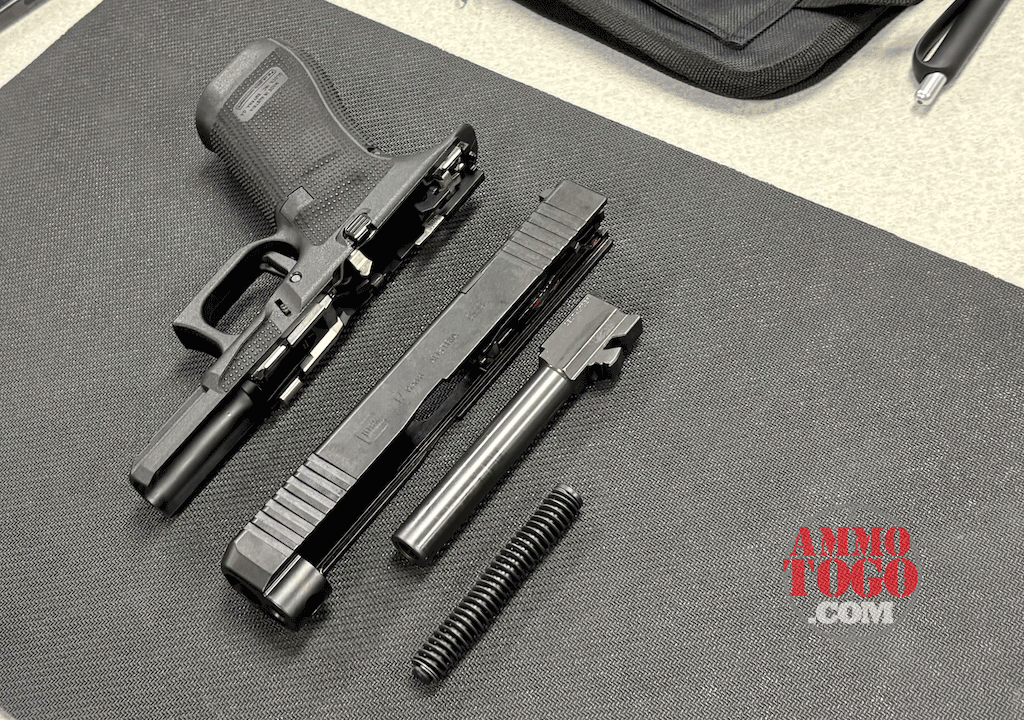
Most of the changes under the hood are subtle. I haven’t received a full review sample to measure and dissect, but a basic takedown already revealed several notable changes.
New parts:
Barrels
What you need to know as of yet, is that prior Gen barrels are not interchangeable with the Gen 6 Glocks. The new Gen 6 barrels feature new chambering geometry that doesn’t allow for cross-compatibility with previous generations.
Extractor
The extractor channel has been shortened and there’s no longer a hole from the optics cut in the slide. This is a boon as it will prevent locking up the extractor with an over-application of Loctite on an optics screw.
Trigger
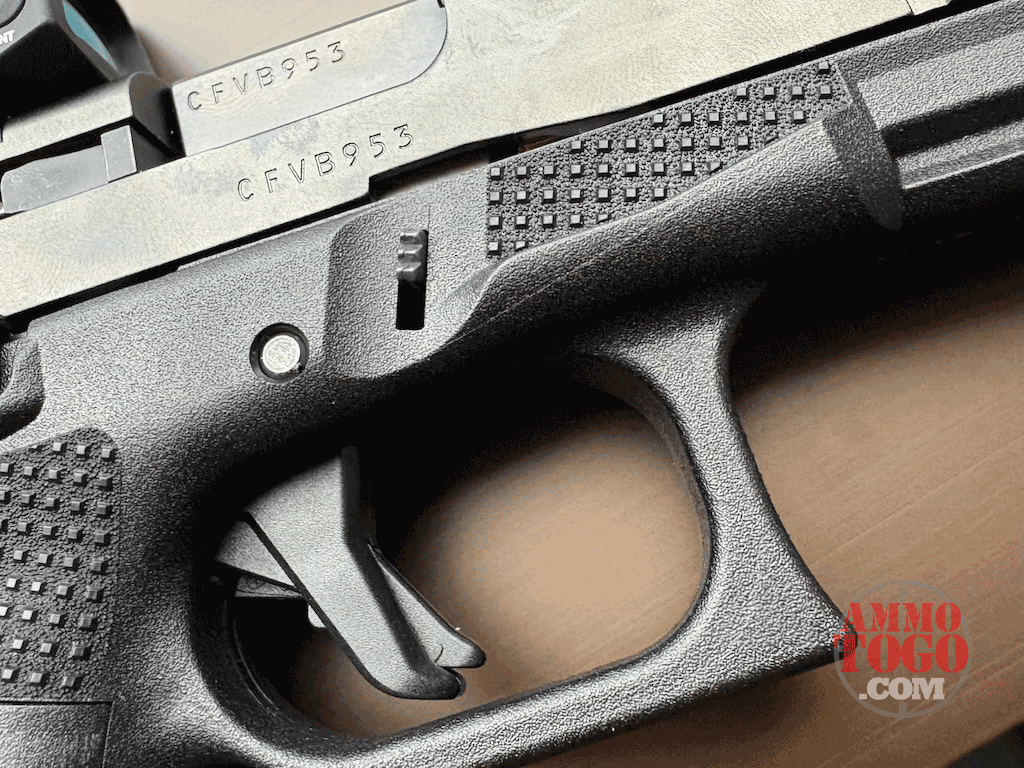
I’m going to say that the trigger is relatively the same but the should has been reprofiled to have a flat-face. If you like the feel of a wide, smooth, flat-faced trigger, this will be a decent step up.
Guide rod
Gen 6 returns to a single stage guide rod which may have implications for some holster fitments. More on that to follow.
Other parts
GLOCK’s are known for their simplicity. One key element of this is limiting the number of parts in the gun. Although the event didn’t provide full details on all Gen 6 part changes, we learned that some internal components interchange while others do not.
The takedown on a Gen 6 follows the same procedure as always. Taking out the firing pin will be familiar, and pulling the extractor is still easy enough to do in a matter of seconds.
Shooting the Gen 6 G17, G19, and G45
All told, I put at least 200 rounds through the new guns. There’s a good bit to talk about here. As I was wrapping up, I was asked, pointedly, what I thought about the new design. I didn’t have a solid answer.
Don’t misunderstand me here. I don’t have many complaints about how Gen 5 guns shoot, and I have no complaints about how Gen 6 guns shoot. That doesn’t mean I’m not enthusiastic about the changes.
These Gen 6 guns are easier to hold down. The thumb ledge is effective although I did lose purchase on my left thumb when the gun locked back empty a couple of times, but I learned quickly how to hold it on (which isn’t important, as I’d normally be off the gun and headed for a mag change with that hand anyway).
My grip purchase is higher on the gun which makes the recoil impulse more manageable by capturing that energy directly in the web of my hand.
My Gen 5 guns work great. I consider GLOCKs to be the epitome of a fighting handgun—if not for their ergonomics, for their unfailing performance. And now these guns are one step closer to perfection on the ergonomic side. I have no doubt that I will pick up a Gen 6 G45 as soon as it is available in January.
And if I were equipping a department, I’d make the change, too.
Holsters and aftermarket parts for Gen 6 GLOCKs
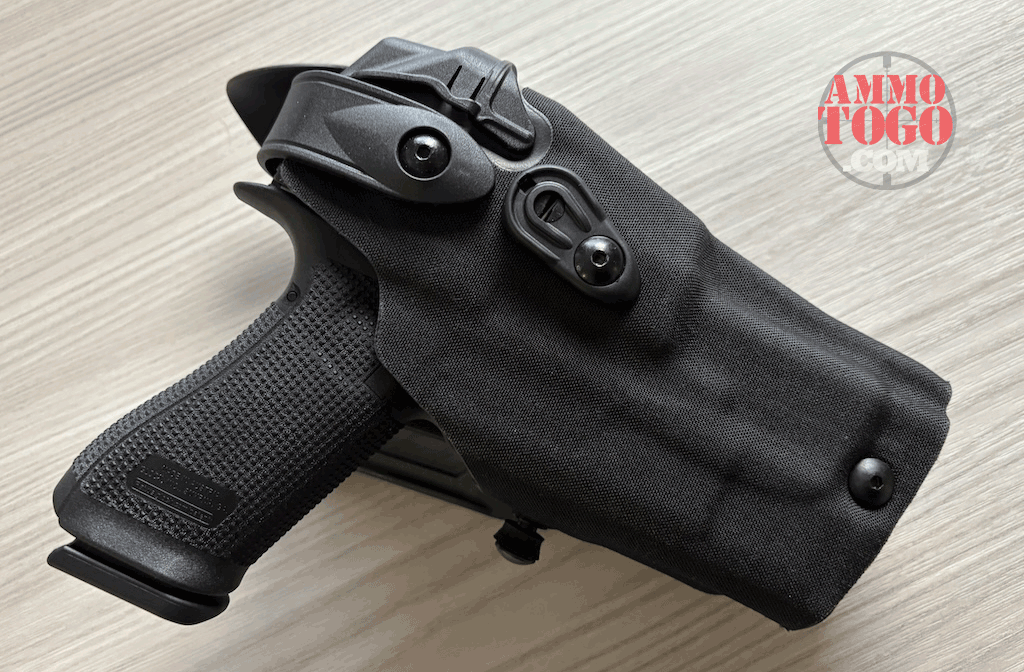
I work for Safariland, so I have the skinny here. As GLOCK works to ensure backwards compatibility, Safariland has literally thousands of SKUs that will work. Almost all IWB holsters for Gen 5 guns (with optics clearance) will work for Gen 6 guns.
Safariland’s duty holsters are compatible as well. Lines like Ballast and Solis are backwards compatible. The 6000 series holsters will have new Gen 6 fits that will be specific for Gen 6, as the new guide rods protrude just far enough to keep the guns from seating in 6TS holsters designed for Gen 4 and 5 guns.
After market accessories, like sights, are good-to-go. Barrels will follow soon. By the end of the first week, I expect we will see some Gen 6 specific reverse engineering and parts cropping up.
Last, but not least, these will run all previous generations of mags.
What’s next?
I’d be remiss if I didn’t note what’s not included in this launch coverage. We only saw three models at the live event. There’s a G49 that will be available internationally. There was no mention of any other models, or calibers.
Those paying attention over the summer are aware that GLOCK culled a ton of models and odd-ball calibers from the catalog. However, Glock still lists the slimline G43 and G48 models in its catalog, and they will likely receive the new RF6 grip overhaul at some point, although the event staff kept quiet about details.
40 years old, brand new, and same as it ever was…
Here at the end, I’d like to point to a couple of odd GLOCK contradictions. GLOCK, in its infancy, was wildly revolutionary. It was a plastic framed pistol in a world dominated by steel and aluminum. It wasn’t the first polymer frame, but the original G17—what we would now call Gen 1—was the most contentious handgun design of the 20th Century.
Once GLOCK landed on this form factor it held tight. If you were to line up all of the Sigs, Walthers, Springfields, FNs, HKs, Berettas… you would see some dramatic changes and abandonment of previous designs.
Glock’s most revolutionary design is now one of the most conservative. This was noted at the launch event for Gen 6. Several people, speaking on behalf of the company noted that GLOCK isn’t “chasing fads” or the like. Odd how the pendulum swings. It was GLOCK that proved polymer wasn’t a fad by pioneering its use in production.
Gen 6 guns could easily be mistaken for Gen 1 guns by anyone who isn’t in the know. And this alone may be at the heart of the GLOCK business model. If you know your way around a GLOCK handgun, from any generation, you will feel instantly at home behind the trigger of a new Gen 6. There is no learning curve. Grab and go.
How much will it cost to grab one? $745, give-or-take. Once the rush subsides, the price will settle in right about where a Gen 5 gun sits now.